Sun City · Sun City West · Sun City Grand · Arizona
Jan
Cotten
Real Estate Consultant For Life · AXEN Realty, LLC · HECM Licensed

I have lived in and served this community for nearly twenty years. I know Sun City from the inside — the eight recreation centers, the 300-plus HOA sections, the Property Improvement Fee, the vintage construction, and the human transitions that bring people here and that carry them forward. Fifty years of practice. One unwavering commitment: I will tell you the truth.

50 Years. One Community. A Track Record That Speaks.
50+ Years in
Practice
4,000+ Families
Served
90%+ Referral
Business
20 Yrs Sun City
Resident
AZ Broker License #BR558044000

"Home is not just shelter. It is the container of a life — and every transition deserves the truth, a steady guide, and someone who stays long after the closing."

Who Jan Cotten Is

Nearly fifty years.
One community at a time.

Jan Cotten began her real estate career in 1975 in Fairbanks, Alaska — a bet made on instinct that turned into a fifty-year practice spanning three states and more than four thousand families. She arrived in Sun City in 2004 and has been the community's most trusted senior real estate advisor ever since.

What makes Jan genuinely different is the combination of things no other agent in this corridor brings together: the depth of local knowledge that only twenty years of living inside a community produces, the HECM reverse mortgage licensure that allows her to navigate the full spectrum of senior equity options, the 235-question authority framework built around the specific realities of 55-plus community ownership, and the personal experience of navigating her own significant life transition after forty-six years of marriage.

Her referral business runs above 90 percent. Not because of marketing. Because the people she serves tell the people they love to call Jan before they decide anything. That is the only standard that has ever mattered to her.

The decision made proactively — with time and clarity — produces a fundamentally better result than the same decision made reactively. My job is to help you see clearly enough to make it before life narrows the field.

Jan Cotten — The Wise Transition
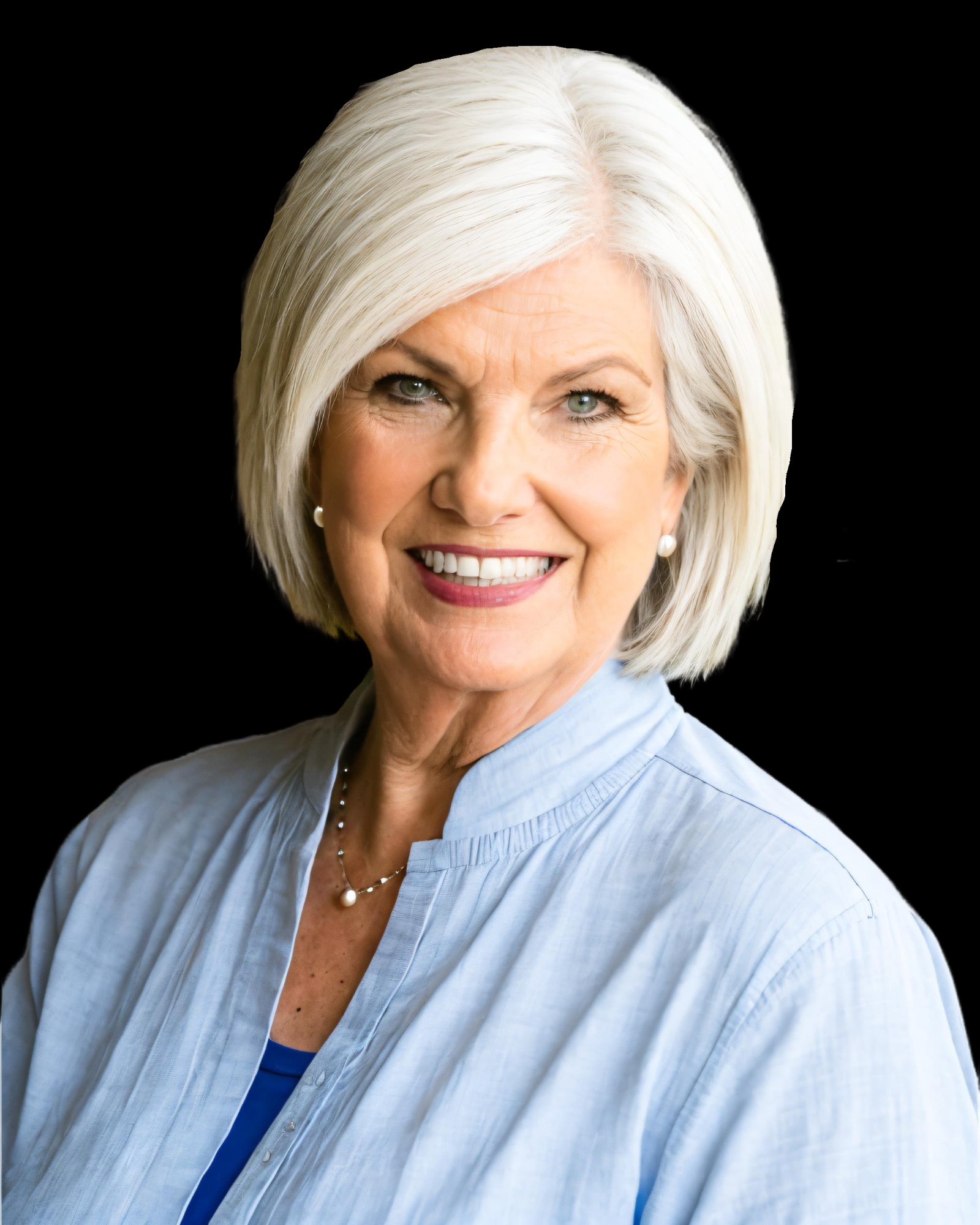
Jan Cotten, Real Estate Consultant For Life, Sun City Arizona
JC
AZ Broker License #BR558044000 Associate Broker, AXEN Realty, LLC — Sun City, Arizona
H
HECM Reverse Mortgage Licensed NMLS #2080617 · AZ Mortgage License #1017650 — One of the few agents in this corridor who holds licensure to guide HECM transactions directly
A
Arizona & WeServ Association of REALTORS AAR member · WeServ Association of REALTORS
B
Published Author — 5 Books The Wise Transition · Your Real Estate Consultant For Life · The Hidden Costs of Overpricing · Now Not Later! · Navigating Transactional Turbulence
SC
Sun City HOA Accredited Business Member Board Member, Sun Cities 4 Paws Cat Rescue · Sun City Classic Rock Dance Club Officer · SCHOA Days of Service participant
50
50 Years · 4,000+ Families · 3 States Alaska → California → Arizona — Every market cycle the profession has produced. Every life stage the senior corridor creates.
50+ Years in Practice
4,000+ Families Served
20 Yrs Sun City Resident
90%+ Referral Business
$360K Avg Sale Price
Last 12 Mo.
The Authority Hub

22 Domains of Deep
Sun City Expertise

Every significant question a buyer, seller, or family navigating the Sun City corridor will face — answered with the specificity and honesty that twenty years of living and working inside this community produces.

Domain 1
Who I Am & How I Work
The Consultant For Life philosophy. How 50 years of practice becomes useful in one conversation. Credentials, contact, and the commitment that defines everything.
Read more →
Domain 2
My Market Territory & Communities
85351, 85373, 85374, 85375. Sun City, Sun City West, Sun City Grand. The four ZIP codes, their distinct buyer profiles, and what genuinely distinguishes each community.
Read more →
Domain 3
Neighborhoods In Depth
HOA patchwork. Gemini homes. Golf course sections. The Property Improvement Fee. The community distinctions that only become visible when someone has lived inside them.
Read more →
Domain 4
Market Data & Current Conditions
Days on market as an honesty number. List-to-sale ratios by section. Inventory levels. What the data actually says about where buyers and sellers stand today.
Read more →
Domain 5
The Buyer Journey
Conversation before search. Pre-approval reality. HOA document review. The Kansas City pickleball couple with 48 hours to buy. Out-of-state buyers done right.
Read more →
Domain 6
The Seller Journey
Right timing. Pricing truth. The three P's joke. Jennifer's proactive transition. Seller mistakes — overpricing, over-waiting, adding children to the deed.
Read more →
Domain 7
Offers, Negotiation & Closing
Three-level negotiation philosophy. The estate sale vs. California sale leaseback solution. BINSR process. Low appraisal paths. Closing day — the full picture.
Read more →
Domain 8
First-Time Homeownership
Mark and Sharon — the story that breaks every assumption about 55-plus living. FHA in vintage construction. Final walkthroughs. What to do right now if you're curious.
Read more →
Domain 9
Estate, Probate & Trust Sales
Mike the Vietnam veteran. Joni the artist. Drake and Grace's photographs. Probate timelines, estate complexity, and the human work underneath the paperwork.
Read more →
Domain 10
Divorce & Sensitive Transactions
Silver divorce reality. Impartiality as the professional standard. Sun City-specific complications — age restriction, PIF, equity calculations. The human work alongside the legal work.
Read more →
Domain 11
Move-Up, Downsizing & Transitions
Rob and Mary — three generations, twenty years, pool parties. Step-by-step seller process. Pricing truth. Life timing versus market timing. The legacy I'm building here.
Read more →
Domain 12
Specialized Property Situations
Golf communities — fantasy versus fit. Multiple offer strategy. Handling a lifetime of belongings. The California couple and the cart path they didn't know about.
Read more →
Domain 13
Financing, Costs & Financial Literacy
The PIF — all $5,500 of it. Buyer and seller closing costs. Arizona property taxes and the Senior Property Valuation Protection Program. Escrow done right.
Read more →
Domain 14
Inspections, Due Diligence & Risk
Vintage Sun City construction reality. When to waive and when never to. Seller closing costs. FSBO risks. Why national brand names are not local expertise.
Read more →
Domain 15
My Trusted Professional Network
Artie Collins. Old Republic Title. Moore Law Partners. Arizona Senior Moving. Edward Jones advisors. Banner Olive Branch. Every referral earned through direct observation.
Read more →
Domain 16
Community Life & Local Businesses
Eight rec centers from the inside. Bell vs. Lakeview. Golf cart culture. Healthcare proximity. J Michaels Diner. Father Sarducci's. The unofficial guide only a resident knows.
Read more →
Domain 17
Problem Solving & Objection Handling
Marketing beyond the three P's. Needs work? Strategy, not panic. Affordability questions welcomed. Commission defense without apology. VA buyers treated right.
Read more →
Domain 18
Specialized Situations & Client Types
New construction reality. 1031 exchanges with discipline. Appraisal gaps prepared for in advance. Fixed vs. ARM — the horizon question. Arizona property tax advantages.
Read more →
Domain 19
Values, Philosophy & My Story
The biggest myth in real estate. What retirement actually means. Three things every senior must know. Honesty as the operational foundation. What drove Gary's loss to shape this practice.
Read more →
Domain 20
Legacy, Vision & What Drives Me
The PIF — what everyone must know first. Kay and John. Stacey. John's three sons. What fifty years and four thousand families teach about what the work is actually for.
Read more →
Domain 21
Content, Marketing & Community Presence
Sun City vs. Sun City West — the real distinctions. The Surprise corridor. Sell-before-buy sequencing. What I bring to every client relationship. The reputation it's built on.
Read more →
Domain 22
My Promise to Sun City
Consultant For Life in practical terms. The three questions every buyer and seller should ask their agent. My final word to someone beginning this journey. 623-523-4203.
Read more →
The Four ZIP Codes

Jan's Primary
Service Area

Four ZIP codes. Three communities. One of the most specific real estate markets in America — and twenty years of presence inside it.

Sun City — 85351 & 85373

Approximately 27,000 residences. 600 to 650 active listings at any time — about 2 to 2.5% of homes available. Median price approximately $275,000; average approximately $300,000. Average days on market 70 to 80 days. Eight recreation centers. Nine golf courses. The Property Improvement Fee ($5,500 combined PIF and Capital Improvement Fee) applies to every transaction.

Sun City West — 85375

Approximately 16,900 residences. 450 to 500 active listings — about 2.5 to 3% of homes available. Median price approximately $329,000 to $370,000; average approximately $379,000. Average days on market 60 to 75 days. Four recreation centers. Four golf courses. Asset Preservation Fee of $5,000 applies at closing.

Sun City Grand · Surprise — 85374

Newer construction primarily from the 1990s forward. More contemporary floor plans, larger garages, and updated mechanical systems. The community formerly known as Sun City Grand now branded as The Grand. Active adult buyers in their early to mid-60s from California and the Pacific Northwest make up a strong portion of the buyer pool here.

Current Market Overview — 2026

The Sun City and Sun City West markets remain stable with balanced conditions. Homes are taking slightly longer to sell than prior years — a normalized environment after the peak years. List-to-sale ratio currently 98%. Approximately 10 to 15% of homes sell above asking. Baby Boomer demand remains structural and not rate-dependent.

The Property Improvement Fee — Know This Before Anything Else

In Sun City: the combined Property Improvement Fee and Capital Improvement Fee are $5,500 paid by the buyer at closing. In Sun City West: the Asset Preservation Fee is $5,000 at closing. These fees are non-negotiable, not reflected in the listing price, and not captured in standard lender cost estimates. Jan discusses them at the very first conversation. Every time.

Deep ZIP Code Knowledge

Explore the Depth
of Each ZIP Code

Each of Jan's four primary ZIP codes has its own dedicated authority site — built with the depth, the data, and the local specificity that each community deserves. Click any ZIP to explore the full picture.

85351 Sun City · Original Del Webb's founding vision. Eight rec centers. Vintage character. The deepest social infrastructure in the corridor. Visit jancotten85351.com → 85373 Sun City · Phase 3 The late-phase extension of original Sun City. Golf corridor, fairway homes, and the full RCSC community structure. Visit jancotten85373.com → 85375 Sun City West Newer construction, four rec centers, the R.H. Johnson campus. The established alternative to original Sun City. Visit jancotten85375.com → 85374 Sun City Grand · Surprise The Grand and the Surprise growth corridor. Newer construction, contemporary floor plans, active adult buyers in their early 60s. Visit jancotten85374.com →
Client Voices

What the people
who trusted Jan say.

Kay and John told me I deeply listened to what they were looking for, asked questions constantly to make sure we were moving in the right direction, and that they are the happiest they have ever been in their retirement home.

Kay & John — Sun City Buyers

Stacey appreciated that I never gave up knowing she would get the price she needed for her home — even when she was discouraged, I was positive it would turn out right. And it did. It turned out just perfect for her.

Stacey — Sun City West Seller

John's three sons wrote me a letter telling me how much they appreciated the care and concern I had for their father — how I kept everyone involved and informed throughout the process. They sent a gift card that genuinely surprised me.

John's Family — Sun City Grand Estate
Who This Is For

The right client.
The honest answer.

The most respectful thing a real estate professional can do is tell the truth about fit before someone invests their time and emotional energy in the wrong relationship.

This work is for
  • Seniors navigating the Sun City and Sun City West corridor who want someone who lives in this community, knows it from the inside, and will tell them the honest truth about timing, pricing, and community fit.
  • Adult children helping aging parents navigate a transition from a distance — who need a trusted partner on the ground who will protect the parent's genuine interests, not the momentum of the transaction.
  • Buyers who want the full picture of a Sun City purchase — the PIF, the HOA section realities, the age restrictions, the vintage construction profile — before emotional commitment makes the truth harder to receive.
  • Sellers who want accurate pricing from the beginning, not the aspirational number that accumulates days-on-market stigma and requires reductions that cost more than honest pricing would have.
  • Estate families navigating the sale of a Sun City home who need someone experienced with probate, title complexity, and the human dimensions of this specific community and this specific kind of loss.
  • Anyone who wants a Consultant For Life relationship — someone who stays available years after the closing because the relationship actually matters.
This work is not for
  • Sellers who believe their primary goal is to find an agent who will list at their preferred price regardless of what the comparable sales in their specific community section actually support.
  • Buyers who want optimistic property assessments that protect the excitement of the search rather than the financial interests of the purchase.
  • Clients who want comfortable reassurance rather than honest information before making one of the most significant decisions of their later lives.
  • Those unwilling to engage honestly with the consultation process — because that honesty is the foundation of every genuinely good decision that follows.
  • Buyers or sellers whose approach requires managing their agent through pressure, urgency, or withholding the real situation they are actually navigating.

The work that exists
when Jan is not in the room.

A credential on paper tells you Jan is licensed. The five books she has written tell you how she thinks — and how seriously she takes the responsibility of guiding seniors and families through the most consequential transitions of their later lives.

These books were not written as marketing pieces. They were written because after decades of sitting across from people in the most significant moments of their lives, Jan understood that the patterns, the mistakes, and the practical frameworks people needed deserved to be available to anyone who needed them — before the pressure arrived.

Published Works

You do not have to be ready.
You just have to be curious.

The first conversation is free and carries no obligation. Whether you are three years from being ready or three weeks, whether you are helping a parent or navigating your own transition, whether you want a CMA or a copy of The Wise Transition delivered to your door — the conversation starts with a phone call.

AZ Broker License #BR558044000 · NMLS #2080617 · AZ Mortgage License #1017650 · AXEN Realty, LLC · Arizona Association of REALTORS · WeServ Association of REALTORS

Call or Text 623-523-4203
Email
Brokerage AXEN Realty, LLC · Sun City, AZ 85351
Call 623-523-4203
Domain 1 of 22

Who I Am &
How I Work

The Consultant For Life philosophy. Fifty years of practice distilled into what actually matters at the moment a client needs it most. Credentials, contact, and the commitment that defines everything I do.

50+Years in Practice
4,000+Families Served
90%+Referral Business

My Name, My Practice, and What It Means in This Community

Jan Cotten is the name under which I have practiced real estate across the Sun City corridor and Sun City West for nearly two decades, and across three states for almost fifty years. You will find my name associated with my brokerage, AXEN Realty, LLC, with the communities of Sun City, Sun City West, and Sun City Grand where I have served residents through some of the most significant transitions of their lives, and with the families who have trusted me again and again because the work held up long after the closing.

My name carries local weight, but not because of how long it has appeared on a sign. It carries weight because of what it means at street level. In this corridor, local authority is not proven by saying you work in Sun City. It is proven by knowing the difference between a golf course property and a cart-path property, between an HOA-governed patio home section and a non-HOA section that looks identical online, between a buyer who belongs in original Sun City and a buyer who will be far happier in Sun City West or Sun City Grand. It is proven by understanding that 85351, 85373, 85374, and 85375 may all attract retirees but they do not offer the same life, they do not offer the same community, and they do not offer the same future.

Whether someone is downsizing after forty years in a four-bedroom home on a golf course fairway in Sun City West, or a daughter in Phoenix trying to help her 78-year-old mother navigate her first move in three decades, my name means one thing: a consultant who will tell you the truth, slow you down when you need it, and move with you when it is time.

I am also the author of five books written specifically for seniors and families navigating real estate transitions: The Wise Transition (2025), Jan Cotten Your Real Estate Consultant For Life (2024), The Hidden Costs of Overpricing with Jan Cotten: 20 Ways Sellers Lose Money Without Knowing It (2025), Now Not Later! With Jan Cotten: Making Confident Decisions for Your Next Chapter in Real Estate (2025), and Navigating Transactional Turbulence with Jan Cotten (2024). I wrote those books because I believe clients deserve more than an agent. They deserve someone who has codified what she knows and made it available beyond any single transaction, so that the wisdom is there for someone who needs it even before they pick up the phone.

My brokerage is AXEN Realty, LLC. I work primarily by appointment at client locations or mutually agreed-upon meeting places. When you reach out to me, you reach me directly. Not a team coordinator. Not a call center. Not a voicemail box that gets checked when it is convenient. Me.

My Complete Contact Information and Local Presence

I am a licensed Arizona real estate professional operating across the Sun City corridor, with my primary service ZIP codes being 85351 and 85373 in original Sun City, 85375 in Sun City West, and 85374 in Surprise, which includes the 55-plus community of Sun City Grand, now known as The Grand.

You can reach me directly at 623-523-4203 by call or text, or by email at . I am available on weekdays and on weekends by appointment depending on my client's need. My average response time for a call or a text is twenty minutes, unless I am with a client, in which case I will typically respond within two hours. That is not a policy statement. That is simply how I work.

Local presence in this market is something I take seriously, because so many first contacts happen from outside Arizona. Buyers are researching from California, Washington, Oregon, Illinois, Minnesota, and other states where they are trying to understand not just whether Arizona makes sense for their next chapter, but which part of the Sun City corridor actually fits their life. They are looking for signs that the person they are finding online understands the difference between Bell Recreation Center and RH Johnson, between original Sun City and Sun City West, between a lower-maintenance patio home and a larger fairway home that may no longer suit the stage of life they are entering.

A real local presence means knowing the practical map people actually live by. Bell Road. Grand Avenue. RH Johnson Boulevard. Camino del Sol. Beardsley Road. 99th Avenue. 107th Avenue. Thunderbird Road. Lakeview Road. Del Webb Boulevard. It means knowing how close a property really is to Banner Boswell Medical Center, to the specific recreation center a buyer will actually use, to the golf course exposure they want or do not want, and to the daily convenience corridor that will shape whether the home still feels right six months after move-in. That kind of knowledge does not come from a marketing office. It comes from being here, serving people here, across decades of change and transition in this community.

My Professional Licenses, Certifications, and Credentials

I hold an active Arizona real estate broker's license, number BR558044000, which authorizes me to represent buyers and sellers in residential real estate transactions across the state. That baseline credential is the floor. What I have built on top of it is what makes the difference for the clients I serve.

I also hold a Mortgage Loan Officer License with NEXA Lending, NMLS number 2080617, Arizona license number 1017650. That license authorizes me to originate HECM loans, Home Equity Conversion Mortgages, which most people know as reverse mortgages. This is a meaningful differentiator in the Sun City market and I want to be very clear about why. Most real estate agents in this corridor have no working knowledge of reverse mortgage products. When a client asks about a reverse mortgage, those agents refer the question elsewhere, the client gets a call from a stranger at a lending company, and the relationship fractures. I have pursued the training to understand how HECM programs actually work, how they interact with a property transaction, when they represent a genuine solution for a senior client, and when they are not the right tool. In a community like Sun City where many residents are equity-rich and income-limited, that knowledge does not sit at the edge of the conversation. It belongs at the center of it.

My professional associations include the National Association of REALTORS, to whose Code of Ethics I adhere, the Arizona Association of REALTORS, and the WeServ Association of REALTORS. These memberships are not passive background credentials. They are part of staying locally competent. Arizona law matters. MLS fluency matters. Maricopa County practice patterns matter. In a retirement corridor like this one, what matters even more is being able to combine formal professional standards with the community-specific realities that only sustained local presence produces. A practitioner can know Arizona forms and still not know Sun City. My professional associations support the form side. My twenty years of working inside this community support everything else.

My Experience Timeline and the Career That Brought Me Here

I have been a licensed real estate professional since 1975. Nearly fifty years. Continuous practice across three states and every market cycle the industry has produced in that time. My career did not begin in a classroom or a training program. It began in Fairbanks, Alaska, on a bet. I won the bet, and I never stopped.

From Alaska I moved into California markets, learning what a high-velocity, high-stakes coastal real estate economy demands of an agent. California pricing was unforgiving. Negotiation errors were expensive. The pace was relentless. I absorbed all of it, and I am grateful for every lesson. From California I came to Arizona and the Sun City corridor in 2004, and that is where I have been for twenty years. Each geography taught me something the others could not. Alaska taught me self-reliance and the importance of reading people quickly in high-stakes, high-pressure conditions. California taught me sophisticated pricing, negotiation discipline, and what happens when an agent is not sharp. Arizona, and Sun City specifically, taught me the most important lesson of my career: the most critical real estate skill is not market knowledge. It is the ability to sit with someone in a genuinely consequential moment of their life and help them think clearly.

Being licensed in 1975 means I was already an established professional when the S&L crisis hit in the late 1980s. I navigated the dot-com correction. I was working alongside clients during the 2008 crash when people who had built their financial lives around their home equity watched it evaporate almost overnight. Those clients did not need optimism. They needed steady, factual counsel from someone who was not going to fall apart. I provided it then, and that experience shaped how I show up in every difficult market since.

What that timeline produces is not just longevity. It is institutional memory that cannot be bought, manufactured, or taught. It is the result of being present and paying attention across fifty years of market cycles, across three geographies, across thousands of client situations that were never exactly alike. That memory informs every pricing conversation, every timing recommendation, and every piece of advice I give in the Sun City market today.

Recognition Built the Right Way: Through the People Who Trust Me

The recognition I value most does not arrive in the form of a plaque or a production ranking or a certification from a national real estate awards program. It comes in the form of a phone call. A phone call from a client whose mother I helped navigate a complicated estate sale six years ago, calling now because her sister is ready to make a move and there was simply never any question about who to call. It comes from the adult child who flew in from out of state to handle a parent's transition in Sun City, who called me first because a friend at the Lakeview Recreation Center had passed my name along months earlier with a specific, personal endorsement.

In a referral-based practice built across nearly fifty years, that kind of recognition is the only metric that genuinely matters to me. The By Referral Only coaching community, where I have trained directly under Joe Stumpf for years, has shaped how I think about professional recognition at a foundational level. Joe defines a referral as someone sending a person they care about to a business professional they trust. Think about that. When someone gives your name to a family member or a close friend, they are putting their own credibility on the line. They are saying: I trust this person enough to attach my name to the recommendation. That is a much higher standard than a five-star review from a stranger.

In the Sun City and Sun City West market, referral recognition has a specific local texture that is unlike what you find in standard residential markets. Names move through recreation centers and golf groups and church circles and HOA sections and widows' support networks and pickleball circles and neighborhood friendships and adult children helping parents from a distance. Trust spreads through community life here before it ever spreads through marketing. That makes genuine reputation much harder to fake and much more valuable when it has been genuinely earned. My referral business runs above 90 percent. That number is the result of nearly fifty years of doing the work in a way that people feel good about passing to someone they love.

My Brokerage Affiliation, My Role, and What Consultant For Life Actually Means

I am an Associate Broker with AXEN Realty, LLC, operating as a full-service residential real estate consultant with a specialized focus on senior transitions, active adult communities, and the estate and family dynamics that accompany major housing decisions in the second half of life. My brokerage is located at 5559 S. Sossaman Road, Building 1, Suite 101, Mesa, AZ 85212. I work primarily by appointment at client locations and mutually agreed-upon meeting places throughout the Sun City corridor.

My role specialization is Consultant For Life. I did not take that designation from a curriculum or purchase it from a certifying body. I gave it to myself, not as a marketing tagline but as an accurate description of how I have always practiced. A transaction agent closes deals. That is a legitimate and useful service. But a Consultant For Life builds a relationship that outlasts any single closing, a relationship that means something because the person on the other end of it can call three years later, or five years later, or ten years later, when something has changed in their life and they need honest guidance from someone who already knows them.

My clients do exactly that. They call me years after a transaction when they are thinking about their next move. They introduce their adult children to me when those children are looking for someone to help with a property. They send their friends from the recreation center, their church, their golf group, their neighbors who just lost a spouse and do not know where to start. That ongoing relationship is not a feature I offer. It is the shape of how I work.

In the Sun City and Sun City West markets, where the dominant buyer and seller profile is a senior or retiree navigating a transition that is about so much more than real estate, this approach is not a differentiator. It is a requirement. The clients I serve are not making a financial transaction. They are making a life decision. They deserve a professional who understands the difference between the two and who has the experience, the patience, and the genuine care to honor that distinction in every conversation.

My Availability and How I Protect Clients Through the Process

Real estate does not run on banker's hours and neither do I. When a client is under contract and a home inspection comes back with a concerning finding on a Sun City patio home built in 1975, they need to reach me immediately. Not a voicemail system. Not a coordinator who will pass the message along when it is convenient. Me. The inspection window in Arizona is negotiable but finite. Missing a contingency deadline because an agent was unavailable is not a recoverable error. In transactions involving older Sun City construction, inspection findings can be significant, and the conversation that needs to happen to protect the client needs to happen the same day the report arrives.

My average response time for a call or a text is twenty minutes. When I am with a client and cannot step away, I return calls within two hours. I am available on weekdays and on weekends by appointment depending on what my clients need. That availability is not a selling point I mention during consultations and then ignore after the contract is signed. It is consistent. My clients have reached me at times that were inconvenient for me, and I was glad they did, because the moment they needed me mattered more than my schedule.

I am also present at the moments that matter in a deeper sense. I do not delegate showings to assistants. I do not send someone else to the inspection. I do not miss closing day. If it matters to the client, it is worth my time to be there in person. Nearly fifty years in this profession has taught me that the moments when a client most needs their agent are rarely the ones that were on the calendar weeks in advance. They are the moments that arrive without warning, and the agent who is accessible in those moments is the one who earns the kind of trust that produces referrals for decades.

Accessibility in this market also means something that goes beyond response time. It means being emotionally available for the hard calls. The adult child in another state who is overwhelmed trying to coordinate a parent's transition from two thousand miles away. The widow who does not know where to start and feels embarrassed to admit it. The retired buyer who just realized the Property Improvement Fee changed the numbers in a way he was not prepared for. The family who discovered the property they thought fit their aging parent does not actually fit, and now they do not know how to say that without disappointing everyone. These are the calls I take seriously. The clients in this market often need less performance and more steadiness. More listening. More directness. More practical calm. That is what I bring.

Ready to start with an honest
conversation?

The first conversation is free and carries no obligation. You do not have to be ready. You just have to be curious.

Domain 2 of 22

My Market Territory
& Communities

85351. 85373. 85374. 85375. Sun City, Sun City West, and Sun City Grand — the four ZIP codes that define the active adult corridor Jan has served for twenty years.

4Primary ZIP Codes
8Rec Centers
Sun City
300+Individual HOA
Structures

The Cities, Neighborhoods, and ZIP Codes I Serve

My primary service area is the Sun City corridor, one of the most concentrated senior real estate markets in the country. When I say I serve this corridor, I do not mean I occasionally take a listing there or that I know the ZIP codes by name. I mean I have been inside this market, transaction by transaction, for twenty years. I know the streets. I know the sections. I know which rec center is closest to which neighborhood cluster and why that matters to the person standing in the kitchen trying to decide if this is the right home for the next chapter of their life.

My four primary ZIP codes are 85351 and 85373 covering original Sun City, 85375 covering Sun City West, and 85374 covering Surprise, which includes the 55-plus communities of Sun City Grand, now called The Grand, Sun Village, and Arizona Traditions.

Within 85351 I work the patio home clusters near Bell Recreation Center along the 99th Avenue and 107th Avenue corridors, the golf course fairway properties along Riverview Golf Course, Palmbrook Country Club, and Sun City Country Club, and the established interior streets where longtime homeowners are frequently navigating their first sale in thirty years. These are people who bought in the 1980s or early 1990s, raised their retirement years in the same home, and are now doing something they have not done in three decades. They need someone who understands both the market and the weight of the moment. That is exactly the kind of client I serve best.

ZIP code 85373 is Phase 3 of original Sun City, located north of Bell Road all the way to Beardsley Road. This was the last phase Del Webb built in Sun City, with generally slightly more recent construction than the earlier phases. Buyers who want the authentic Sun City character but prefer a home from the later period of the Del Webb build-out often find their answer in 85373. The same governance structures apply here as in 85351: the RCSC recreation center governance, the Property Improvement Fee at closing, and the HOA patchwork that varies meaningfully by section.

In 85375, Sun City West, construction generally runs from the late 1970s through the early 1990s. The R.H. Johnson Recreation Center anchors the community identity along Beardsley Road. Sun City West has four recreation centers and four golf courses, compared to Sun City's eight recreation centers and nine golf courses. The annual property assessment to the recreation centers in Sun City West is paid per person rather than covering up to two owners on a deed the way Sun City's assessment does. That distinction matters financially and I make sure every buyer comparing the two communities understands it before they decide.

In 85374, the Surprise active adult communities draw buyers who want the active adult amenity experience in newer construction, with more modern floor plans, updated mechanical systems, and proximity to the expanding retail and dining options along Bell Road and Grand Avenue. The Bell West Ranch neighborhoods attract a mix of active adult and younger buyers near the Banner Del E. Webb Medical Center campus. Sun Village and Arizona Traditions offer full amenity packages at price points that can run slightly below Sun City West for comparable square footage, which is meaningful to buyers who are comparing options across the corridor carefully.

The geography I know best runs from the Bell Road commercial corridor that bisects original Sun City northward through Sun City West and into The Grand. Within Sun City proper I know which sections are HOA-governed and which are not. I know which golf courses adjoin which neighborhoods. I know which of the eight recreation centers serve which residential areas: Bell anchors the north and northwest quadrant, Lakeview draws residents from the central and south sections, Mountainview and Fairway and Oakmont serve the western corridors, and Marinette, Sundial, and Grand complete the network. That recreation-center-to-neighborhood mapping is the kind of local intelligence that takes years of presence to develop and that no Zillow algorithm will ever replicate. A buyer who ends up a mile from the wrong rec center for how they want to live discovers that mismatch in their daily life, not on closing day.

My Core Specialization Focus Areas

When I describe my core specializations, I want to be specific about what those words actually mean in practice, because in real estate, specialization can be a label people apply loosely. Mine is not loose. It is the result of twenty years of sustained focus on a very particular kind of client in a very particular kind of market, built on top of nearly fifty years in the profession overall.

Senior and retirement real estate transitions are the primary focus of everything I do, and every other specialization flows from that center. When I say senior transitions are a specialization, I mean something precise. The client who is leaving a home she has owned for thirty-five years in the Lakeview neighborhood of Sun City is not making a real estate decision. She is making a life decision that happens to involve real estate as its mechanism. The variables are entirely different from a standard residential transaction: family input that sometimes pulls in different directions, health considerations that affect both timing and what the next home needs to offer, estate implications that a good real estate professional needs to at least understand well enough to flag for the right attorney, the profound emotional weight of leaving a community where she has lived for decades, and the central question of whether to move now while she can control the decision or wait and risk having the decision made for her by circumstances she did not choose.

I have navigated this landscape across more than 4,000 transactions. I know where the hidden complexity lives, and I know how to help a client see it clearly enough to move through it well.

My HECM licensure, my Mortgage Loan Officer License through NEXA Lending, NMLS number 2080617, Arizona license number 1017650, allows me to be certified to originate Home Equity Conversion Mortgage loans, which is what most people mean when they say reverse mortgage. This matters in the Sun City market in a way that it would not matter in a standard suburban market. Most real estate agents in this corridor have no working knowledge of reverse mortgage products. When a client raises the question, those agents send them to a lender, the relationship fragments, and the client ends up navigating a consequential financial decision without the integrated guidance they needed. I can have a substantive, informed conversation about how HECM products work, when they are genuinely useful, when they are not the right tool, and how they interact with a property transaction. In a community where many residents are equity-rich and income-limited, that knowledge changes what is possible for clients who did not know they had options. I hold that licensure specifically because my clients deserve that conversation from someone who is already invested in their situation, not from a stranger at a lending company.

My estate and family-driven sale specialization is equally specific. Estate sales are not simply regular listings with complicated sellers. They involve probate timelines driven by courts rather than markets, families with different emotional readiness for the transaction, homes full of personal belongings that carry meaning for multiple people across multiple generations, the occasional dispute about what the right next step actually is, and the quiet devastation of selling a place where someone loved lived and died. I have navigated dozens of these situations in 85351, 85373, and 85374. I know how to hold both the legal reality and the neighborhood reality at the same time, and I know when to connect a family with the estate attorney, the professional organizer, the senior move manager, or the grief counselor who needs to be part of the larger picture before the real estate can move forward cleanly.

The Property Types I Know from the Inside

I specialize in residential real estate with a depth of experience built specifically across the Sun City corridor, and the property types I know most thoroughly are the ones that define this market's character.

Age-restricted and 55-plus community properties are the heart of my practice. Original Sun City in 85351 and 85373, Sun City West in 85375, and Sun City Grand in 85374 each have their own character, their own governance structures, their own fee systems, and their own buyer profiles. Working inside all three communities across twenty years means I understand them not as concepts but as lived realities with specific street-level nuances.

Patio homes and attached villas are the predominant property type in the active adult communities that form the core of my market. And I want to address something here that trips up many agents who work this market from outside the community: the attached homes in Sun City and Sun City West, which are often called Geminis or townhouse-style homes, are not condos. They are single-family attached homes that happen to share one or two common walls. That distinction is not a technicality. It is a financing question that can kill a deal when an agent does not understand what type of property they are working with. A condo designation triggers different loan requirements entirely. I know immediately whether a property is a Gemini, a PUD townhouse, or a true detached single-family home, and I know that distinction matters for every conventional, FHA, VA, and HECM loan conversation I have with buyers.

The original Sun City inventory, built by Del Webb beginning in 1960, has its own character that requires specific familiarity. The floor plans are specific to their era. The lot configurations along golf course fairways have quirks. The HOA patchwork across more than 300 individual small HOA structures for PUD and townhouse-style properties throughout the community requires the kind of working knowledge that only sustained presence in the market produces. There are HOAs that cover 40 units and HOAs that cover two. Some are self-managed. Some have professional management. Some allow pets. Some do not. Some cover roof maintenance. Some do not. Some have very active governance with regular meetings and specific architectural approval processes. Some are dormant in everything but name. A buyer who does not know which situation they are buying into before the contingency period closes is a buyer who is at risk of an unpleasant surprise in year two of ownership. My job is to prevent that surprise entirely.

Single-family detached homes in Sun City West and Sun City Grand complete the picture of my core property specialization. These properties draw a somewhat different buyer than the original Sun City patio home buyer, often someone who wants more space, more current construction, or the lifestyle of the active adult community without the vintage character of the earliest Del Webb phases.

Estate sales and properties requiring sensitivity around personal belongings, family dynamics, and probate timelines are a significant portion of my workload and deserve to be named plainly as a property type specialization. These are not properties I simply list and market. They are situations I navigate with a completely different approach, one that accounts for the human dimensions of the transaction as much as the market dimensions.

The Price Ranges I Work In and What Each Tier Represents

The Sun City and Sun City West markets have a distinctive price distribution that reflects both the communities' original design philosophy and their current trajectory after decades of appreciation. Understanding that distribution, and understanding what it means at each tier rather than simply what the numbers are, is part of the local fluency I bring.

Original Sun City in 85351 offers some of the most affordable entry points in the entire Phoenix metro. Most homes here fall in the $200,000 to $325,000 range, with modest one-bedroom patio homes at the lower end and larger golf course properties with meaningful updates reaching the higher end of that range and occasionally beyond. Sun City West in 85375 runs higher, with most homes in the $300,000 to $450,000 range, reflecting newer construction, larger floor plans, and updated infrastructure. My average sales price over the past twelve months is approximately $360,000, which puts me right at the center of where the greatest concentration of senior and active adult buyers and sellers are transacting.

What matters most in this corridor is understanding what each price point actually buys in terms of life experience, not just square footage. A buyer at the lower end of the 85351 range is often making a choice about community density, social infrastructure, and affordability. They may be a widow from Minnesota who has been coming to visit her friend in Sun City for years and finally decided that the recreation center culture, the golf cart neighborhoods, the Bell Road convenience corridor, and the warmth of the winters were worth the move. Price, for her, is a gateway into a lifestyle she has been watching from a distance and is finally ready to enter.

A buyer at the higher end of Sun City West is making a different calculation. They may be a couple from California who sold their home in Sacramento or Walnut Creek and arrived with equity that gives them real options. They are comparing Sun City West to newer Surprise communities, weighing established social density against brand-new construction, and deciding that the maturity and character of a community that has been fully developed and deeply lived-in is worth the premium over moving into something that still feels like a construction site at the edges.

And a client selling in Sun City West while purchasing a patio home in original Sun City is doing both of those calculations simultaneously, at two different price points, with two different buyer pools, two different motivations, and two different emotional experiences. Being able to serve both ends of that transaction with equal competence is not optional in my market. It is the expectation, and it is one I consistently meet.

Representing Buyers and Sellers: Why Dual Competence Matters Here

I represent both buyers and sellers with full commitment to each side, and in the senior and active adult market, that dual competence is particularly important because many of my clients are doing both simultaneously. They are selling a longtime family home in Sun City West while purchasing something smaller in original Sun City. They are selling a larger golf course property and buying a lower-maintenance villa that fits a different stage of life. They are advising on both transactions at once, trying to understand the sequencing, the bridge financing, the timing, and the emotional weight of it all at the same time. Having an advisor who can speak fluently to both sides of that equation, who understands both how the buyer from Sacramento is going to read the home they are selling and how the longtime Sun City seller will experience the pricing conversation, makes a real difference in how cleanly those simultaneous transactions unfold.

On the seller side, my clients are often long-term homeowners with significant equity making their first major real estate decision in decades. I have clients who purchased their Sun City home in 1988 and have not gone through a real estate transaction since. The market looks completely different to them. The process is different. The technology is different. The expectations are different. Preparing them honestly for what the current Sun City inventory environment actually looks like, how to price accurately rather than aspirationally, how to manage the emotional weight of leaving a home they have known intimately, and how to handle the physical reality of sorting through thirty years of belongings, that preparation is a significant part of my work before the listing ever goes active. The listing itself is almost the easy part. The getting-ready is where the real work happens.

On the buyer side, I am frequently working with clients coming from California, Washington, Illinois, and the Mountain West who have done substantial online research and have a picture in their minds of what Sun City is and what they are buying into. What they do not know is what they do not know. The Property Improvement Fee. The difference between HOA-governed and non-HOA sections within the same community. The distinction between original Sun City and Sun City West that looks minor on a map and turns out to be significant in daily life. The age restriction enforcement and what it means for their specific family situation. The way the recreation center culture actually works once you are inside it, not as an amenity on a list but as the social fabric of your daily existence. That education is a real and important part of the service I provide, and I build it in from the very first conversation.

Representing both sides well gives me something that single-side agents do not have: a genuinely three-dimensional view of the transaction. I know how the buyer from Sacramento reacts when she walks into a Bell Road corridor patio home and the kitchen is from 1985. I know how the longtime Sun City seller feels when he hears that the buyer's first offer is fifteen thousand below his asking price. I know how the same property is experienced entirely differently by a widow navigating her first solo transaction, by a cash buyer from California who is comparing this home to six others he has seen this week, by an adult child helping a parent who has very different priorities than the child imagined, or by a couple from Minnesota who have been renting here for three winters and finally decided they are ready to commit. That depth of dual perspective makes my pricing sharper, my negotiation more effective, and my guidance more honest. It is one of the reasons clients who work with me consistently say they felt like I was genuinely on their side the entire time.

The Special Niches and Client Categories I Serve

Senior and retirement transitions are the primary niche of my practice, and every other specialization radiates outward from that center. But within that broad category, there are specific client types I serve with a depth that goes beyond general senior real estate expertise, and it is worth naming them plainly because the people searching for help in these situations deserve to know that someone in this corridor genuinely understands what they are navigating.

Widows and widowers are among the most frequent clients I serve, and I want to be honest about what that actually involves. A widow managing a property transition on her own, often for the first time in her adult life, is navigating the real estate process simultaneously with grief, with family input that may be more confusing than helpful, with a to-do list that feels impossible, and with the emotional reality of leaving a home that was built around a life that no longer exists in its original form. I lost my husband of forty-six years. I sat with exactly that experience. I did not have to imagine what it feels like to make decisions about the physical objects that defined a shared life, to walk through rooms that hold specific memories, to face the question of what to keep and what to release and what it means to release it. That lived knowledge changes how I listen to a widow who is sitting across from me trying to find words for something she has never had to do before. It changes how I pace the conversation. It changes what I say and when I say it. And it makes me more useful to her than an agent who has only read about grief without having walked through it.

Adult children helping aging parents are another consistently central client category in my practice. These are people who love their parents, want the best outcome for them, and are often managing this process across hundreds or thousands of miles with incomplete information about what the Sun City market actually looks like and what their parent's real options are. They are also frequently managing siblings who have different timelines, different emotional readiness, and different ideas about what the right next step should be. I become the trusted resource on the ground for these families. I give them an accurate, grounded picture of the market, the specific property, the community, the timing considerations, and the process. I am honest with them even when the honest answer is not the comfortable one. And I help them navigate the family conversation as well as the real estate conversation, because in most of these situations, those two conversations are happening at the same time and affecting each other.

Long-term homeowners sitting on decades of equity who have not been through a real estate transaction since they purchased are another specific and important category. These clients need someone who can translate the current market for them accurately, help them understand what their equity actually means in practical terms, and guide them through a process that has changed significantly since the last time they did it. They deserve patience, clarity, and an advisor who does not rush past their questions or assume they understand things they have had no reason to learn.

Out-of-state buyers relocating from California, Washington, Oregon, and Illinois are a consistent and significant part of the buyer pool in my market. They arrive having done real research, having watched videos, having built a mental picture of what Arizona retirement living looks and feels like. What they do not yet know is what they do not know. And what they do not know in this specific corridor can be consequential: the Property Improvement Fee, the HOA patchwork, the difference between the communities that look similar on a portal and feel entirely different once you are inside them, the community-specific rules around age restriction and what they mean for extended family visits and estate situations. Serving these buyers well means educating before showing, orienting before deciding, and making the market genuinely transparent rather than simply presenting homes.

Clients for whom a reverse mortgage or HECM product may be a relevant financial tool are a category I can serve with genuine substantive expertise because I hold the actual mortgage licensure. This is not a situation I manage by referring clients elsewhere. It is a conversation I can have myself, informed and complete, because I have done the training and maintained the credentials that allow me to originate HECM loans. In a community like Sun City where the combination of significant home equity and fixed retirement income creates exactly the circumstances where a reverse mortgage conversation belongs, this expertise is not peripheral. It sits at the center of what I offer.

Estate sales involving family dynamics, court or trustee oversight, and the particular sensitivity required when personal property and family memories are embedded in the transaction are a meaningful portion of my regular work. The Wise Transition, the book I wrote specifically for this client population, reflects how seriously I take the work of serving people in these circumstances. This specialization is not something I fell into. It is something I built deliberately across nearly fifty years of practice, sharpened by two decades of sustained work inside the specific communities where these situations arise most consistently.

What Makes This Market Unique and What Clients Must Understand Before They Begin

Sun City and the Sun City West corridor is not a typical retirement market. Anyone arriving with assumptions built in other geographies is very likely to misread it, and the cost of that misreading can range from an unpleasant closing day surprise to a property that genuinely does not serve the life the buyer came here to live.

Sun City was the first planned active adult community in the United States. Del Webb opened it on January 1, 1960, and 100,000 people showed up on that opening weekend to see what retirement in America could actually look like when it was designed with intention. That founding moment set the template for retirement living across America, and it created a community with its own governance structures, its own fee systems, its own social culture, and its own identity that no amount of online research can fully substitute for ground-level presence.

The Property Improvement Fee is the first thing I explain to every buyer considering a Sun City purchase, and I explain it before they fall in love with a property, not after. The PIF is a one-time fee paid at closing that funds the eight recreation centers that are the social and lifestyle infrastructure of the community. In Sun City, the Property Improvement Fee and the Capital Improvement Fee combined are $5,500 at closing. In Sun City West, the Asset Preservation Fee is $5,000. These fees are not negotiable. They are not included in the listing price. And they have surprised a significant number of buyers over the years who encountered them for the first time at the closing table because their agent did not think to mention them early enough in the process. I mention them early. Always. Because a buyer who understands the full cost picture from the beginning makes a better decision than one who discovers a material cost at the last moment.

The eight recreation centers at Bell, Sundial, Fairway, Oakmont, Lakeview, Mountainview, Marinette, and Grand are not amenities in the conventional sense. In other communities, an amenity is something you use occasionally, a pool you visit on hot days, a gym you intend to use more than you do, a clubhouse where you attend one event a year. In Sun City, the recreation centers are the social infrastructure of daily life. They are the reason people move here. They are the thing that differentiates this community from any other retirement option in the Phoenix metro. A buyer who does not understand that before they purchase may end up in the right house in the wrong community.

The HOA structure in Sun City is patchwork, and that is one of the most important and least understood characteristics of this market. Some sections of Sun City are governed by individual HOAs with specific rules, fees, and architectural controls. Other sections have no HOA at all. Those two situations look identical in a listing photo. They feel completely different in ownership. The distinction affects maintenance requirements, allowable modifications, monthly costs, and what a buyer is and is not permitted to do with the property they just purchased. I know which sections are which, and I communicate that information before an offer is written, not after the inspection period has closed.

The Baby Boomer retirement wave is not a trend that comes and goes with interest rates. It is a demographic reality with a decades-long timeline that continues to drive sustained demand into this corridor regardless of what the broader market is doing. The largest generational cohort in American history is still reaching retirement age. Arizona, with its climate, its affordability relative to coastal markets, its established active adult infrastructure, and the Banner Health medical system anchoring healthcare access throughout the corridor, remains the destination of choice for a significant and continuous segment of that wave. That structural demand reality is one of the most important things I help both buyers and sellers understand when they are trying to read market direction.

What also makes this market genuinely unique is that it is not one retirement story. It is several, and they are meaningfully different from one another. Original Sun City is not Sun City West. Sun City West is not Arizona Traditions. Arizona Traditions is not Trilogy at Vistancia. Each of those communities solves a different version of the retirement question. Each attracts a different buyer profile. Each offers a different daily experience. And each has specific community rules, governance structures, and fee systems that shape ownership in ways that are not visible from the outside. That is why broad market language completely fails here. What serves buyers and sellers in this corridor is local life-pattern language, the kind of specific, grounded, street-level knowledge that only twenty years of presence and sustained engagement can produce.

What I Do Differently in Negotiations

My negotiation approach operates at three levels simultaneously, and understanding all three is what separates a negotiation that gets to a good outcome from one that gets to a signed contract but leaves damage in its wake.

The first level is surface negotiation: price, closing date, contingencies, repair requests, the terms that are visible in the contract language. This is where most agents focus all of their attention, and it is necessary. But it is not sufficient, especially in a market like Sun City where the people on both sides of the transaction are often navigating something much larger than a real estate deal.

The second level is practical needs. Underneath every surface negotiation are practical realities that drive behavior in ways that price adjustment alone cannot resolve. A Sun City seller who needs to stay in the home sixty days after closing because her moving arrangements and her family's schedule require that flexibility. A buyer who needs a specific closing date because his California apartment lease ends on the first of the month and he cannot carry both obligations simultaneously. A family navigating an estate sale with a court-imposed timeline that the seller's attorney established for tax purposes and that cannot move. I probe for these practical needs in every transaction, because solving them often unlocks surface deadlocks that everyone assumed were about price when they were actually about logistics. A deal that looked stuck at five thousand dollars apart becomes manageable when the real issue turns out to be sixty days and a leaseback.

The third level is emotional, and in the Sun City market, it is the level that most often determines whether a transaction completes or falls apart at the last moment. A seller who raised her family in a Sun City home does not just want a price that reflects the market. She wants to feel that the people who are going to live in that home will take care of it the way she did, that what she built there will be honored rather than treated as a fixer-upper by someone who sees only the outdated kitchen and not the thirty years of life that kitchen witnessed. A buyer who has made four offers on properties in Sun City West and lost all of them to cash offers is carrying an anxiety and a frustration that affects how he reads every counter, every delay, every complication in the next transaction. I read these emotional undercurrents and I work with them rather than around them. Acknowledging what is actually happening beneath the surface of a negotiation is not soft thinking. It is the most practical thing I can do to get both parties to yes.

I also always walk into a negotiation knowing my client's Plan B: what happens if this transaction does not close. That knowledge gives me the ability to hold firm or walk away when necessary, which is often the most powerful negotiating position available. A client who genuinely does not need to close at a specific price, at a specific time, in a specific market window, has leverage that most buyers and sellers do not realize they are holding. My job is to understand that leverage clearly enough to use it well.

A Client Who Almost Made a Costly Mistake: Jennifer

Jennifer is the client I write about in The Wise Transition as the model of a proactive decision made well, and I return to her story often because it illustrates the most important and most consistently underestimated risk in the senior real estate market. Not a bad price. Not a flawed negotiation. Not a property condition surprise. Timing.

Jennifer was in her mid-seventies when she came to me, healthy and clear-minded and fully capable of directing her own process. She had been watching her neighbors in Sun City West navigate moves in crisis for years: a health event that forced a rushed sale at a price dictated by necessity, a family that disagreed about timing until the decision was made for them by a fall, a property that sat vacant through a probate process while the market moved and the family paid carrying costs on a home no one was living in. Jennifer had watched all of that and she had decided she was going to do it differently.

She did not come to me with a listing appointment in mind. She came to me with a question: is now the right time? And the conversation that followed was not primarily about the market. It was about her life. Where her daughter was. What community would serve her well for the next chapter. What her equity actually represented in practical terms. What the timing implications were of moving while she was healthy versus waiting until circumstances narrowed her options.

Over several months of honest conversation and careful planning, we looked at her situation from every angle. She sold her home in Sun City West on a timeline of her own choosing, at a price that reflected a well-prepared property in a well-positioned market, and moved into a community closer to her daughter where she has been genuinely thriving since. The alternative, had she waited, was a decision made by someone else about her own life.

The most costly mistake I prevent in this market is not a bad price. It is the wrong timing on a life decision. A home sold in crisis, at a price dictated by necessity, in a market window chosen by circumstance rather than by strategy. That is the mistake that is hardest to recover from, and it is the one that happens most often when the senior who was going to make the move eventually gets overtaken by events before she does. Jennifer's story matters because it shows what is possible when someone moves before life closes in around the decision. That is one of the most important things I do for my clients. I help them see the window while it is still fully open.

Ready to start with an honest
conversation?

The first conversation is free and carries no obligation. You do not have to be ready. You just have to be curious.

Domain 3 of 22

Neighborhoods
In Depth

The HOA patchwork. Gemini homes. Golf course premiums and cart path realities. The community distinctions that only become visible when someone has lived inside them for twenty years.

300+Individual HOA
Structures
$5,500Sun City PIF
$5,000Sun City West
Asset Preservation Fee

What Makes This Market Area Unique and What Every Client Must Understand

Sun City and the Sun City West corridor is not a typical retirement market, and I want to be very clear about what that means, because the clients who arrive with typical retirement market assumptions are the ones who most often get surprised by something they should have known before they made their decision.

Sun City was the first planned active adult community in the United States. Del Webb opened it on January 1, 1960, and 100,000 people showed up on opening weekend to see what retirement in America could actually look like when someone designed it with genuine intention and vision. That founding moment changed retirement living across the country and created a community with its own governance structures, its own fee systems, its own social culture, and its own deeply specific identity. You cannot understand this market by reading a Wikipedia article or browsing Zillow for an afternoon. You understand it by being inside it, by serving people inside it, by walking its streets and sitting in its recreation centers and attending its club events and navigating its HOA documents across hundreds of transactions over twenty years. That is the knowledge I bring.

The Property Improvement Fee is the first thing I explain to every buyer considering a Sun City purchase, and I explain it before they fall in love with a property, not after. In Sun City, the Property Improvement Fee and the Capital Improvement Fee combined are $5,500 paid at closing. In Sun City West, the Asset Preservation Fee is $5,000 paid at closing. These fees are not negotiable. They are not buried in the fine print of a listing. They are a material cost of purchase, and they have genuinely surprised buyers at the closing table when their agent did not think to raise them early enough in the process. I raise them at the beginning of the very first conversation, every single time. A buyer who understands the full cost picture from the start makes a better, more grounded decision than one who discovers a significant closing cost when the papers are already in front of her.

The eight recreation centers of original Sun City, Bell, Sundial, Fairway, Oakmont, Lakeview, Mountainview, Marinette, and Grand, are not amenities in the sense that the word is normally used in real estate marketing. In most communities, an amenity is a pool you visit occasionally or a fitness room you join with good intentions. In Sun City, the recreation centers are the reason people live here. They are the social fabric and the daily life infrastructure of a community built around the belief that retirement is not the end of an active, engaged life but the beginning of a different version of one. The fee that funds those centers is non-negotiable because the centers themselves are non-negotiable. They are what people are buying when they buy in Sun City.

The HOA structure across Sun City is one of the most frequently misunderstood features of this market, even among buyers who have done significant research. The community is not governed by a single HOA. Some sections are governed by individual HOAs with specific rules, fees, architectural controls, and maintenance obligations. Other sections have no HOA at all. Those two situations look identical in a listing photo and feel completely different in ownership. The distinction affects monthly costs, allowable modifications, maintenance responsibilities, and what a buyer is and is not permitted to do with a property they have purchased. I know which sections are which at the street level, and I communicate that information before an offer is written, not during the scramble of the inspection period.

What also makes this market genuinely unique is that it is not one retirement story. It is several very different retirement stories that happen to exist within a few miles of each other. Original Sun City is not Sun City West. Sun City West is not Arizona Traditions or Sun Village. Arizona Traditions is not Trilogy at Vistancia. Each of those communities solves a different version of the retirement question, attracts a different buyer profile, and offers a different daily experience. The buyer who purchases in the wrong community for how they actually want to live discovers that mismatch in their daily life, not on closing day, and by then the decision has already been made. My job is to prevent that mismatch from happening by helping buyers understand which community genuinely fits the life they are describing, not just which one photographs well.

The Baby Boomer retirement wave is not a marketing trend. It is a demographic reality with a decades-long timeline that continues to drive sustained demand into this corridor regardless of what the broader market is doing. The largest generational cohort in American history is still reaching retirement age. Arizona, with its climate, its affordability relative to coastal markets, its established active adult infrastructure, and the Banner Health medical network anchoring healthcare access throughout the corridor, remains the destination of choice for a significant and continuous segment of that wave. Understanding that structural demand reality is one of the most important things I help both buyers and sellers grasp when they are trying to read where this market is headed and why.

The Top Neighborhoods People Ask About and What Makes Each One Distinct

Within my primary service area, the most consistently requested communities follow a pattern that reflects what buyers are really prioritizing, and the most important thing I can do in those early conversations is help buyers hear what they are actually asking for, rather than simply showing them what they said they wanted.

Original Sun City, 85351 is the founding community, the one that started it all, and it remains one of the most iconic and most requested active adult communities in America. Its eight recreation centers represent a social and lifestyle infrastructure that newer communities have genuinely tried to replicate and have not matched in depth or character. The golf course fairway properties along Riverview Golf Course, Palmbrook Country Club, and Sun City Country Club corridors generate consistent buyer interest from buyers who want the Arizona outdoor lifestyle literally built into their backyard, where the morning light falls across a fairway and the pace of the day feels different than it does anywhere else. The patio home clusters throughout the 85351 interior, particularly along 107th Avenue and 99th Avenue, are practical, purposefully affordable, and designed for exactly the active adult lifestyle the community was built to support.

The buyer who lands in 85351 tends to be drawn by the original Sun City character, the social density of sixty-five years of community life, and the entry price point that is meaningfully lower than Sun City West or the Surprise corridor communities. The classic profile for an 85351 buyer is someone from Illinois, Minnesota, or the Pacific Northwest, often a widow or widower, frequently navigating their first real estate transaction in twenty to thirty years, drawn here by a friend who already lives in Sun City and who has told them about the recreation center culture firsthand. Not a brochure. Not a website. A phone call from someone they trust who said you have to come see this place.

I know original Sun City well enough to know which golf course fairways along Riverview and Palmbrook get the afternoon sun and which ones face into the western glare. I know which sections near Bell Recreation Center carry the highest social density among year-round residents. I know which interior patio home clusters feel quieter and more private and which ones have the kind of neighbor-to-neighbor life that people come here looking for. I know which properties near Banner Boswell Medical Center on Thunderbird Road attract buyers whose primary decision factor is healthcare proximity, and I know which sections along the 99th Avenue and 107th Avenue corridors tend to produce the kind of long-term seller who has been in the same home since 1988 and is navigating the process of leaving for the first time.

Phase Three of original Sun City, 85373, runs north from Bell Road all the way to Beardsley Road and was one of the last phases Del Webb built in Sun City. Construction here is generally slightly more recent than the earlier phases in 85351. Buyers who want the authentic original Sun City character but prefer a home from the later period of the Del Webb build-out, something with a slightly newer footprint while still carrying the community's founding identity, often find their answer in 85373. The same RCSC governance structure applies here, the same Property Improvement Fee structure, and the same HOA patchwork that varies meaningfully from section to section. Buyers comparing 85351 and 85373 are making a subtle distinction that matters in daily life even if it does not appear significant on a map.

Sun City West, 85375, draws buyers who want the active adult lifestyle in a somewhat newer package. Del Webb built Sun City West after the original phases were complete, and the construction here ranges from the 1970s, with composition shingle roofs and slump stone brick walls that carry their own era-specific character, through the mid-1990s, with stucco exteriors and tile roofs and more contemporary floor plans that feel meaningfully different from the earliest Sun City phases. The R.H. Johnson Recreation Center anchors the community identity along the Beardsley Road corridor, and Sun City West has four recreation centers and four golf courses compared to Sun City's eight recreation centers and nine golf courses. The RCSC annual property assessment in Sun City West is paid per person rather than covering up to two owners on a deed the way Sun City's assessment does, which is a distinction with real financial consequences that every buyer comparing the two communities needs to understand before they decide.

The buyer who ends up in Sun City West often toured 85351 first, genuinely loved the lifestyle concept, and then made a specific choice: they wanted a home built in the 1980s or 1990s rather than the 1960s or early 1970s. They wanted the established social density of a mature community without the vintage construction questions that come with the earliest Sun City phases. This buyer often comes from California or the Pacific Northwest with meaningful equity, and they are typically comparing Sun City West directly against newer Surprise communities before making their final decision. What I help them understand is the genuine trade-off: Sun City West gives you the established social density and community character of a place that has been fully lived in for decades. The Surprise corridor gives you newer construction and more modern floor plans in exchange for a community that is still in the process of developing its social fabric. Neither answer is wrong. They are simply different answers to the same question about how you want to spend the next chapter of your life.

Sun City Grand, now called The Grand, in Surprise, 85374, draws buyers who want the active adult amenity experience in genuinely newer construction. Sun Village and Arizona Traditions also sit in this area, offering full amenity packages at price points that can run slightly below Sun City West for comparable square footage. These communities attract a somewhat younger buyer within the active adult range, often in the early to mid-sixties rather than the mid-seventies, frequently relocating from California or Oregon, and prioritizing newer construction, open floor plans, three-car garages, and proximity to the expanding retail and dining options along Bell Road and Grand Avenue. Buyers who come to me having already decided they want Surprise active adult communities often do not yet know the specific differences between Sun City Grand, Sun Village, and Arizona Traditions, and helping them understand those distinctions before they make an offer is part of what I provide.

The underlying truth about all of these community distinctions is one I share with every buyer who is sorting through this corridor: you are not really comparing houses. You are comparing futures. Original Sun City solves social density, affordability, and iconic active adult infrastructure built across sixty-five years of community life. Sun City West solves that same lifestyle in a somewhat newer home. Sun City Grand and the Surprise active adult communities solve newer construction, modern amenities, and a different pace of community development. Each is the right answer for a specific kind of buyer. The work I do is helping you understand which future you are actually looking for before the money moves.

Dual Agency, Representation Transparency, and the Client's Right to Full Advocacy

Dual agency, which means representing both the buyer and the seller in the same transaction, is legal in Arizona and requires full written disclosure and informed consent from both parties before proceeding. I handle this situation with complete transparency and genuine care, because I believe both parties in a transaction deserve to understand exactly what representation structure they are operating within before they commit to it.

My default position is that clients deserve full advocacy. A buyer deserves an agent whose sole obligation is to serve the buyer's interests. A seller deserves the same. When dual agency arises, I ensure both parties understand precisely what it means for the representation each will receive, what limitations exist when one agent serves both sides, what the alternatives are, and that the decision to proceed under dual agency is entirely and exclusively the client's choice. No client of mine has ever been surprised by the representation structure they were inside.

One reason I place such emphasis on this conversation is that so many of my clients come from other states where representation law works differently. Arizona's agency and fiduciary definitions are not the same as California's, or Colorado's, or Minnesota's, or Illinois's. A buyer who last purchased a home in another state may have assumptions about what their agent is and is not permitted to share, what fiduciary duty means in practice, and what dual agency involves that simply do not apply in Arizona. When someone is moving to Sun City from out of state, I always ask what state they came from so I can understand what kind of representation experience they have had before and then explain clearly how Arizona practice differs. That orientation conversation is part of how I protect people from surprises inside a process that is consequential enough that surprises are costly.

I also want to be direct about something that clients sometimes do not hear clearly enough: in an Arizona real estate transaction, the buyer has an actual fiduciary representation relationship with their agent, not merely a facilitator relationship that exists in some other states. That is a real and meaningful distinction. A fiduciary is legally and professionally obligated to put the client's interests first. A facilitator is not. Every buyer who works with me deserves to understand that they have the stronger form of representation and what that means for how I am permitted and required to serve them.

My Referral Business and What It Actually Means

My referral business runs above 90 percent, and I want to explain what that number actually represents because it means something different than a marketing statistic.

A referral, as my business coach Joe Stumpf has defined it, is someone sending a person they care about to a business professional they trust. Think carefully about those words. When someone gives my name to a family member, a close friend, a neighbor from the recreation center, a person from their church group or their golf circle, they are not simply sharing a business card. They are attaching their own credibility to a recommendation. They are saying: I trust this person enough that I am willing to put my name behind her for someone I love. That is a standard far more demanding than any production threshold or industry award. And it is the standard I hold myself to in every transaction.

In the Sun City and Sun City West market, referrals carry even more weight than they do in standard residential markets because of how trust actually moves in this community. Trust here does not move primarily through advertising or through search engine rankings or through marketing campaigns, though all of those things matter. Trust moves through rec centers, through golf groups, through church circles, through widows' support networks, through pickleball circles, through neighborhood conversations over backyard fences, through the adult children who compare notes with each other about which agent their parent worked with and whether the experience was what they needed it to be. In a community built around people navigating the same stage of life together, that kind of trust travels fast and it sticks. When my name comes up in one of those conversations, it means someone believed I would handle another family's most significant transition with the same care I handled theirs. That is the most serious professional standard I know.

What the 90-plus percent referral rate tells me about my own practice is this: the clients I served last year, the year before that, and the decade before that, trusted the experience enough to introduce me to people they love. That accountability loop is more demanding than any external quality standard, because it requires consistency not just in one transaction but across the full arc of the client relationship, including the years after the closing when I am checking in, when I am passing along market information that matters, when I am still available to answer the question that comes up two years later about a neighbor's estate situation or a grandchild's housing need in the Phoenix area. The referral is not just a measure of the transaction. It is a measure of the relationship.

A Successful Negotiation Walk-Through: When Both Timelines Seem Impossible

I want to walk through a specific negotiation situation I have navigated more than once in the Sun City corridor, because it illustrates something important about how good negotiation works in this market: the obstacle that appears to be about price is very often not actually about price at all.

In this situation, the estate needed to close within sixty days for specific tax reasons established by the estate's attorney and the probate timeline. The buyer, a couple relocating from California, needed ninety days to complete the sale of their California property before they could fully fund their purchase. On the surface, those two timelines were simply incompatible. The estate had a hard deadline. The buyers had a hard financial constraint. The transaction appeared to be stuck at an irreconcilable point before the serious negotiation had even begun.

What I did first was not make a counter-proposal. What I did first was understand both parties' actual situations fully enough to identify what they genuinely needed beneath what they were saying. The estate needed certainty and a specific close date for tax reasons. The buyers needed a workable bridge between their California sale and their Arizona purchase. Neither of those needs was actually about price.

The solution that served both parties involved a seller leaseback arrangement, where the estate sold and closed within the sixty-day window but the occupancy transition was extended to accommodate the buyers' actual move-in timeline, combined with a modest price adjustment that compensated the buyers fairly for the flexibility they were providing to the estate. Clear written documentation protected both parties through the extended period between closing and occupancy transfer. The deal closed on a timeline that the estate's attorney was satisfied with and that the buyers could actually execute without financial distress.

Neither party got exactly what they originally asked for. Both parties got what they actually needed. That is what good negotiation looks like at all three levels simultaneously: the surface terms addressed, the practical needs solved, and the emotional reality of both parties acknowledged and respected throughout the process.

In this corridor, that kind of negotiation is especially important because so many transactions involve the layered complexity that this specific community and client population produce. Out-of-state buyers with California sale timelines. Estate attorneys with court-driven deadlines. Families coordinating across multiple states. Health situations that impose their own timelines on everyone involved. Senior sellers who need a transition period that the standard thirty-day close does not accommodate. Good negotiation in this market is not primarily contract skill, though contract skill matters. It is the ability to see the real obstacle earlier than the parties can name it themselves, and then build a solution that addresses what they actually need rather than what they first said they wanted.

Getting Started: The First Steps in Buying a Home in This Market

The home buying process in Sun City and the Sun City West corridor begins long before anyone walks through a door, and the clients who understand that have the smoothest experiences. The most valuable work I do with buyers happens in the preparation phase, the conversations that orient a buyer to what this market actually is, what the communities genuinely offer, and what they need to understand and prepare for before an offer is ever written.

For buyers new to this market, that preparation includes an honest education about the community-specific dynamics that are not explained on national portals. The Property Improvement Fee and what it means for total purchase cost. The age restriction rules and what they mean for the buyer's specific family situation, including extended family visits and estate considerations. The HOA patchwork and why two properties that look identical online may sit in entirely different governance situations. The difference between communities that look interchangeable from out of state and feel genuinely different once you are living inside them. The rec center system and how proximity to the center that matches your lifestyle affects daily quality of life in ways that only become visible after you are already there.

For buyers coming from out of state, and a significant portion of my buyers are, this preparation is even more important because the gap between what they think they know and what they actually need to know can be substantial. They have done research. They have watched videos. They have read community websites and browsed listings and built a mental picture of what they are coming into. What they have not yet done is talk with someone who has been inside this specific market across twenty years of transactions and knows what the portal version of Sun City leaves out. That conversation, before the search becomes serious, is where I create the most durable value for out-of-state buyers.

Pre-Approval: Why It Matters and What It Actually Signals

For buyers who plan to finance their purchase, pre-approval is an essential step that I strongly encourage before serious home searching begins, and the reason goes beyond the obvious budget clarity.

Pre-approval tells you exactly what you can afford in real numbers, which prevents the specific heartbreak of identifying a home in Sun City West that is genuinely outside your range after you have already fallen in love with it. It prevents losing a well-priced home in the Surprise corridor to a better-prepared buyer who submitted a pre-approval letter while yours was still processing. And in a market where cash buyers are common, particularly in the 55-plus communities, a strong pre-approval letter signals to sellers that you are a verified, serious buyer, not someone testing the market or browsing without real intention.

I have relationships with lenders who specialize in the specific types of financing common in my market: conventional loans, FHA loans, VA loans, HECM reverse mortgages, and cash-out refinance situations for clients who want to use equity from a current home to facilitate a purchase here. I make introductions based on each buyer's specific situation because one lender is not the right fit for every client. A buyer using VA financing needs a different lender conversation than a buyer exploring a reverse mortgage, and both of those differ from the conventional buyer who is bringing California equity and simply needs a clean, fast pre-approval letter to compete effectively.

Pre-approval also helps me guide the search more intelligently by submarket. Some buyers can compete effectively in 85375 and some are better served by starting in 85351 where the price points give them more room to work within their range. Some should be looking at the Surprise active adult communities in 85374 for the combination of value and newer construction that fits their priorities. A real pre-approval, with actual numbers and an actual lender commitment behind it, lets me build a search that is grounded in what is genuinely possible right now rather than what feels emotionally compelling in the abstract.

That said, I will talk with anyone before pre-approval if what they need first is the orientation conversation. The goal is not to gate access to guidance. It is to make sure that when the search becomes serious, you are financially positioned to act with confidence in the specific part of this corridor you have decided to pursue.

Buyer Representation: What It Means, How It Works, and What It Costs You

The real estate industry underwent significant changes in 2024 following the NAR settlement, and how buyer agent compensation works has changed in meaningful ways. I walk every buyer through this clearly at the beginning of our relationship, because transparency about the structure of representation is not just professional practice. It is the right thing to do for someone who is about to make one of the most significant financial decisions of their life.

Before the NAR settlement, most sellers agreed to pay the buyer's agent compensation, and that amount was communicated through the MLS listing. Under the post-settlement structure, sellers and listing agents are not permitted to share compensation information in the MLS, and the buyer must now sign a written Buyer Broker Agreement with their agent before the search becomes serious, with compensation terms clearly spelled out. If the seller does not agree to participate in paying the buyer agent's compensation, the buyer is responsible for that cost. This model has actually been standard practice in commercial real estate for many years, where each party retains their own agent and each party compensates their own representative, with seller participation being a negotiated rather than assumed element.

What I want every buyer to understand is that buyer representation in Arizona is not a vague promise of assistance. Arizona operates under an actual fiduciary representation standard, not a facilitator relationship as exists in some other states. A fiduciary is legally and professionally obligated to put the client's interests first, to protect the confidentiality of the client's negotiating position, and to advocate for the client's outcome throughout the transaction. That is a real and meaningful form of protection, and every buyer who works with me in this corridor has it.

In practical terms, what that representation covers: the education before the search, where I help you understand the communities, the governance structures, the fee systems, and the market dynamics before you step into a property; the local guidance during the search, where I bring twenty years of community-specific knowledge to every property we walk through together; the contract and contingency strategy, built around the specific risks and opportunities that the Sun City market presents; the HOA and RCSC document review, which is a substantive step in this market and not a formality; the inspection navigation and loan coordination; the negotiation on your behalf through all three levels; and the steady, calm presence through closing that I bring to every transaction regardless of how many moving parts are in motion at once.

In a community-specific market like this one, where the wrong assumption can place a buyer in the wrong section of the corridor, in the wrong governance structure, with costs they did not anticipate, that level of informed representation has genuine and concrete value. I explain the compensation structure clearly because I want buyers to know exactly what they are receiving, how the relationship works, and where my responsibility to them begins and continues for the full duration of the process and beyond.

Ready to start with an honest
conversation?

The first conversation is free and carries no obligation. You do not have to be ready. You just have to be curious.

Domain 4 of 22

Market Data &
Current Conditions

Days on market as the honesty number. List-to-sale ratios by section. Inventory levels that tell the real story. What the data actually says — not what the headline says.

98%List-to-Sale Ratio
Sun City & SCW
70-80Avg Days on Market
Sun City 2026
10-15%Homes Selling
Above Asking

A Complex Transaction I Navigated Successfully

The most challenging transactions in this market are rarely complicated by the real estate itself. They are complicated by the human circumstances surrounding it. In a market like Sun City and Sun City West where estate dynamics, family disagreements, grief, and the emotional weight of leaving a longtime home are frequent companions to every transaction, the challenge is almost always the people, not the property. Understanding that difference, and responding to it correctly, is one of the things that separates a consultant who is genuinely useful in this corridor from one who is simply processing paperwork.

Drake is the client I describe in The Wise Transition, and his story belongs in every conversation about what complex transactions in this market actually look like. Drake was a widower who had shared his Sun City home with his wife Grace for more than three decades. They had built a life there together, the kind of life that accumulates in rooms over decades, photographs on the walls, letters in desk drawers, handwritten documents representing the arc of a marriage, objects with specific memories attached to specific people. When Grace died, Drake was attempting to deal with the home in the way that grief sometimes works when it has grown so heavy it becomes motion: by eliminating everything, quickly, systematically, as though clearing the physical space could somehow clear the interior weight he was carrying.

He was putting boxes in the trash. Not things without value. Photographs. Letters. Documents his children and grandchildren would never be able to recover once they were gone. He was doing this not from indifference, not from cruelty, but from a grief that had become overwhelm, and the overwhelm had become action, and the action was heading toward an irreversible loss that no closing price could ever compensate for.

I stopped that version of the transaction. The sale itself eventually closed successfully, on time, at the right price. But before any of that could happen with integrity, I had to slow down and see what was actually occurring in that house, say it clearly to Drake without making him feel judged or managed, and connect him with the right people to address it. I reached out to a professional organizer who had worked with people navigating grief and estate transitions specifically in the Sun City community, someone who understood that sorting through a deceased spouse's belongings is not a logistical exercise. It is one of the most emotionally demanding things a human being can be asked to do. I connected Drake with an estate professional who could properly assess and manage the contents with care and appropriate attention to what had value, both financially and personally.

Drake's children and grandchildren now have photographs and letters and documents that would have been gone forever. The home closed. But the outcome that mattered most happened before the lockbox ever went on the door, in the moment when someone stopped the motion long enough to see what was actually happening and do something about it.

That transaction taught me the most important lesson I carry about this work: the most valuable thing I can do for a client in a complicated situation is to see what they cannot see themselves, say it clearly, and help them access the right resource at the right moment. The real estate will sort itself out. The human decisions, if they go wrong, are the ones that are permanent. No commission check compensates for a family that lost something irreplaceable because no one slowed down to look.

The Most Challenging Market Condition I Have Worked Through

I have practiced real estate through every major market cycle of the last fifty years. The stagflation era of the late 1970s in Alaska, when interest rates climbed into territory that made financing feel almost impossible and transactions slowed to a fraction of their normal pace. The S&L crisis of the late 1980s in California, when the savings and loan industry collapsed and took a significant portion of the residential market with it. The dot-com correction in the early 2000s. And the 2008 crash, which was the most severe test of my career and the one that shaped most deeply how I think about what clients genuinely need from an advisor during a crisis.

The 2008 crash did not arrive as a gradual shift. It arrived as a sudden and devastating collapse, and for clients in the Sun City and Sun City West corridor who had built their financial lives around the equity in their homes, the experience was shattering. I watched people who had spent decades accumulating meaningful home equity watch it evaporate in months. The calls I received in that period were not calls about strategy or market timing. They were calls about fear. About loss. About the disorientation of discovering that something they had anchored their financial security and their retirement planning to had suddenly become uncertain in ways they had never imagined possible.

What I learned from 2008, and what I have applied to every difficult market since, is that the most valuable thing I can offer in a crisis is not a quick answer designed to make someone feel better in the moment. It is an honest assessment, delivered with care and steadiness, even when that assessment means telling someone that their best path forward is not what they had hoped for. The clients who received the truth in 2008, even when it was hard to hear, made better decisions than the clients who were told what they wanted to hear by advisors who could not bring themselves to say the difficult thing. I have never forgotten that distinction. It is the reason honesty is not a value I describe. It is a commitment I keep, transaction by transaction, regardless of what the conversation costs me.

The second lesson that every difficult market teaches me, and that 2008 taught with particular clarity: the agents who serve clients well in hard times are the ones those clients trust forever. I have a client base today that includes people who first reached out to me during the worst period of the 2008 crash, in genuine distress, looking for someone who would give them a straight answer. I gave them the straight answer. They have been in my network ever since, sending their friends, their family members, their neighbors, because they remember what it felt like to have someone be honest with them when honesty cost something.

There is also something specific about how difficult markets affect the Sun City and Sun City West buyer population that is worth understanding. Retirement buyers do not disappear from the market the way move-up suburban buyers do when conditions tighten. Their motivations are often less interest-rate sensitive and more life-stage driven. A senior who needs to move closer to family or out of a home that no longer fits her physical capacity is not waiting for mortgage rates to drop. But they do become more cautious, more selective, and significantly more sensitive to value, trust, and the quality of the guidance they are receiving. In difficult markets, weak advice is punished quickly and visibly. Good advice becomes unforgettable. That standard sharpens me every time the market turns.

The unprecedented acceleration of 2020 through 2022 and the subsequent volatility taught its own lessons. The Sun City and Sun City West market absorbed an extraordinary wave of in-migration from California, Washington, and other high-cost states during that period. Buyers arrived with significant equity and strong purchasing power in a market that had historically been moderate in its pricing. What followed was a period of appreciation that surprised even longtime observers of this corridor. And then the interest rate environment shifted, and the market adjusted, and the buyers who had been most aggressive during the acceleration found themselves navigating a different reality. The lesson of that cycle, as with every cycle before it, is the same: markets move. Clients who understand what they are buying and why they are buying it, who are making a genuine life decision rather than speculating on appreciation, navigate those movements with far more stability than clients who were primarily chasing a number.

The Property Types I Specialize In and Why Community Logic Matters More Than Square Footage

I specialize in residential real estate with a depth of experience built across twenty years specifically in the Sun City corridor, and I want to explain the property types I know most thoroughly in a way that goes beyond the standard list, because in this market, the house type is inseparable from the community logic that surrounds it.

Age-restricted and 55-plus community properties in original Sun City in 85351 and 85373, Sun City West in 85375, and Sun City Grand in 85374 are the core of my practice. Each of those communities has its own governance structure, its own fee system, its own social character, and its own buyer profile. Working inside all three across twenty years means I understand them not as categories on a credential list but as lived environments with specific street-level nuances that change the meaning of a transaction.

Patio homes and attached villas are the predominant property type in the active adult communities that form the center of this market, and they require a specific kind of familiarity that generic residential experience does not produce. One of the most important distinctions I bring to buyers considering these properties is the difference between a Gemini home and a condo. Throughout Sun City and Sun City West, the attached homes are often called Geminis or townhouse-style homes, and they are not condos. They are single-family attached homes that happen to share one or two common walls. That is not a technicality. It is a financing question that can kill a deal when an agent who does not know the community tries to originate financing on a property they have mischaracterized. Condo designation triggers entirely different loan requirements than single-family attached. I know immediately which situation I am dealing with, and I know it matters for every conventional, FHA, VA, and HECM loan conversation I have with buyers.

There are more than 300 individual small HOA structures governing the PUD and townhouse-style properties throughout the Sun City communities. Some cover two units in a single building that Del Webb put up in the 1960s and left as their own HOA. Some cover forty units. Some are self-managed by the residents. Some have professional management. Some allow pets. Some do not. Some cover roof maintenance and exterior painting. Some do not. Some have very active governance with regular meetings and specific architectural approval processes. Some are dormant in everything but name. A buyer who does not know which situation they are purchasing into before the contingency period closes is a buyer who may spend year two of ownership discovering obligations they did not understand when they signed. My job is to surface all of that before the offer is written.

Single-family detached homes in Sun City West and Sun City Grand represent a different buying experience than the patio home and Gemini inventory in original Sun City. These properties draw buyers who want more space, more current construction, larger garages, and the community benefits of active adult living without the vintage construction questions that come with the earliest Del Webb phases. Estate sales requiring sensitivity around personal belongings, family dynamics, and probate timelines are a meaningful portion of my regular workload and deserve to be named as a property specialization rather than a transaction complication. Working an estate sale in this market is not the same as working a standard listing. It is a different discipline that requires a different approach from the first conversation.

What distinguishes my property specialization in this corridor is that I understand not only the house type but the community logic that surrounds it. A patio home in 85351 is not simply smaller housing. It is a specific answer to a specific life question: how do I maintain a quality of life I love while reducing the maintenance burden that a larger property requires? A detached home in Sun City West signals that the buyer wants the established active adult community benefits with more updated stock and a slightly more contemporary feel. A newer Surprise property in 85374 signals that the buyer values construction age and floor plan modernity over the historic community character of original Sun City. Property type in this market is always connected to life stage, maintenance preference, social orientation, and how the buyer genuinely wants to live day to day. Understanding that connection is what makes my guidance useful rather than simply informational.

Current Median Sale Prices Across My Primary ZIP Codes

I track pricing data across my primary service ZIP codes continuously, because the difference between a general market summary and accurate local data can be thousands of dollars in a seller's net proceeds or a buyer's offer strategy. The numbers I share here are current as of early 2026 and will update as the market moves.

In original Sun City, average home values run approximately $300,000 with median sale prices closer to $275,000. The gap between the average and the median tells an important story that buyers and sellers both need to understand. The average is pulled upward by a smaller number of updated, expanded, or golf-course-positioned homes that command meaningfully higher prices. The median reflects where the bulk of the inventory actually transacts, which in original Sun City is in the lower and middle price ranges. A seller whose home is a standard patio home in an interior section of 85351 needs to understand they are pricing against the median reality, not the average, and that distinction affects their positioning significantly.

In Sun City West, average home values run approximately $379,000 with median sale prices in the range of $329,000 to $370,000. The same dynamic applies: larger homes, more recent construction, and premium-positioned properties pull the average above where most transactions actually close. A buyer who arrives in Sun City West expecting to find $379,000 properties everywhere will find the real inventory in the $329,000 to $370,000 range more accurately reflects what is available and how it is actually trading.

My own average sales price over the past twelve months is approximately $360,000, which puts my transactions squarely at the center of where the greatest concentration of senior and active adult buyers and sellers are transacting in this corridor. That number is not a point of pride. It is simply a data point that reflects where the real market activity lives and where my experience is most concentrated.

The most important thing I can say about price data in this market is this: median price is useful only when paired with local context. The median in 85351 tells a different story than the median in 85375, and both of those tell different stories than the active adult communities in 85374. Understanding which story applies to the specific property a buyer or seller cares about is the analytical work I do every day, and it is the kind of work that raw numbers alone cannot replace.

Current Inventory Levels and What They Mean

Inventory levels are among the most important indicators of whether buyers or sellers hold the advantage in any specific ZIP code and community section of this corridor. I monitor this continuously and can give any client an accurate, current picture of the competition they face in the specific community they are focused on, whether they are buying or selling.

Sun City has approximately 27,000 residences across its primary ZIP codes. With roughly 600 to 650 homes on the market at any given time, that represents approximately 2 to 2.5 percent of total housing inventory available at once. That is a stable and balanced level of turnover for a community this size. It means buyers have real choices without being overwhelmed by inventory, and sellers are not competing against an excessive number of alternatives. Sun City West has approximately 16,900 homes, with roughly 450 to 500 homes on the market at any given time, representing about 2.5 to 3 percent of total inventory. Again, a stable and healthy level.

What those percentages do not tell on their own is the story of what is available within specific sections, price tiers, and property types. A buyer looking for a well-maintained patio home near Bell Recreation Center in the $250,000 to $300,000 range may find the choice narrower than the overall inventory number suggests, because that specific combination of location, condition, and price point represents a subset of the total market. A seller pricing a fairway property in Sun City West may find that the competition within their specific segment is lighter than the broad inventory number implies. That granular reading of inventory is the analysis I bring to every client conversation, not just the headline number.

Days on Market: The Honesty Number

Days on market tells you how fast the market is moving in each specific community, and I want to be honest about why I pay attention to it beyond the obvious timing implications. Days on market is also one of the most accurate leading indicators of price pressure in any specific section of this corridor. As it increases, sellers face more negotiating pressure. As it decreases, buyers face more competition. But there is a third thing it tells, which is the one I find most useful: it tells you how well a property matched the real expectations of the buyer pool in that specific community.

A well-positioned original Sun City patio home that is priced accurately for its section, prepared honestly, and presented clearly moves faster than the average would suggest is possible. A home in Sun City West that hits the right balance of price, condition, and location relative to the R.H. Johnson Recreation Center moves well even in a market that is generally slowing. A newer home in the Surprise active adult communities that is priced as though it belongs to a stronger submarket than it does will sit, and the days accumulating on the market tell the story of that mismatch more honestly than the seller is usually willing to hear.

Current average days on market in Sun City is approximately 70 to 80 days. In Sun City West it is approximately 60 to 75 days. Both communities are taking slightly longer to sell compared to the same period a year ago. Sun City was running approximately 60 to 65 days a year ago. Sun City West was similar. The modest increase reflects a shift toward a more balanced market environment, where buyers are taking more time to evaluate and exercising greater negotiating leverage than they had during the peak years of 2020 through 2022.

I look at days on market not just as a timing number but as an honesty number. It very often tells the truth about a property before the seller is ready to hear it. A home that sits for 90 days in a market where well-positioned homes are selling in 50 is not suffering from bad luck or a slow week. It is suffering from a mismatch between how it was presented, how it was priced, or how it is positioned relative to what buyers in that specific section are actually willing to pay. My job is to prevent that situation from arising in the first place, through honest pricing conversation at the start rather than a correction conversation three months in.

List-to-Sale Price Ratio: What It Tells Buyers and Sellers

The list-to-sale price ratio is one of the most honest and verifiable measures available for understanding how well a property was positioned and how effectively a negotiation was conducted on behalf of a seller. A ratio consistently at or above the market average means sellers are receiving more of the value their home actually commands. A ratio consistently below market average is a signal worth investigating before any buyer or seller decides which agent to hire.

Homes in Sun City and Sun City West are currently selling at approximately 98 percent of list price. That means most sellers can expect offers that land slightly below their asking price, with the exact gap depending on condition, the accuracy of the original pricing, and the specific section of the community the home sits in. Well-prepared and properly priced homes can still achieve list price or occasionally above it. Homes that are priced aggressively, that need work the listing did not fully acknowledge, or that are in sections where current buyer demand is softer may see larger negotiation margins.

Approximately 10 to 15 percent of homes in this market are selling above asking price. That means the substantial majority, roughly 85 to 90 percent, are selling at or below list. Sellers who arrive at the pricing conversation expecting a bidding war need to understand that number clearly before they set expectations that the market will not support. Buyers who arrive expecting significant room to negotiate below list need to understand that a 10 to 15 percent probability of multiple-offer competition is real and requires offer preparation that accounts for that possibility.

I track this metric across my primary ZIP codes and welcome the comparison. Pricing discipline and negotiating effectiveness are measurable, and clients should measure them when evaluating which agent to hire. The list-to-sale ratio is never just about negotiation skill in isolation. It reflects whether the property was positioned correctly for the right buyer pool in the first place, and correct positioning is always a function of genuine local knowledge, not just a formula applied to stale comparable data.

Annual Sales Volume, What Transaction Count Reveals About This Market

In the last twelve months, approximately 4,800 to 5,000 homes have sold across ZIP codes 85351 and 85373, the original Sun City market. In Sun City West, ZIP code 85375, approximately 1,400 to 1,600 homes have sold in the same period. These transaction volumes reflect healthy market liquidity, meaning there are enough buyers and sellers actively transacting to support reliable pricing data and reasonable market timing for both sides of a transaction.

Annual sales volume in the Sun City corridor also tells a story that is larger than market mechanics. It reflects generational turnover inside a community built to hold people for a very long time. When someone who purchased their Sun City home in 1988 is selling in 2026, they have been in that home for thirty-eight years. The equity they are sitting on is significant. The emotional weight of leaving is real. And the complexity of what comes next, where to go, how to time it, what the net proceeds will fund, how to coordinate with family who may have opinions that do not align with each other, is the kind of complexity that requires sustained local expertise rather than a generic residential agent. That is the daily reality of the transaction volume in my ZIP codes. Every number in that annual sales count represents a family navigating one of the most consequential decisions of their later life.

What Percentage of Homes Are Selling Above Asking Price

Approximately 10 to 15 percent of homes in Sun City and Sun City West are currently selling above asking price, with the substantial majority selling at or slightly below list. This metric matters differently depending on which side of the transaction you are on.

For buyers, it is an offer calibration tool. In a market where roughly 10 to 15 percent of homes attract above-asking-price activity, a buyer needs to understand the specific section and property type they are pursuing and whether that particular category is in the 10 to 15 percent or in the 85 to 90 percent. A well-maintained, updated patio home near Bell Recreation Center in original Sun City in a price range that is seeing consistent interest from California relocators may behave differently than a standard detached home in a section of Sun City West where inventory is more available. I help buyers read that distinction before they write the offer, not after they lose the property.

For sellers, this number tells something equally important: the market is rewarding strong positioning and quietly punishing wishful pricing. A home that sells above asking in a specific section almost always did so because it was priced correctly from the start, presented honestly, and reached the buyer pool who was most likely to respond to it. Another home in another section, attempting the same above-asking strategy without the underlying market support, will sit while the clock runs and the negotiating leverage gradually shifts to the buyer. My pricing conversations with sellers are built around this reality, because understanding where a specific property sits in the distribution, whether it belongs to the 10 to 15 percent or to the 85 to 90 percent, is the most honest starting point for a listing strategy.

The Most Common Price Ranges and What Each Tier Represents

The price distribution in Sun City and Sun City West reveals something important about this market that raw numbers alone do not communicate: each price tier is not simply a budget category. It is a lifestyle statement, a community position, and in many cases a reflection of a specific life decision that has brought this buyer to this section of the corridor at this moment.

In original Sun City, most homes transact in the $200,000 to $325,000 range. At the lower end of that range, buyers are often finding smaller patio homes, attached Gemini properties, or older detached homes that need updating. These properties offer the most affordable entry into the Sun City lifestyle and the rec center culture, and they attract buyers for whom value and social infrastructure are the primary motivations. A buyer at $215,000 in 85351 is often prioritizing the opportunity to be inside the community, with access to Bell or Lakeview or Mountainview Recreation Center and the social life that flows from that proximity, over updated finishes or modern appliances. They are making a clear-eyed choice about what they are coming here for, and the right guidance helps them make that choice with full information.

At the mid-range of the 85351 and 85373 price distribution, more updated and better-positioned detached homes become available. These properties attract buyers who want the Sun City lifestyle and the original community character but also want a home that has been thoughtfully maintained and updated, that does not require significant immediate investment, and that feels comfortable as a place to settle into rather than a project to manage. At the higher end of the price range in original Sun City, golf course lot positions, significant renovations, expanded floor plans, and premium section locations come into play. These properties attract a different buyer conversation entirely, one that is more about lifestyle identity, outdoor living, and the specific experience of a fairway home in a community built around that experience.

In Sun City West, the $300,000 to $450,000 range reflects newer construction, larger floor plans, more contemporary finishes, and the slightly different community character that comes with a community built one to three decades after the original Sun City phases. A buyer spending $380,000 in Sun City West is almost always making a specific choice about construction era and floor plan modernity, often after having toured original Sun City and appreciated the community while deciding they wanted something built more recently. That is a legitimate and considered choice, and helping buyers make it with clear eyes about what they are trading and what they are gaining is part of the guidance I provide.

The Property Improvement Fee: What It Is and Why I Raise It First

The Property Improvement Fee is the most consistently misunderstood cost in Sun City real estate, and it has surprised buyers at closing tables across this corridor for decades. I have made it my practice to introduce this fee at the very first conversation with any buyer considering a Sun City purchase, before they have identified a specific property, before they have set an emotional attachment to a community, and well before the closing table is anywhere in sight. Not because I enjoy delivering cost surprises, but because a buyer who understands the full cost picture from the beginning makes a better, more grounded decision than one who discovers a significant closing cost at the last moment.

In Sun City, the Property Improvement Fee and the Capital Improvement Fee combined are $5,500 paid at closing. In Sun City West, the Asset Preservation Fee is $5,000 paid at closing. These fees are not negotiable. They are not included in the listing price. They are not a seller concession that can be offset against the purchase price. They are a community contribution paid at the time of purchase that funds the recreation center infrastructure buyers are purchasing lifetime access to. The eight recreation centers of original Sun City, the four recreation centers and four golf courses of Sun City West, the community clubs, the social programs, the facilities that make this community what it is, they exist and continue to function because of this fee structure.

The reason the PIF surprises buyers who have not been prepared is simple: it does not appear in standard listing information in the way that HOA dues or property taxes appear. It is a closing cost that is specific to this community and that buyers coming from California, Washington, Minnesota, or Illinois have simply never encountered before. An agent who knows this market raises it immediately. An agent who does not know this market does not raise it, and the buyer discovers it when the settlement statement arrives.

For sellers, understanding the PIF matters in a different but equally important way. The fee affects how buyers who are comparing Sun City to Sun City West, to Surprise active adult communities, and to other retirement options calculate the total cost of purchase. A seller whose home is priced correctly and presented well still needs to understand that every buyer doing a cost comparison across communities is factoring in the PIF as part of what their Sun City purchase actually costs. Sellers who do not understand that dynamic may price their home in a way that does not account for how buyers are experiencing the affordability of the purchase relative to alternatives.

How Sun City Prices Compare to the Broader Phoenix Metro

Sun City has historically offered a meaningful discount to the broader Phoenix metro, and understanding why that discount exists, and what it does and does not mean, is important for both buyers evaluating the value proposition and sellers calibrating realistic expectations.

The discount exists primarily because the 55-plus age restriction limits the buyer pool relative to unrestricted communities. A property in Sun City can only be purchased by buyers who meet the age qualification, which eliminates a significant portion of the overall buyer population. That narrower buyer pool, relative to unrestricted suburban markets, creates a structural price difference that has persisted across every market cycle I have observed in this corridor.

What that discount does not mean is diminished quality of life or diminished investment value for the buyers who belong in this market. Buyers who are specifically seeking the active adult lifestyle, the recreation center culture, the community social infrastructure, the age-specific environment, and the maintenance philosophy of a community built around retirement living are paying less for something that serves their actual needs better than any comparably priced unrestricted community would. That is genuine value. The discount is not a defect. It is a feature for the buyer who belongs here.

For sellers, the comparison to the broader Phoenix metro is a calibration tool rather than a benchmark to aspire to. Understanding that Sun City homes trade at a discount to unrestricted communities is part of pricing honestly and realistically. A seller who prices based on what they believe their home should be worth relative to a Scottsdale or Tempe comparison will consistently experience longer days on market and a lower final sale price than a seller who prices based on what the Sun City and Sun City West market actually supports for their specific property type, section, and condition level.

The Next Twelve Months: What to Expect

I am careful to present market forecasts with the intellectual honesty they deserve, because real estate prediction is an inexact science and anyone who claims certainty about future market conditions is overselling what they can genuinely know. What I can offer is a grounded assessment based on current data, the underlying demographic demand that continues to shape this corridor, and my understanding of the specific factors shaping buyer and seller behavior in my primary ZIP codes right now.

The Sun City and Sun City West markets are expected to remain stable over the next twelve months, with conditions continuing to reflect a balanced environment. Inventory levels have increased modestly compared to prior years, and homes are taking somewhat longer to sell, giving buyers more time to make deliberate decisions rather than being forced by urgency into commitments they have not fully examined. Demand remains steady, particularly from retirement-motivated relocators from California, Washington, and the Mountain West who are drawn to the affordability, climate, and established lifestyle infrastructure this corridor provides.

Pricing is expected to remain relatively stable, with modest fluctuations depending on interest rate movement and the seasonal demand patterns that characterize this market. The winter months bring an influx of buyers from colder climates who are seriously evaluating permanent relocation, and that seasonal dynamic continues to be one of the factors that shapes the annual rhythm of the Sun City and Sun City West transaction calendar. Well-prepared and properly priced homes should continue to sell in a reasonable timeframe, and sellers who are willing to price accurately from the start will continue to outperform sellers who test high and correct later.

The most important thing to understand about the direction of this market is that the underlying structural driver is not rate-dependent and is not going away. The Baby Boomer retirement wave continues with decades of momentum behind it. The largest generational cohort in American history is still reaching retirement age, and Arizona, with its climate, its affordability relative to coastal retirement alternatives, and its established active adult infrastructure, remains a primary destination for that wave. The demand pipeline into Sun City and Sun City West is not a trend that can be reversed by a quarter-point rate move. It is a demographic reality that will shape this corridor for years to come.

What has changed, and what the next twelve months will continue to reflect, is that demand has become more segmented and more specific than it was during the peak years of 2020 through 2022. Buyers are no longer simply asking whether to retire in Arizona. They are asking very specifically whether they belong in 85351, 85373, 85374, or 85375. Whether they want original community character or newer inventory. Whether they need Banner Boswell access as a primary factor or simply want a modern floor plan and a three-car garage. Whether the established social density of Sun City West is worth more to them than the newer construction of a Surprise active adult community. The market has matured in its buyer sophistication, and maturity favors the advisor who can explain the distinctions clearly rather than the one who simply reports the averages.

How I Stay in Touch and What That Actually Looks Like

I stay in touch with my clients because I genuinely care about the people I have served, not because I am managing a database or running a nurture campaign with automated touchpoints. Those are two entirely different motivations, and clients can feel the difference.

I check in on clients who have been through major transitions, because I know that the months after a major move are often harder than the transaction itself. The settling in period. The building of a new routine. The moments when the community that looked wonderful from the outside during the search process is being experienced for the first time from the inside of daily life. I reach out when market conditions in a specific ZIP code have moved in a way that is materially relevant to a past conversation I had with someone. I am always available when a question comes up, whether it has been three months or three years since the closing.

The best way to stay connected with me is through direct contact: 623-523-4203 by call or text, or . I am also on Facebook and Instagram, where I share community observations, market updates, and content that I hope is genuinely useful rather than simply visible. I believe in communicating when there is something worth saying, not for the sake of maintaining a presence. In a community where trust is the product and noise is the enemy, that distinction matters.

One personal note that I want to include here because it reflects how I think about this relationship: I love to acknowledge my clients and friends on their birthdays and anniversaries. If you share those dates with me, you will hear from me on them. It is a small thing. But it is the kind of small thing that reflects a large truth about how I practice: the relationship does not end at the closing table. It continues, and it is meant to.

Ready to start with an honest
conversation?

The first conversation is free and carries no obligation. You do not have to be ready. You just have to be curious.

Domain 5 of 22

The Buyer
Journey

Conversation before search. The Kansas City pickleball couple with 48 hours to buy. Out-of-state buyers given genuine context. Pre-approval reality. HOA documents done right.

48 HrKansas City Buyers
Purchase Window
5-15Focused Homes
vs. 50 Unfocused
4ZIP Codes
Deep Knowledge

How to Get Started with the Home Buying Process in Sun City

The starting point I always recommend is a conversation, not a home search. Before you look at a single listing on Zillow, before you spend a Saturday afternoon driving through Sun City in a rental car trying to get a feel for the streets, before you fall in love with a floor plan in a photo that may or may not represent the section of the community you actually belong in, it is worth spending thirty to sixty minutes in a real conversation with someone who knows this market from the inside.

What that conversation covers is not a tour pitch or a service presentation. It is a genuine exploration of your actual situation. Why you are considering a move at all. What you are hoping this next chapter looks and feels like day to day. What your financial picture is, including whether you are bringing equity from a current home, whether you are planning to finance a portion of the purchase, and what the total cost of purchase means in practice, including what the Property Improvement Fee means for your specific budget. What your family situation is and what that means for the age restriction requirements. What you have heard about the different communities in this corridor and what your impressions are, because those impressions are often a useful starting point for the conversation even when they need significant refinement.

From that conversation I can point you toward a direction that matches what you actually need rather than what you initially assumed you wanted. Whether to talk to a lender before anything else. Whether original Sun City in 85351 or 85373, Sun City West in 85375, or the newer Surprise active adult communities in 85374 better fit what you described when you talked about how you want to live. Whether your timeline is realistic given current inventory in the specific section of the corridor you are targeting. Whether the lifestyle you described belongs in a patio home near Bell Recreation Center or in a detached home in Sun City West where newer construction matters more to you than Del Webb character.

That strategic setup before the search begins is the difference between a focused, purposeful home search and months of emotional fatigue looking at properties that were never going to be right. Buyers who begin with clarity find their home far more efficiently than buyers who begin with a portal and a list of open houses. I have watched that pattern play out across thousands of transactions, and the difference is not subtle.

In this market specifically, getting started well also means understanding that the phrase the Sun City area is not a precise enough answer to work from. Sun City, Sun City West, and Sun City Grand are three distinct communities with meaningfully different characters, governance structures, fee systems, social density, and construction eras. The buyer who says I want to be in the Sun City area and leaves it at that has really not made a decision yet. They have identified a region. My job in that first conversation is to help them understand the real distinctions clearly enough that they can make an actual decision, and then move toward that decision with confidence rather than indefinite comparison-shopping across an entire corridor.

Pre-Approval: The Essential First Step for Financed Buyers

For buyers who plan to finance their purchase, pre-approval is an essential step that I recommend strongly before serious home searching begins. Let me explain not just what it is but what it actually accomplishes in this specific market, because the reasons it matters here go beyond the standard explanation.

Pre-approval is a formal process involving a credit check, income documentation, asset verification, and a lender's conditional commitment to fund a specific loan amount. Pre-qualification is a quick, informal estimate based on self-reported information with no verification behind it. These are not the same thing, and in a market where cash buyers are common and sellers have real options, that distinction can determine whether you get the home you want or watch it go to someone who was better prepared.

The first thing pre-approval accomplishes is telling you your actual budget, in real numbers, before you have attached emotionally to a property that may be outside it. The Sun City purchase has costs that standard suburban markets do not have. The Property Improvement Fee in Sun City is $5,500 at closing. In Sun City West it is $5,000. HOA fees vary by section. Arizona property taxes need to be factored in. Homeowner's insurance for Arizona properties has specific considerations. A buyer who builds their budget from the list price of a property without accounting for all of those costs may discover at the closing table that the numbers do not work the way they imagined. Pre-approval, done properly, surfaces all of that before the emotional investment has been made.

The second thing pre-approval accomplishes is positioning you competitively in a market where a significant portion of buyers are bringing cash. When a seller in Sun City West receives two offers the same afternoon, one from a cash buyer and one from a financed buyer, the financed buyer's pre-approval letter is the signal that tells the seller this person is verified, prepared, and serious. A pre-qualification letter, or no letter at all, says something different. In a community where sellers are often seniors who have lived in their home for decades and are making one of the most significant decisions of their lives, confidence in the buyer's ability to close is not a minor consideration. It is often a deciding one.

I have relationships with lenders who specialize in the specific types of financing common in my market, conventional loans, FHA loans, VA loans, and HECM reverse mortgages. I make introductions based on each buyer's specific situation, because the right lender for a retired couple bringing California equity and wanting a clean conventional loan is not the same as the right lender for a veteran exploring VA financing, and both of those differ from the right lender for a client who wants to explore whether a reverse mortgage purchase program could allow them to buy without monthly mortgage payments. One lender does not fit every client, and I do not pretend otherwise.

That said, I will talk with any buyer before pre-approval if what they need first is the orientation conversation. The point is not to make pre-approval a gate that prevents anyone from having a useful first discussion. The point is to make sure that when the search becomes serious and a home that fits everything you are looking for appears in the market, you are positioned to act intelligently and immediately rather than watching it go while your paperwork catches up.

The Difference Between a Buyer's Agent and a Seller's Agent

In a real estate transaction, the seller's agent represents the seller. Their job, their professional obligation, their fiduciary duty, is to serve the seller's interests. They are working to get the best possible price and the best possible terms for the person who hired them. That is appropriate. It is how the system is supposed to work. But it means, clearly and without softening, that they are not working for you.

The buyer's agent represents you. Their job is to protect your interests, advocate for your outcome, surface the information that serves you, and negotiate on your behalf throughout the process. When I represent a buyer, I am working exclusively for that buyer. I will not share information that weakens your negotiating position with a seller. I will not encourage you toward a decision that serves the transaction without also serving your life. I will tell you things about a property or a community that you need to hear even when those things are inconvenient, because my obligation is to your outcome, not to closing the deal.

This distinction matters in the Sun City market with a particular sharpness that does not always apply in standard residential markets. The seller of a patio home in original Sun City knows things about that property and that section of the community that are not in the listing description. She knows which neighbors have loud landscaping crews on Tuesday mornings. She knows whether the golf course tee box visible from the back patio gets active at dawn when you are trying to have coffee in peace. She knows whether the HOA in her section has been actively enforcing its architectural guidelines or has been dormant for years. She knows the specific history of the Property Improvement Fee for her property. Her agent serves her. Your agent needs to surface the information that serves you.

In my market, buyer representation also means helping you understand the parts of the community that do not reveal themselves in the listing photos, the portal description, or the open house conversation with a seller's agent who is skillfully presenting everything at its best. Whether this specific section of 85351 is HOA-governed or not, and what that means for your monthly obligations and your flexibility as an owner. Whether the fairway exposure on this lot is the peaceful backdrop you imagined or an active playing corridor that brings golf carts and players past your back patio throughout the morning. Whether the recreation center you are planning to anchor your social life around is genuinely close to this home or is a longer drive than it appeared on the map. Whether the home that looks ideal online carries a maintenance profile in its vintage systems, its roof, its plumbing, or its HVAC that will become real in the first Arizona summer. A seller's agent is not there to bring those things into sharper focus for you. I am.

How Buyer Representation Works and What It Costs You

The real estate industry underwent significant changes in 2024 following the NAR settlement, and how buyer agent compensation works has changed in ways that every buyer needs to understand clearly before the search begins. I walk every buyer through this at the very start of our relationship, because transparency about the structure of representation is not just professional best practice. It is the right thing to do for someone who is about to make one of the most consequential financial decisions of their life.

Before the NAR settlement, sellers typically agreed to pay the buyer's agent compensation, and that amount was disclosed in the MLS listing. Under the post-settlement structure, sellers and listing agents are no longer permitted to share information about buyer agent compensation in the MLS. Buyers are now required to sign a written Buyer Broker Agreement with their agent before serious searching begins, with compensation terms clearly spelled out in that agreement. If the seller does not agree to participate in paying the buyer agent's compensation, the buyer is responsible for that cost. This model has been standard in commercial real estate for many years, where each party retains their own agent and each party is responsible for compensating their own representative unless the seller agrees in writing to contribute.

What I want every buyer to understand about this change is that it has not diminished the value of having professional buyer representation. If anything, it has made the case for that representation more explicit than it used to be, because the buyer now has a formal agreement that documents exactly what they are receiving in exchange for the compensation they are paying. That agreement is not a formality. It is a professional commitment, and I take it seriously.

The important thing to know about Arizona specifically is that buyer representation here operates under an actual fiduciary standard, not the facilitator standard that exists in some other states. A fiduciary is legally and professionally obligated to put the client's interests first, maintain confidentiality of the client's negotiating position, avoid conflicts of interest, and advocate for the client's outcome throughout the transaction. Every buyer who works with me in this corridor receives that standard of representation. Not a vague promise of assistance. A genuine legal and professional obligation to serve their interests above all others.

In practical terms, what that representation covers across the full buyer journey: the education before the search, where I help you understand the communities, the governance structures, the fee systems, and the market dynamics before you set foot in a property; the local guidance during the search, where twenty years of community-specific knowledge informs every property we walk through together; the contract and contingency strategy, built around the specific risks and opportunities that this market presents; the HOA and RCSC and RCSCW document review in Sun City and Sun City West and Sun City Grand properties, which is a substantive step that deserves real attention rather than the rubber-stamp treatment it sometimes receives; the inspection navigation and loan coordination; the negotiation on your behalf; and the steady, calm presence through closing that I bring regardless of how many moving parts are in motion. In a community-specific market where the wrong assumption can place you in the wrong section of the corridor, at a cost you did not anticipate, that level of informed and committed representation has concrete and measurable value.

What to Look for When Buying in a 55-Plus Community

Buying in a 55-plus community like Sun City or Sun City West requires evaluating factors that simply do not apply in traditional residential neighborhoods. I coach every buyer through this evaluation systematically, and I begin the conversation well before an offer is ever made, because the time to understand these factors is before you are emotionally attached to a specific property.

The first thing to verify is age qualification. Sun City requires at least one resident per household to be 55 or older, with no permanent residents under 19. That rule requires more careful examination than buyers often give it initially. If you have a grandchild who spends extended periods with you, understand what the community's enforcement of the under-19 restriction looks like in practice. Extended visits by grandchildren are generally permitted. Permanent residency is not. The practical line between an extended visit and permanent residency has been the subject of community enforcement discussions, and understanding where that line sits before you purchase is meaningfully better than discovering the ambiguity after you have moved in.

If you are purchasing a Sun City property as an heir to an estate, the age restriction has specific implications for your right to occupy and the timeline the community allows for compliance. These are questions I know how to navigate because I have navigated them repeatedly, not because I have read the policy document but because I have sat with families working through exactly this situation in the context of real estate transactions that had real consequences.

The Property Improvement Fee is the second element I always address. In Sun City, the combined Property Improvement Fee and Capital Improvement Fee are $5,500 at closing. In Sun City West, the Asset Preservation Fee is $5,000 at closing. These fees are not negotiable, not optional, and not reflected in the listing price. They represent a buyer's one-time contribution to the recreation center infrastructure that is the social and lifestyle core of the community. Every buyer considering Sun City or Sun City West needs to factor these fees into their total cost calculation from the very first budget conversation, not as a surprise at the closing table.

The HOA structure is the third element that requires systematic evaluation before any offer is made. Sun City is a patchwork of HOA-governed and non-HOA sections, and the two situations look identical from the listing portal. Which situation you are buying into matters significantly for your monthly carrying costs, your flexibility as a property owner, your maintenance obligations, and the architectural controls that will govern any modifications you want to make. I know which sections are which at the street level, and I communicate that information before the contingency period so you have the full picture before you are committed.

Evaluating the recreation infrastructure is something I encourage every buyer to do in person before making a final decision. The eight recreation centers of Sun City and the four recreation centers of Sun City West are not interchangeable. Bell Recreation Center and Lakeview Recreation Center in original Sun City anchor very different residential neighborhoods and serve different population densities. The R.H. Johnson Recreation Center in Sun City West has its own character and its own community feel. Understanding which center is genuinely close to the property you are considering, what it offers, and whether its particular character matches what you came here looking for is a practical exercise that is worth investing in before you sign a contract. Visit the centers. Walk through them. Attend an event if timing allows. Talk to residents. The rec center is not an amenity you will use occasionally. In Sun City, it is the social architecture of your daily life.

Long-term accessibility is the final element I raise proactively with every buyer who is purchasing a home they intend to age in place in. Sun City and Sun City West attract buyers in their sixties and seventies who are planning to be in their next home for a long time. Whether the floor plan will serve you well as mobility changes, whether the entry is step-free, whether the bathrooms can be modified affordably if needed, whether the garage entry is workable, these are not morbid questions. They are practical planning questions that save buyers from a second major move ten years earlier than necessary because the home they loved at sixty-five no longer works at seventy-five.

Making an Offer in This Market: What You Need to Know

Making a thoughtful and competitive offer in the Sun City and Sun City West market requires understanding both the numbers and the seller's specific situation. The buyer who approaches an offer armed only with a price point and a readiness to compete on price alone is missing most of the picture.

Before any offer, I pull recent comparable sales in the specific ZIP code and community section, not just general Sun City or Sun City West averages. What have genuinely similar homes actually sold for in the last 90 days in the specific section of 85351 or 85375 where this property sits? Not what they were listed for. What they actually closed at. In a market where the list-to-sale ratio is running at approximately 98 percent, that distinction is meaningful. The gap between what sellers are asking and what buyers are paying is real and specific, and it varies by section, by property type, and by condition level in ways that a general market average cannot capture.

Understanding the seller's position beyond price is often where the best offer leverage lives. What does the seller need that is not visible in the listing? A longer escrow period to give her time to coordinate the move into her daughter's guest house in Scottsdale while the patio home sale closes? A brief leaseback after closing that gives the family two weeks to collect the remaining belongings without the pressure of an immediate vacancy? The certainty of a cash or strong conventional offer over a complex financing situation that might take ninety days and still have underwriting risk? In the senior real estate market, these practical needs are often more important to a seller than a few thousand dollars in price. Understanding them, sometimes by asking directly and sometimes by reading what the listing history reveals, creates negotiating room that pure price competition cannot access.

Being ready to move is a competitive advantage in this market that buyers consistently underestimate. A well-priced patio home near Bell Recreation Center in a section of original Sun City that is seeing consistent interest from Minnesota and Illinois relocators can generate showing activity within the first few days of listing. Being pre-approved, having clarity about your priorities, and being able to make a decision within 24 to 48 hours when the right home appears is not excessive urgency. It is appropriate preparation for a market that is not moving at a casual pace for the best properties.

The right offer is also shaped by the specific community you are buying into. A clean, straightforward offer on a well-positioned 85351 patio home may need a different structure than an offer on a newer active adult property in the Surprise corridor, or a golf course position in Sun City West, or an estate sale where the personal representative has specific legal obligations about how they can evaluate offers. I help buyers construct offers that fit the local context of each specific situation, not just offers that reflect the buyer's excitement about a property they have just seen.

How Many Homes Should You See Before Deciding

There is no universally correct number, but there is a pattern I have observed consistently across nearly fifty years of working with buyers in this market: people who have done their clarity work before the search begins find their home in a focused search of five to fifteen properties. People who have not done that clarity work can tour forty or fifty homes across Sun City, Sun City West, and the Surprise active adult communities and still feel uncertain at the end of the process, because they are discovering what they want through the search rather than bringing clarity into it.

My job before the search begins is not to generate a list of available properties. It is to help you get clear enough on your actual priorities that you can recognize the right home when you see it without needing to see every other option as a comparison point. That clarity work saves weeks. It reduces the emotional fatigue that comes from touring properties that were never going to be right. It produces better decisions, because a buyer who knows what they are choosing among makes a more confident and more grounded offer than a buyer who is still figuring it out.

In this market specifically, that clarity work is less about bedrooms and square footage than buyers typically expect when they first sit down with me. Those things matter, but they are not usually where the real uncertainty lives. The real questions in this corridor are almost always these: Do you genuinely want original Sun City, with the sixty-five-year-old community character and the eight recreation centers and the Del Webb legacy and the vintage construction? Or do you want Sun City West, where the community spirit is present but the homes are newer and the character is slightly different? Or do you want Sun City Grand or one of the other Surprise active adult communities, where the construction is genuinely newer, the floor plans are more contemporary, but the community density of original Sun City is not there yet in the same way?

Do you want to be proximate to Bell Recreation Center specifically because that is where the social life you are looking for is concentrated? Or do you want a quieter section where you can access the recreation center culture when you choose but are not immediately surrounded by its daily flow? Do you want a fairway home where golf is woven into your physical environment every day? Or would the daily reality of cart traffic and golf-adjacent noise actually be different from what you have imagined? Do you need to be within a specific distance of Banner Boswell Medical Center because healthcare proximity is a primary factor in your decision? Or is medical proximity a comfort consideration rather than a daily reality driver?

Once those questions are answered honestly, the home count usually drops sharply and the right property becomes much easier to recognize when it appears. I do not believe buyers need to see everything available in the market. I believe they need to understand what they are really choosing among, and then search within that understood field rather than inside the entire corridor.

How I Help Buyers Who Are Moving from Out of State

Out-of-state buyers face a challenge that is specific and real: they are making one of the largest financial decisions of their lives in a market they may have visited only once or twice, in communities with governance structures, fee systems, and neighborhood distinctions that are genuinely unlike anything they have encountered before. The research they have done online has given them a picture of Sun City that is accurate in its broad outlines and insufficient in its local specifics. My job is to close that gap before the commitment is made.

The structure I have developed for out-of-state buyers begins before they set foot in Arizona. A thorough pre-visit consultation, typically by phone or FaceTime, covers the actual priorities behind their stated preferences, the community-specific realities they need to understand before their trip, and the specific distinctions between original Sun City, Sun City West, and Sun City Grand that the internet has flattened into a single category. By the end of that consultation, I know which communities and which types of properties we are actually looking for, and they know what they are walking into before they arrive.

Technology has transformed how I work with out-of-state buyers in ways that genuinely serve them. When I preview properties for a buyer who is still in Minnesota or California or Illinois, I do not send them a link to the listing they could find themselves. I go through the property on FaceTime or send detailed video walkthroughs that treat the property the way we would treat it in person: opening cabinets, measuring closets, checking the garage width, walking the outdoor space, standing on the patio and showing what the actual view and adjacency look like from a living perspective rather than a marketing perspective. I drive from the property to the nearest recreation center, to Bell Road, to the Banner Boswell campus if healthcare proximity is a factor, so the buyer can see the actual distances and the actual landscape of daily life rather than relying on a map distance that does not convey what the drive actually feels like.

From those virtual walkthroughs, we narrow a larger list to the four or five properties that genuinely warrant in-person consideration. When the buyer arrives in Arizona for their visit, we are not starting from scratch. We are confirming and deciding from a position of real prior engagement. I have had buyers arrive with 48 hours available to find and commit to a home, and we have done it successfully because the pre-visit work made the in-person time efficient and purposeful rather than exploratory.

I have also helped buyers purchase sight-unseen when their circumstances required it, navigating the entire process remotely with thorough video documentation, FaceTime inspection walkthroughs, and close coordination at every step. That approach requires genuine commitment to thoroughness from both sides, but it works when the communication is real and the buyer is honest about what they need. I present it as a genuine option for the right situation, not a compromise to be talked into.

The underlying principle I bring to every out-of-state buyer relationship is this: they do not need more listings. They need more context. A buyer from Sacramento or Portland or Chicago may know exactly what they want in general terms and still not know whether they belong in a Bell-area patio home in original Sun City, a Sun City West detached home near the R.H. Johnson Recreation Center, or a newer active adult property in the Surprise corridor. That is not a failure of research on their part. It is a consequence of the internet flattening genuine local distinctions into interchangeable categories. My job is to restore that texture before the commitment is made, so the buyer stops shopping a map and starts making a genuinely informed decision about the life they are choosing.

Ready to start with an honest
conversation?

The first conversation is free and carries no obligation. You do not have to be ready. You just have to be curious.

Domain 6 of 22

The Seller
Journey

Right timing. Honest pricing. Jennifer's proactive decision. The three P's. Seller mistakes that cost more than people realize — overpricing, over-waiting, adding children to the deed.

70-80Avg Days on Market
Sun City
60-75Avg Days on Market
Sun City West
98%List-to-Sale
Ratio

How I Know When It Is the Right Time to Sell Your Home

This is the question I have thought about more carefully than almost any other in my career, because I wrote an entire book about it. The Wise Transition is built around the single most important lesson I have absorbed across nearly fifty years of serving seniors in real estate: the right time to sell is almost always before you are forced to.

Let me explain what that means in practice, because it is easy to say and much harder to truly hear when you are sitting in a home you have loved for thirty years, in a community that has shaped your daily life, surrounded by belongings that hold the memory of a whole chapter of living. The right time to sell is when staying no longer serves you as well as going. That calculation is different for every person, and I hold enormous respect for the fact that only you can make it. But across more than 4,000 transitions I have walked alongside in this corridor, I have seen consistent signals that are worth naming.

When maintaining a golf course fairway home has become a burden rather than a pleasure, when the landscaping and the pool and the roof and the systems all require more attention than your energy budget can comfortably absorb, that is a signal worth listening to. When the floor plan no longer matches how you actually live, when you are using two or three rooms and the rest of the house is simply a maintenance obligation, that is a signal. When proximity to family has become more important than proximity to the recreation center culture that brought you to Sun City in the first place, when grandchildren are growing and you are missing daily moments because you are twenty-five hundred miles away, that is a signal. When the home is holding significant equity that could be funding the next chapter, the closer living to family, the smaller property with lower carrying costs, the community that better fits who you are today, rather than sitting in walls and roof tiles and a floor plan that was right for your life fifteen years ago, that is a signal.

The most important thing I tell every client who raises this question is this: do not wait until you have no choice. The clients who move from a position of strength and intention, while they are healthy and clear-minded and fully capable of directing their own process, consistently achieve better outcomes on every dimension than the clients who wait until a health event, a fall, a diagnosis, or a family pressure makes the decision for them. The first group sells with preparation, with correct pricing, with time to choose the right landing place, and with the emotional capacity to make a good decision. The second group often sells in market conditions they did not choose, at a pace dictated by necessity, at a price shaped by urgency rather than strategy, while simultaneously managing a health situation or family crisis that consumes the bandwidth that good decision-making requires.

Jennifer is the client who exemplifies the first group, and I write about her in The Wise Transition because her story is the one I want every senior who is beginning to ask this question to have access to. Jennifer was in her mid-seventies when she came to me, healthy, clear-minded, still fully in command of her own life. She had been watching neighbors in Sun City West make their moves under pressure, from hospital beds and family ultimatums, and she had decided she was going to do it differently. Over several months of honest conversation and careful planning, she understood her equity position, evaluated her options, timed the market intelligently, and sold her home on terms of her own choosing. She moved closer to her daughter. She is thriving. The alternative, the one that would have come if she had waited two more years, was a decision made by someone else about her own life.

The timing truth in this market has a specific local shape that is worth understanding. A seller in original Sun City may still love the community deeply but know the house itself no longer fits the physical reality of her day. A seller in Sun City West may be asking whether the upkeep of a larger property is worth the lifestyle it provides. A seller in Sun City Grand may be weighing whether the right next step is closer to family in Phoenix or closer to a different kind of support system entirely. There is no universal answer. There is only the right answer for your body, your life, your finances, your family, and your actual use of the home right now. My role is to help you see that timing truth clearly enough to trust what you already know.

How I Determine the Right Listing Price for Your Home

Pricing is one of the most consequential decisions in any real estate transaction, and I approach it with both analytical rigor and the specific market intuition that twenty years of transactions in Sun City and Sun City West produce. These are not interchangeable inputs. The analysis without local intuition produces a number that looks correct on a spreadsheet and misses the community reality. The intuition without analysis produces a number that feels right and cannot be defended to a buyer's agent who is doing their own homework. Both together produce the price that actually serves the seller.

The foundation of every pricing conversation I have is a detailed Comparative Market Analysis looking at recently closed comparable sales in the specific neighborhood section where the property sits. Not just Sun City generally. Not just 85351. The specific section, with properties of similar size, age, condition, HOA or non-HOA status, golf course frontage or standard lot position, typically within the last 90 days. In this market, the comparable has to be genuinely comparable to be useful. A patio home in an HOA-governed section of original Sun City is not directly comparable to a non-HOA patio home two streets away, even if the square footage is identical, because the monthly carrying costs, the governance obligations, and the buyer conversation around the two properties are meaningfully different. A golf course fairway lot commands a premium that a standard interior lot does not, and the size of that premium varies by which fairway, which orientation, and how the afternoon sun hits the outdoor space. I know those distinctions. They are the difference between a price that the market confirms and a price that the market quietly ignores.

Beyond the comparable sales, I review active competition, meaning what buyers are currently seeing as alternatives in the same price range within the same community section. A well-priced home in Sun City West can still struggle if the current inventory includes two better-positioned properties at a similar price point. Understanding that competitive landscape before pricing is part of positioning correctly rather than positioning hopefully. I also review expired and canceled listings, because the homes that failed to sell at a given price in a given section tell a story about the market's actual threshold that is at least as useful as the homes that succeeded.

My philosophy on pricing in this market is direct and I deliver it without softening: overpricing a Sun City or Sun City West home costs sellers more money than underpricing does. That statement surprises people sometimes, and I want to explain why it is true. A home priced too high in this market sits. It accumulates days on the market. As those days accumulate, buyers begin to ask the question that is the most damaging question a listing can generate: what is wrong with it? The active adult buyer pool in Sun City and Sun City West is financially sophisticated. These are people who have often bought and sold multiple properties across their lives. They watch the market. They know when something has been sitting. A home that was listed at $375,000 in January and is now at $355,000 in March is not a bargain find to a sophisticated buyer. It is a property with a story they are suspicious of.

The home that is priced correctly from day one attracts the right buyer pool immediately, generates a clean offer within a reasonable timeframe, and closes at a price that reflects the property's genuine market position. The final net proceeds of a home that sold cleanly at correct list price are consistently higher than the final net proceeds of a home that started too high, sat for sixty days, reduced, reduced again, and eventually closed at a number the seller never expected to accept. I have watched that pattern play out enough times to have complete conviction about it.

Pricing in this corridor also has to account for the specific buyer profile the property naturally attracts and what that buyer's decision framework actually is. A classic 1960s patio home near Bell Recreation Center in 85351 is being evaluated primarily through the lens of affordability, simplicity, community access, and confidence in condition. A fairway home in Sun City West is being judged through lot quality, view, privacy, and the quality and era of interior updates. A newer active adult property in the Surprise corridor is being compared against surrounding inventory including new construction, and any pricing that ignores that competitive pressure will produce results that confirm it by sitting. The right list price is never just a number. It is the number that aligns the actual house, the actual buyer pool, and the actual local competition all at the same time. That is what I am doing when I price a home. Not generating a figure. Aligning reality.

How to Prepare Your Home for Sale

My advice on home preparation is grounded in one core principle I have carried across fifty years: you are trying to make the home feel clean, cared for, and comfortable. You are not renovating it for someone else's taste. The distinction matters enormously for what sellers should invest in and what they should leave alone.

There is a saying in the real estate industry that captures something true about how buyers experience properties: the home is a contestant in a beauty contest whether the seller likes it or not, and the cleanest, shiniest contestant will win. That sounds slightly frivolous until you understand what it actually means in practice. When a buyer from Minnesota walks through a Sun City patio home on a Tuesday afternoon after touring four other properties that morning, her evaluation is happening at a pace and with an emotional bandwidth that does not allow for imagining what the home could be with some work. She is experiencing what it is. The home that is clean, well-maintained, and presented with care signals immediately that it has been lived in with attention, that the systems have been watched, that the details have not been ignored. That signal translates directly into buyer confidence, and buyer confidence translates directly into offer strength.

The high-return preparations for a Sun City or Sun City West sale are consistently these: a deep cleaning that covers every surface, every corner, every closet, and every inch of the kitchen and bathrooms, because in vintage Sun City construction, meticulous cleanliness signals to buyers that the home has been maintained with the same care; a thorough decluttering, because a patio home that breathes and shows its layout clearly is more appealing than one where decades of belongings reduce every room to a narrower version of itself; fresh paint in neutral colors where walls are scuffed or carry strong personal colors that will narrow buyer appeal; landscaping that is tidy, well-maintained, and represents the desert aesthetic at its best, because in Arizona's climate, the first impression happens in the driveway before the buyer steps inside; and minor repairs, dripping faucets, sticky doors, burned-out light bulbs, loose hardware, because in older Sun City construction, small deferred maintenance sends a large message about what else may have been deferred that the inspection is about to find.

What I advise sellers strongly against is large renovation projects done purely for resale. Major kitchen remodels, full bathroom renovations, and significant updates done to a seller's taste level almost never return their full cost at sale in the Sun City market. The buyer who is drawn to original Sun City because of its character, its community, and its price point is not paying dollar-for-dollar for a kitchen that was renovated at a cost that belongs to a different tier of the market. The exception is when something is functionally broken or creates a clear objection that will appear in every buyer's negotiation. A kitchen that has failing appliances or a non-functional layout is a different conversation than a kitchen that is simply dated. The first requires attention. The second may not.

The preparation question also has a specific local answer that varies by property type in this corridor. A 1960s or 1970s patio home in 85351 needs confidence, cleanliness, and honest presentation more than it needs trend-driven styling. Buyers who want that property are generally not expecting 2024 finishes. They are expecting a home that has been cared for and is priced honestly for what it is. A fairway home in Sun City West needs its lot and its view to read clearly and beautifully, because that is the primary value proposition the buyer is paying for. A newer active adult property in the Surprise corridor may need much less intervention than the seller assumes, because the property already competes well against surrounding inventory and the investment in cosmetic work may not produce a proportional return. My eye is always on what this specific local buyer pool will actually reward in this specific section of the market.

How Long Will It Take to Sell Your Home

The honest answer to this question depends on three things that I can either influence directly or help you understand clearly: price, condition, and the current inventory reality in your specific ZIP code and community section. I control how I position and market the home. I educate sellers on what they can realistically do about condition. And I am transparent about current market conditions in 85351, 85373, 85374, and 85375 so that sellers can calibrate their expectations to what is actually happening rather than to what they hope might happen.

What I will always tell you clearly: a correctly priced home in good condition sells. It may not sell in the first week in a market that is running 70 to 80 days average in Sun City and 60 to 75 days average in Sun City West, but it sells. The homes that sit are the ones that entered the market overpriced, that had condition issues that either were not disclosed or were priced as though they did not exist, or that were marketed without any genuine understanding of who actually buys homes in this specific active adult corridor and what those buyers are looking for.

Days on market in Sun City is currently averaging approximately 70 to 80 days. In Sun City West it is running approximately 60 to 75 days. Both communities are taking somewhat longer to sell than they were a year ago, when Sun City was averaging 60 to 65 days and Sun City West was similar. That shift reflects the broader movement toward a more balanced market environment, where buyers are taking more deliberate time with their decisions and exercising more negotiating leverage than they had during the peak years of 2020 through 2022. This is not a market in distress. It is a market that has normalized, and normalized markets reward preparation, honest pricing, and strategic presentation more than heated markets do.

Well-prepared homes in strong sections of both communities still move faster than the average. I have listed properties in original Sun City that were in the right location, priced correctly for their section and condition, and presented with genuine care, and those homes have generated showing activity in the first week and offers before the second week was out. The average includes homes that were none of those things, and it tells a different story than the story of a home that entered the market correctly. My job is to make sure your home enters the market in the right position, so that it is in the category of properties that perform better than the average rather than in the category that is pulling the average higher.

How I Market the Homes I List

There is a joke in the real estate industry, and I want to share it because it is actually a real thing, not just a joke. Most agents use what gets called the three P's: they Put the listing in the MLS, Put up a sign in the yard, and then Pray that a buyer shows up. I know that sounds tongue-in-cheek, but in reality, that is exactly what happens too much of the time, particularly when the agent is working in a market like the 55-plus communities without the specific knowledge of who buys here and why and how to reach them.

My marketing philosophy centers on one principle: the right buyer needs to see this home, understand it, and want to come see it in person. In the Sun City and Sun City West market, that means reaching buyers where they actually are, which includes a very significant population of out-of-state buyers who may never have driven through Sun City before, who are forming their entire first impression of the property from what appears on their screen in California or Washington or Minnesota, and who are deciding whether to add it to their Arizona trip itinerary based entirely on the quality of what they see online.

Today's buyers, even buyers in their sixties, seventies, and eighties, begin their search online. That reality does not leave room for listing descriptions that undersell the property or photos that were taken quickly on a phone. Every listing I take receives professional photography that covers every room from multiple angles, the outdoor spaces, the lot, the proximity to rec centers or golf courses where relevant, and anything about the property's specific location within the community that makes it distinctive. I include a photo of the floor plan so that buyers searching from another state can understand the layout before they ever ask for more information. The written description in the MLS uses language that speaks to the active adult buyer's actual priorities, not generic real estate language that could apply to any property anywhere.

When a property goes live in the MLS, it syndicates automatically to all the major real estate search portals. But I do not stop there, because syndication is the baseline, not the strategy. I maintain a list of people who have expressed interest in specific property types and price points in the Sun City communities, and I personally reach out to those prospects with the virtual tour and listing link the day the property goes live. I hand-carry flyers to the neighbors immediately surrounding the property, including the neighbors directly across the street and on both sides, with an invitation to a neighbors-only open house that happens before the first public open house. Why? Because neighbors are the best referral network in this community. They know people. They talk. If someone in their church group or recreation center circle or golf foursome has been thinking about moving to Sun City, the neighbor who just walked through the listing and fell in love with it on their behalf is the most persuasive marketing channel available.

I schedule a broker tour for agents who are actively working with buyers in the specific community where the property is listed. Sun City is not a market where every agent in the greater Phoenix metro knows the nuances of what they are showing. I want the agents who know this community, who have active buyers in this corridor, to see the property early and understand why it is priced and positioned the way it is. I schedule public open houses at times and in formats that work for the buyer population in this market. And I promote the listing consistently through my Facebook and Instagram presence, sharing not just the photos but the community context, the location, the lifestyle story that makes a specific property make sense for the buyer who belongs in it.

What makes my marketing meaningfully stronger in this corridor than generic residential marketing is that I know who the likely buyer is for each specific listing. The California equity buyer who is comparing Sun City West to Surprise active adult communities and needs to understand why the established community density of 85375 is worth the premium. The widow from the Midwest who is looking for an affordable patio home near Bell or Lakeview and needs to feel the community warmth in the listing before she books a flight. The adult child in Phoenix who is helping a parent and needs to see clearly that the property's condition and location are honest. The buyer who wants the fairway exposure and the buyer who absolutely does not. Marketing works best when it is not generic exposure to everyone. It is specific interpretation for the people who are most likely to become the buyer.

Should You Make Improvements Before Selling or Sell As-Is

This is one of the most consequential pre-listing decisions a seller faces, and I address it directly in The Wise Transition because the wrong answer costs real money. The right answer is never universal, which means any advisor who gives you a blanket recommendation without examining your specific property, your specific market section, and your specific situation is not giving you advice. They are giving you a posture.

There are circumstances where selling as-is makes clear sense. When a seller needs to close within a timeline that does not allow for renovation work. When the deferred maintenance is more extensive than cosmetic and the cost of true remediation would not be recovered in the sale price. When the seller lacks the physical capacity, the emotional energy, or the financial resources for a renovation process. When current market conditions in the specific section of the community are strong enough that well-priced properties are moving regardless of condition. In those circumstances, the right strategy is honest pricing that accounts for condition, clean presentation that shows the best of what is there, and clear disclosure that sets buyers up for accurate expectations rather than a rude surprise during the inspection.

There are also circumstances where strategic improvements make clear sense. Fresh paint in neutral colors, a thorough deep cleaning, and improved landscaping are universally high-return investments in the Sun City seller's first impression, and they are almost always worth doing because their cost is low and their impact on buyer perception is disproportionately high. Functional repairs, particularly in older Sun City construction where aging systems, deferred maintenance on plumbing or electrical, or roof conditions may be heading toward inspection findings, deserve serious attention because the cost of a repair done before listing is almost always lower than the cost of that same issue appearing in an inspection negotiation after an offer has been written. A buyer who discovers a problem during inspection has leverage. A seller who has already addressed the problem does not give that leverage away.

What I advise against consistently and specifically is the large cosmetic renovation done at the seller's taste level in the belief that it will return more than it costs. A full kitchen remodel of a Sun City patio home in 85351, done because the seller wants the home to look contemporary, will almost never return dollar-for-dollar in the sale price in the segment where that home is actually trading. The buyer who belongs in that property is not expecting a 2024 kitchen. They are expecting honest condition and accurate pricing. Spending $35,000 to make a home that should list at $265,000 look like it should list at $300,000 in a market where the comparable ceiling in that section is $285,000 is a loss before the first showing.

My local eye in this specific corridor goes beyond the general principle. A 1960s or 1970s patio home in original Sun City needs confidence, cleanliness, and honest presentation above all. A fairway home in Sun City West needs its outdoor living and its lot to read clearly and beautifully, because that is the value proposition the buyer is paying for, and any indoor project that competes for that investment should be evaluated against the question of whether the fairway and the outdoor space are already in their best possible condition. A newer property in the Surprise active adult communities may need less intervention than the seller assumes because the construction era already competes well and the investment would not produce the return it would in vintage inventory. I model the likely return on specific improvements in specific ZIP codes before any seller commits to them, because the answer genuinely varies by community, property type, and current buyer demand.

What Sellers Often Get Wrong About the Process

The seller mistakes I see most consistently in this market are worth naming clearly, because the best time to prevent them is before they have been made rather than after.

The most common is pricing based on what a neighbor received two years ago rather than current comparable data in the specific section. The Sun City and Sun City West market has moved since 2022. The seller who anchors to a peak-era comparable and uses it to justify a current asking price is not competing with the 2022 market. They are competing with every other seller who is active in the market today, in conditions that are meaningfully different from what produced that 2022 number. That mismatch between anchored expectation and current reality is the origin point of most of the overpricing situations I see, and overpricing, as I have explained, costs sellers more money than getting the price right from the beginning.

The second is waiting too long and selling in reaction to a health crisis, a family pressure event, or a property that has become genuinely unmanageable, rather than from a position of choice and intention. This is the core warning of The Wise Transition and it bears repeating here because it is the most consistently costly mistake in this specific market. A seller who moves on her own terms, with preparation, with time, with the full capacity to make good decisions, nets more on the transaction and lands better in her next chapter than a seller who is forced to move under circumstances she did not control. The timing decision is not a real estate decision. It is a life decision. And making it proactively while the window is fully open is one of the most financially and emotionally protective things a senior homeowner can do.

The third is underestimating the emotional energy required and running out of patience midway through a process that takes longer than the seller expected. The current market in Sun City is running 70 to 80 days on average. That is not a month. It is two to two and a half months of showings, of keeping the home showing-ready, of managing the uncertainty of not knowing exactly when the right buyer will appear. Sellers who understand that reality at the start maintain their resolve through it. Sellers who expected a quicker process sometimes make decisions under impatience, accepting an offer or making a concession they would not have made if they had entered the process with accurate expectations.

The fourth is failing to disclose known issues, creating legal exposure that far outweighs any perceived price benefit. Arizona disclosure law requires sellers to disclose known material defects. A seller who withholds known information about a leaking roof, a foundation issue, a plumbing problem, or a system failure is not protecting their proceeds. They are creating a liability that can arrive months after closing in the form of a buyer's legal claim. Disclosure is protection. It is also, frankly, the right thing to do.

The fifth, and the one I want to close with because it is specific to this community in ways that trap sellers who have not been told about it, is adding adult children to the deed as a way to avoid probate without understanding the consequences. Many seniors in Sun City and Sun City West have done this or are considering it because it feels simple. It is not simple. Adding a child to the deed can trigger gift tax implications, creates capital gains exposure for the child upon future sale because the child inherits the seller's original cost basis rather than the stepped-up basis they would receive through inheritance, and in Sun City can create specific complications with the Property Improvement Fee structure and the age restriction enforcement when the ownership situation changes. The Transfer on Death deed available under Arizona law accomplishes the probate-avoidance goal without any of those complications. Every senior homeowner in this corridor deserves to have a conversation with an estate attorney about their specific title situation before they make this decision, and I connect my clients with trusted elder law attorneys who can have that conversation correctly.

Ready to start with an honest
conversation?

The first conversation is free and carries no obligation. You do not have to be ready. You just have to be curious.

Domain 7 of 22

Offers, Negotiation
& Closing

Three-level negotiation philosophy. The estate sale vs. California buyer leaseback solution. BINSR explained. Low appraisals handled. Closing day — what actually happens.

3Negotiation Levels
Surface / Practical / Emotional
10 DayStandard AZ
Inspection Period
98%Current List-to-Sale
Ratio

Making an Offer: The Full Picture of What Goes Into It

Making an offer in the Sun City and Sun City West market is not simply a matter of picking a number and submitting paperwork. It is a strategic act that requires reading the local submarket, understanding the seller's actual situation beneath the surface terms of the listing, and constructing something that serves your interests while giving the seller a genuine reason to say yes. I prepare buyers for every dimension of that act before we ever sit down to write the contract.

Before any offer, I pull recent comparable sales in the specific ZIP code and specific community section where the property sits, not regional averages and not portal estimates, but actual closed transactions in the last 90 days within the section that most closely matches the subject property. What have genuinely similar homes actually sold for? Not what they were listed at. What the market confirmed at closing. In a market where homes are averaging 98 percent of list price overall, the exact number within that average varies meaningfully by section, by property type, by condition level, and by the current inventory of alternatives the buyer pool is evaluating against this specific home. That variation is the information that shapes the offer.

Understanding the seller's position beyond price is where I consistently find the leverage that pure price competition misses. In the Sun City and Sun City West market, sellers are very often navigating something larger than a real estate transaction. A widow who is listing the home she shared with her husband for thirty years may care as much about who will be living in her home as she cares about the difference between $275,000 and $280,000. An estate sale with multiple heirs across different states may have a court-driven timeline that makes closing certainty more valuable than a few thousand dollars in price. A seller who needs to stay in the home sixty days after closing to coordinate her move to her daughter's community in Scottsdale values leaseback flexibility in ways that do not appear in the headline numbers. I probe for these practical and emotional needs in every transaction, because solving them often creates agreement where pure price negotiation had stalled.

Being ready to move when the right property appears is a competitive reality in this market that buyers consistently underestimate until they have missed a property they wanted. A well-positioned patio home near Bell Recreation Center in 85351 in the $250,000 to $280,000 range that is clean, honestly priced, and in a strong HOA-governed section will see showing activity within days of listing. A buyer who is not pre-approved, who has not done the clarity work about what they are actually looking for, or who needs a week to think about whether they want to write an offer will often find that someone else has already written one. Preparation is not urgency. It is respect for the reality of the market.

My Three-Level Approach to Negotiation

I approach every negotiation in this market at three levels simultaneously, and understanding all three is what separates a negotiation that produces a good outcome from one that produces a signed contract and leaves damage in its wake.

The first level is the surface: price, closing date, contingencies, repair requests, and the visible terms that appear in the contract language. This is where most negotiations live and where most agents focus all of their attention. It is necessary. It is the place where the formal transaction gets structured. But it is not sufficient, especially in a market where the people on both sides of the transaction are very often navigating something much larger than a real estate deal.

The second level is practical needs. Underneath every surface negotiation are practical realities that drive behavior in ways that price adjustment alone cannot reach. The Sun City seller who has a medical appointment scheduled for the closing date and needs to reschedule the signing. The buyer whose California lease ends on the fifteenth and who needs a closing date that accounts for that reality. The estate with a court-imposed timeline that is not flexible and that shapes every decision the personal representative is authorized to make. The seller who simply needs sixty days in the home after closing and is willing to trade some price flexibility for that certainty. I probe for these practical needs at the beginning of every transaction, in both directions, because solving them consistently unlocks deadlocks that everyone assumed were about price when they were actually about logistics. A transaction that appeared stuck at $5,000 apart often turns out to be stuck at sixty days, and the $5,000 gap resolves itself once the sixty days is addressed.

The third level is emotional, and in the Sun City and Sun City West market, it is the level that most often determines whether a transaction finds its footing or quietly falls apart at a point where no one can quite explain why. A seller who raised her family in a Sun City home and built thirty years of life inside it does not just want a price that reflects the market. She wants to feel, in some form, that the people who are going to live in that home will care for it the way she did. That what she built there will be honored rather than immediately gutted for a renovation. That the buyers understand what they are purchasing is not just a property but a community membership in a place that has held her through decades of living. That emotional dimension is real, and working with it rather than around it produces better outcomes for everyone. A well-timed personal letter from a buyer who clearly understands Sun City and genuinely appreciates what they are purchasing can do things that an escalation clause cannot.

I also always walk into a negotiation knowing my client's Plan B, meaning what happens to their life and their situation if this specific transaction does not close. That knowledge gives me the ability to hold firm or walk away when necessary without the panic that comes from treating every deal as existential. A buyer who has a clear sense of their Plan B can decline a counteroffer that is not in their genuine interest rather than accepting it out of fear that they will never find another property. A seller who understands their Plan B can hold their position against a lowball offer rather than conceding out of anxiety about what happens if this buyer walks. That clarity is one of the most important things I bring to a negotiation. It is not about being inflexible. It is about knowing where the real boundaries are and negotiating from genuine knowledge rather than from fear.

In the Sun City and Sun City West corridor, negotiation also requires reading the local submarket correctly in ways that agents working outside the community consistently miss. A patio home in an HOA-governed section of 85351 near Bell Recreation Center negotiates differently than an estate property in a non-HOA section that has been sitting for forty days. A fairway home in Sun City West with strong updates and clear golf exposure negotiates differently than a similar-sized property in an interior section without those attributes. A cash-heavy buyer pool behaves differently than a financing-heavy one. A seller who purchased in 1992 and is sitting on thirty-three years of appreciation has a very different psychological position than a seller who bought in 2019 and is watching appreciation flatten. Reading all of that accurately, in real time, is what local pattern recognition built across twenty years of transactions in these specific communities actually produces. It cannot be approximated from data alone.

A Negotiation Walk-Through: When Both Timelines Look Impossible

I want to walk through a specific negotiation situation I have navigated more than once in this corridor because it illustrates the core principle of my approach more clearly than any abstract description can. The obstacle that appears to be about price is very often not actually about price. The obstacle that appears to make a transaction impossible is very often a logistics problem that has a solution once someone is willing to look for it.

In this situation, an estate sale in original Sun City needed to close within sixty days for specific tax reasons that the estate's attorney and the probate timeline had established. The buyer, a couple relocating from California, needed ninety days to complete the sale of their California property and free up the funds to fully close on their Arizona purchase. On the surface, those two timelines were irreconcilable. The estate had a hard deadline with legal and financial consequences for missing it. The buyers had a real financial constraint they could not simply wish away. Every surface-level counter had produced the same impasse.

What I did first was not write a counter-proposal. What I did first was understand both parties' actual situations fully enough to identify what they genuinely needed beneath what they were saying and beneath what the contract terms were reflecting. The estate needed certainty of close and a specific recording date for tax purposes. The buyers needed a workable bridge between their California sale and their Arizona purchase. Neither of those needs was actually about price. Price was where the conversation kept landing because that was the only lever anyone had tried to pull.

The solution involved three elements working together. First, a seller leaseback arrangement that allowed the estate to close and record within the sixty-day window while extending the occupancy transition timeline to accommodate the buyers' actual move-in date. Second, a modest price adjustment, not a large one, that acknowledged the flexibility the buyers were providing to the estate through the extended closing structure. Third, clear written documentation protecting both parties through the period between closing and occupancy transfer, so neither party was exposed to ambiguity about responsibilities during that window.

The deal closed on a timeline the estate's attorney confirmed satisfied the tax requirements. The buyers completed their California sale, moved their funds, and took occupancy on the date they had actually needed all along. Neither party got exactly what they originally said they wanted. Both parties got what they actually needed. That is what good negotiation looks like at all three levels working simultaneously, with a diagnosis that preceded the solution rather than a solution imposed on top of a misdiagnosis.

The Inspection Period: What Actually Happens and What to Expect

The inspection period in Arizona is negotiated as part of the purchase contract, typically ten days, though this window can be shortened or extended based on the specific circumstances of the transaction and the competitive conditions surrounding the offer. During this period, the buyer has the right to inspect the property professionally and to decide how to proceed based on what the inspection reveals. This period is the buyer's primary window for discovering conditions that were not disclosed, evaluating what those conditions mean for the decision, and negotiating an appropriate response before any contractual commitment hardens.

I recommend hiring a licensed home inspector who has specific experience with the vintage construction common in original Sun City in 85351 and 85373. The homes built by Del Webb beginning in 1960 have their own inspection profile that requires a different kind of reading than a 2015 build in the Surprise corridor. My trusted inspector for Sun City properties is Artie Collins of A1 Inspections, reachable at 623-764-5749 or acollins@inspectionservicesa1.com. Artie has deep working knowledge of Sun City, Sun City West, and Sun City Grand homes and has been the trusted choice for many of my clients across many years because he understands what is ordinary age-related condition in these communities and what is a genuine risk that deserves the buyer's full attention.

For properties in original Sun City particularly, I often recommend a sewer scope inspection in addition to the standard inspection. Sewer lines in older Sun City construction have a specific age-related risk profile, and the cost of a sewer scope is modest compared to the cost of discovering a failing line after closing. For properties with pools, pool inspections are worth the additional investment. For roofs showing visible wear or approaching the age where material replacement becomes likely, a roofing specialist's opinion adds meaningful information to the general inspection report.

After the inspection report is delivered, we review it together. I help buyers understand what is significant, what is expected for a home of that age and construction type, and what warrants attention in the BINSR process. The Arizona Buyer's Inspection Notice and Seller's Response is the formal mechanism through which buyers exercise their rights during the inspection period. Under the BINSR framework, buyers have three options: accept the property as-is with no requests, request specific repairs or a seller credit in lieu of repairs, or cancel the contract and recover the earnest money deposit. I walk buyers through each of those options in the context of what the inspection actually revealed, what the seller's likely response to various requests will be, and what the implications of each path are for the overall transaction.

Not every inspection finding is a dealbreaker and not every item needs to become a renegotiation point. Inspectors document everything they observe, from significant structural issues to minor maintenance items that are simply a new homeowner's routine responsibility going forward. In a home built in 1967 in original Sun City, the inspection report will be longer than a report on a 2020 construction, and that length is not automatically alarming. It reflects the age of the property. My role is to help buyers read the report in context, distinguish between what is material and what is routine, and negotiate in a way that is proportional to the actual condition of the property rather than reactionary to the volume of the document.

What Happens When the Appraisal Comes In Low

An appraisal is an independent assessment of a property's market value conducted by a licensed appraiser and required by lenders as a condition of financing. In the Sun City market, appraisals carry specific nuances that I prepare buyers and sellers for, because the community-specific value drivers in this corridor are not always well captured by the automated comparable selection that appraisers often rely on as a starting point.

When an appraisal comes in at or above the purchase price, the loan proceeds as planned. The lender has confirmed that the collateral value supports the loan amount and there is nothing further to address on the appraisal front. The transaction moves forward to closing preparation.

When an appraisal comes in below the purchase price, an appraisal gap exists between what the lender will fund and what the seller expects to receive. Several paths exist for addressing that gap. The buyer and seller can renegotiate the price down to the appraised value, splitting or eliminating the gap through a revised purchase agreement. The buyer can agree to pay the appraisal gap in cash, covering the difference between the appraised value and the contract price out of pocket. The buyer or seller can challenge the appraisal by presenting additional comparable evidence, which I assist with directly given my depth of comparable sale knowledge in each of my primary ZIP codes. A well-prepared rebuttal to a low appraisal, supported by specific comparable sales that the original appraiser did not use or appropriately weight, can result in a revised appraisal value that closes the gap without requiring a price adjustment. And if the gap simply cannot be bridged through any of those paths, the buyer with an appraisal contingency has the right to exit the transaction and recover the earnest money deposit.

A low appraisal in my market is information that I treat as data rather than disaster. It may mean the contract price got ahead of what the market evidence actually supports in that specific section. It may mean the appraiser used comparables from a different section of the community that does not genuinely represent the subject property. It may mean the appraiser did not account for the specific value premium that a golf course position, a strong HOA-governed section, or a proximity-to-recreation-center factor creates in this corridor. I investigate before advising a course of action, because those are meaningfully different situations that call for different responses.

In the Sun City and Sun City West market specifically, appraisal gaps most often appear when a property is carrying value that is genuinely real in the local market but not perfectly captured by a mechanical comparable search. A fairway position on Riverview Golf Course that creates a specific daily lifestyle experience. A location within two blocks of Lakeview Recreation Center in a section where that proximity creates consistent demand. A well-positioned section of Sun City West where buyer demand is consistently stronger than a broad ZIP code average would suggest. These are real and specific value factors that influence what buyers are willing to pay. Whether the appraisal correctly reflects them is a judgment call that sometimes requires pushing back with evidence, and I know how to do that effectively.

The Closing Process: What Happens and How I Walk You Through It

Closing day is when ownership legally transfers, and I prepare every buyer for exactly what to expect so the day itself feels like a confirmation of a process that was well managed rather than an overwhelming final event.

Before closing day, you will receive a Closing Disclosure at least three business days before the scheduled closing date. That document shows your final numbers: purchase price, loan amount if applicable, all closing costs including the Sun City Property Improvement Fee if the purchase is in Sun City, and the exact amount you need to bring to closing. I review this document with every buyer before they arrive at the signing table, because questions that arise at the table itself slow the process and create anxiety that could have been avoided with a brief review conversation the day before.

At the closing table in Arizona, you will sign the loan documents if you are financing, the deed transfer documentation, and the various disclosures and acknowledgments that are part of every real estate transaction in this state. The escrow officer from the title company, who serves as both the escrow agent and the title representative in Arizona's escrow model, will walk you through each document. The process typically takes 45 to 90 minutes depending on the complexity of the transaction. My trusted title and escrow company for Sun City area transactions is Old Republic Title Arrowhead, located at 17235 N. 75th Avenue, Suite A-125, Glendale, AZ 85308, phone 623-334-5009, with Sandra Sias as manager at ssias@ortc.com. They have handled Sun City transactions for many of my clients across many years with consistent accuracy, responsiveness, and genuine care for the people going through the process.

After signing, the lender funds the loan, the escrow company disburses the proceeds to the appropriate parties, and the deed is recorded with the Maricopa County Recorder. Once recording is confirmed, keys are exchanged and ownership has transferred. I coordinate all of these moving parts and I am available and reachable the entire day so that any last-minute question or issue is addressed immediately rather than becoming a source of delay or anxiety.

For many buyers in my market, closing day is not simply the end of a real estate transaction. It is the formal beginning of a whole new chapter that was often years in the thinking and months in the planning. The couple from Minnesota who spent three winters renting before deciding they were ready to commit permanently. The widow from Illinois who called me the same week she called her children, knowing that this conversation needed to happen before she lost the window to make it on her own terms. The couple from California who sold their home after forty years and arrived in Sun City with equity, intention, and a deep readiness to live inside the community they had been admiring from a distance. For all of them, the keys are not just a transaction closing. They are an opening. I never lose sight of that. The legal mechanics matter and I manage them carefully. The human moment matters too, and I am fully present for both.

Title Insurance: What It Is, Why It Matters Here, and Whether You Really Need It

Title insurance protects property owners and lenders against financial loss from defects in a property's title that were not discovered during the title search process or that arise later from events predating the purchase. In the Sun City market, where properties have sometimes changed hands multiple times across sixty-five years and where estate and probate situations introduce specific title complexity, title insurance is not abstract protection. It addresses risk that is genuinely present in the transaction history of these communities.

There are two types of title insurance relevant to every real estate transaction. Lender's title insurance protects the lender's collateral in the event of a title defect and is required by virtually every mortgage lender as a condition of funding the loan. The cost is typically paid by the buyer. Owner's title insurance protects the buyer's ownership interest against title defects and is optional but strongly recommended. In Arizona, it is common for the seller to pay for the owner's policy as part of the transaction, and it is a negotiated element of the purchase contract. I recommend owner's title insurance consistently in my transactions because the one-time premium is modest relative to the protection it provides, and the scenarios it covers are not theoretical in a market with the history and transaction complexity that Sun City and Sun City West carry.

The events that title insurance protects against include prior liens not discharged from the chain of title, such as an unpaid contractor lien from a renovation done in 2008 that the seller did not know about, unpaid tax liens, or a mortgage that was paid off but never properly released from the title record. Errors or forgeries in public records, including clerical mistakes in the recording of a prior deed transfer, misidentified property descriptions, or documents that were altered. Unknown heirs who claim ownership rights, which is a specific and recurring concern in estate situations common in a senior community where properties regularly transfer through trusts, wills, and probate proceedings. Boundary disputes or encroachments that were not visible in the survey at the time of purchase.

Sun City's age and transaction history make these risks real rather than hypothetical. A home that has been owned since 1975, transferred through an estate in 1998, refinanced twice, and modified under a trust arrangement in 2015 has a chain of title with multiple links, and each link is a point where an error or omission can create a problem that surfaces years after a buyer has moved in. The one-time premium for owner's title insurance bought against the possibility of any of those problems is one of the most straightforward value propositions in the entire transaction, and I consistently recommend it.

Earnest Money: What It Is, How Much to Offer, and When It Is at Risk

Earnest money is a deposit made by the buyer at contract acceptance to demonstrate good faith and seriousness of intention. It is held in escrow by the title company and applied toward the buyer's down payment or closing costs at closing. It is not an additional cost of purchase. It is a forward application of funds the buyer will be spending anyway, with the specific purpose of signaling to the seller that this offer is backed by real commitment.

In the Arizona and Phoenix metro market, earnest money is typically 1 percent of the purchase price, though in competitive situations buyers sometimes offer more to strengthen the total package. In the Sun City market, where sellers are often financially sophisticated and where cash buyers are common, the earnest money deposit is one visible signal among several that tells a seller whether this buyer is prepared and serious or testing the market without real intention. I advise on the appropriate amount based on the specific property and the competitive environment around that listing at the time the offer is written.

Earnest money is protected during the contingency periods in the contract, and understanding those protections clearly is one of the most important things I explain to every buyer before the offer is submitted. If you cancel during the inspection period for an inspection-related reason documented through the BINSR process, earnest money is returned. If you cancel within the financing contingency period due to documented loan denial, earnest money is returned. If you cancel outside of those protected windows without a contractual basis for doing so, forfeiture of the earnest money deposit is the likely outcome, and I make sure every buyer understands exactly where those windows begin and end before they are inside them.

I never advise buyers to use earnest money as a performance gesture disconnected from genuine financial readiness. The deposit should be strategically strong enough to communicate seriousness in the specific competitive context of the transaction, should be contractually protected at every point where the buyer retains the right to exit, and should be an amount the buyer can genuinely absorb as a lost deposit in the worst-case scenario rather than an amount that creates financial hardship if the transaction falls apart outside the protected windows. In this market, where many buyers are seniors managing retirement assets carefully, that last point matters. I discuss it directly and honestly before the offer is written, not after the earnest money check has been deposited.

HOA Documents, Community Rules, and Why This Review Is Not Optional

In Sun City, Sun City West, and Sun City Grand, the HOA and RCSC documents are not background paperwork to be skimmed and filed. They are part of the property decision, and I build a specific, substantive review process into every transaction in these communities.

The documents to review include the CC&Rs, the Covenants Conditions and Restrictions that govern the community and establish the framework for what owners are and are not permitted to do with the property. The HOA financial statements and reserve fund status, because a financially healthy association can maintain its obligations without emergency special assessments while an underfunded one creates risk that a buyer is about to inherit. The meeting minutes from recent board meetings, because upcoming special assessments, major repair decisions, or unresolved community issues that will affect the property are often visible in the minutes before they are visible anywhere else. The rules and regulations governing pet policies, parking limitations, rental restrictions, modification approval requirements, and the specific aesthetic and maintenance standards the owner will be expected to maintain.

For Sun City and Sun City West properties, the RCSC governing documents apply community-wide and establish the framework for the eight recreation centers in Sun City and the four in Sun City West, the Property Improvement Fee structure, and the age restriction enforcement protocols. Understanding both the individual section's HOA governance and the RCSC community-wide governance is essential for every Sun City and Sun City West buyer, and I review both layers of documentation with my clients before the contingency window closes so that the decision to proceed is made with full information.

What consistently catches buyers off guard in this market is that two properties that look nearly identical in listing photos can come with meaningfully different governance realities. One may sit inside an active HOA section with specific architectural controls and monthly fees that include exterior maintenance. The other may sit in a non-HOA section where the owner bears full responsibility for exterior maintenance decisions and costs. Both properties may be in the same ZIP code, within a mile of each other, and priced similarly. The difference only appears when you read the documents, and the difference affects ownership experience, monthly costs, and resale dynamics in ways that a buyer who did not read them will discover in year one of ownership.

I treat document review as a real and substantive part of the buying decision, not a bureaucratic afterthought to be completed on the way to closing. The time to understand what you are buying into is before you are committed, not after the contingency period has closed and the earnest money is no longer protected by an inspection or document review window.

Ready to start with an honest
conversation?

The first conversation is free and carries no obligation. You do not have to be ready. You just have to be curious.

Domain 8 of 22

First-Time
Homeownership

Mark and Sharon — the story that breaks every assumption about 55-plus living. FHA in vintage construction. Final walkthroughs. Free resources. What to do right now if you're curious.

150+Sun City
Chartered Clubs
8Recreation Centers
Sun City
FreeFirst Conversation
No Obligation

Mark and Sharon: The Story That Breaks Every Assumption About 55-Plus Living

There is a perception that lingers around 55-plus communities, and I encounter it regularly when I am talking with buyers who are on the edge of a decision they have been thinking about for a long time. The perception goes something like this: you move into a place like Sun City, and you slow down. You drive your golf cart to the course a couple of times a week. You watch television. You sit. You wait for whatever comes next. Life narrows.

That perception is completely, demonstrably, wonderfully wrong. And one of my favorite stories from twenty years in this community is the story of a couple I will call Mark and Sharon, because their experience puts the lie to that assumption in the most joyful way possible.

Mark and Sharon lived in Minnesota. They were in their late fifties, both working remotely, active, fully employed, not retired, not slowing down, not anywhere near the stage of life that most people associate with a 55-plus purchase. But they had been coming to Phoenix every winter to rent a property near their daughter and grandchildren, working hard to find a rental that could accommodate the whole family gathering during the months they were here. And every summer, when they went back to Minnesota and the grandchildren were here without them, the distance felt wrong. They were missing things. Learning to read a new word. First steps. The daily milestones that are ordinary and irreplaceable at the same time.

They decided to buy a house in Sun City with a pool. They found exactly what they were looking for, a property that could be their winter home and their place to gather with the grandchildren. Everyone loved the pool. The grandchildren came. The family gathered. It was working. But working seasonally was not quite enough. The summers in Minnesota, away from the daily life of their daughter's family, started feeling like the wrong choice for where they were in their lives. The grandchildren were growing. The moments were accumulating. And Mark and Sharon wanted to be there for them.

They made a decision. They sold the Minnesota home. I connected them with an agent there to handle that side of the transaction. They moved permanently to Sun City, just a few minutes from their daughter, close enough that the grandchildren could show up at the pool without a weekend plan required. They were still working. Still active. Still fully engaged in a professional life while simultaneously being present for the family life that mattered most to them.

That is one of my favorite stories because it breaks every version of the assumption. Mark and Sharon were not retired. They were not slowing down. They were not moving to Sun City to find a quieter place to wait for something. They were moving to Sun City because Sun City is where the pool is, and the pool is where the grandchildren are, and the grandchildren are where the life is. And Sun City, with its climate and its community and its affordability relative to what they were leaving behind, made that version of the next chapter possible in a way that no other community could have matched.

The age of buyers entering 55-plus communities keeps getting younger. People are arriving in their early sixties, their late fifties, still employed, still vibrant, choosing this community not because it is the end of something but because it is the right infrastructure for a very specific and very full version of living. Sun City has more than 150 chartered clubs. Pickleball. Art. Dance. Woodworking. Music. Baseball. Aerobics. Yoga. Tai chi. The community was built around the belief that the second half of life deserves to be as active and as socially rich as the first half, and the people who live here demonstrate that belief every day. Mark and Sharon are doing it with grandchildren in their pool. That is exactly the Sun City story I want every person who is afraid of what a 55-plus community means to hear.

The Final Walkthrough: What It Is and Why It Matters

The final walkthrough typically occurs within 24 to 48 hours of closing, and it is not a formality. It is the last checkpoint before ownership transfers, and I treat it with exactly that level of seriousness regardless of how smoothly the transaction has gone up to that point.

The purpose of the final walkthrough is to verify that the property is in the agreed condition: any repairs negotiated through the BINSR process have been completed to the agreed standard, the seller has vacated the property as specified in the contract, personal property included in the sale is present and personal property excluded from the sale has been removed, and no new damage has occurred to the property since the inspection was conducted. These are the four things I am checking, systematically, in every room of every property I walk through with a buyer before we head to the signing table.

In the Sun City and Sun City West corridor, the final walkthrough carries specific weight because the properties are often older, the repair history may be more layered than in newer construction, and the buyers are very often arriving from out of state with a significant amount of their financial future riding on everything being as represented. I walk through each repair that was negotiated, run the systems, check the appliances, open every door, and examine every space where a condition issue was identified during the inspection. If something is not right, I address it before the closing proceeds. It is far easier to resolve a condition dispute before the purchase funds are disbursed than to pursue a seller for a repair obligation after ownership has already transferred.

For buyers who completed much of their process remotely, the final walkthrough may also be one of the first times they have seen the property without the emotional heightening of the initial purchase decision. That is a healthy moment. The clarity of a final walkthrough, seeing the property in its actual condition without the excitement of the offer stage, confirms that the purchase is as sound as the transaction process indicated it was. In my experience, final walkthroughs that uncover genuine problems are uncommon when the inspection was thorough and the BINSR negotiation was well managed. But being present and systematic at that final checkpoint is not optional. It is part of how I protect every buyer through the last mile of a transaction.

Why Not Just Use the Agent You Used Before

When a buyer tells me they have an agent they have worked with in the past and are considering using that same agent for a Sun City or Sun City West purchase, I respect that loyalty completely. The relationship between a buyer and a trusted agent is real and meaningful. What I ask, and what I think any honest person in my position would ask, is one direct question: how many transactions has that agent closed in Sun City or Sun City West specifically in the last twelve months?

That question is not aggressive and it is not self-serving. It is the most practical question available for understanding whether a prior relationship with a good general agent translates into effective representation in this highly specific market. An agent who has done exceptional work for a buyer in Scottsdale or the East Valley or another part of the Phoenix metro may genuinely not know what they do not know about the Sun City corridor. They may not know the HOA patchwork. They may not know the difference between a Gemini home and a condo and why that distinction matters for financing. They may not know the RCSC governance structure and what it means for the documents a buyer must review before the contingency period closes. They may not know the Property Improvement Fee structure and when and how it applies in different transaction types. They may not know which sections of 85351 are HOA-governed and which are not, or which golf course fairways in Sun City West carry specific afternoon sun exposure issues that buyers should understand before they write an offer.

All of those things are knowable. An agent who works in this market regularly knows them. An agent who works in a different market and occasionally takes a Sun City listing does not, and the cost of that knowledge gap can be measured in real dollars and real surprises. The buyer who discovers after closing that the section they purchased in has HOA restrictions they were not told about, or that the closing cost they did not understand included a $5,500 fee they did not account for in their budget, or that the age restriction has implications for their family situation that no one walked them through, that buyer pays for the knowledge gap in ways that a general real estate relationship cannot compensate for.

I encourage every buyer to ask that question of any agent they are considering for a Sun City or Sun City West transaction. Including me. How many transactions have you closed in this specific community in the last twelve months? The answer tells you what you need to know.

Working with FHA Loan Buyers in This Market

I work regularly with FHA buyers and am knowledgeable about the specific property condition requirements and process differences that FHA financing involves in the Sun City corridor. FHA loans serve an important purpose for buyers who are strong in their credit profile and payment history but whose down payment is more limited, and the 3.5 percent down payment threshold that FHA allows can make a Sun City purchase possible for buyers who might otherwise be waiting years to accumulate a larger conventional down payment.

The first thing FHA buyers in this market need to understand is that the age-restriction designation of Sun City as a 55-plus community aligns properly with FHA's requirements for age-restricted communities, and I ensure that this alignment is properly documented and communicated in every Sun City transaction involving FHA financing. This is a specific procedural detail that agents who do not regularly work in age-restricted communities sometimes overlook, and overlooking it can create delays in the loan process that are entirely avoidable.

The second thing FHA buyers need to understand is that FHA appraisers evaluate livability and safety conditions in addition to market value, which means property condition matters to the FHA appraisal in ways it does not matter to a conventional appraisal. The FHA appraiser who is evaluating a property for both market value and habitability will flag peeling paint, handrail deficiencies, safety hazards, roof conditions that are approaching end of useful life, and other visible concerns that a conventional appraisal might note for informational purposes but not make a condition of loan approval. In original Sun City, where the housing stock dates to the 1960s and 1970s, the age of the construction means that some properties carry condition profiles that are perfectly appropriate for the market but that require more careful property selection for FHA financing than a newer property in the Surprise corridor would.

I help FHA buyers by steering them toward properties where the condition profile is a genuine fit for FHA requirements, and by having an honest conversation about property condition as a lending factor before any offer is written. The buyer who falls in love with an older patio home in original Sun City and then discovers during the appraisal that the peeling paint on the exterior triggers an FHA condition that the seller is unwilling to address is a buyer who did not get the guidance they needed at the beginning of the search. That conversation, the one that aligns property condition with financing type before the emotional investment is fully made, is one of the most protective things I can do for a buyer who is financing their purchase with an FHA loan.

The Difference Between List Price and Sale Price

The list price is what a seller asks for. The sale price is what a buyer actually pays. Those two numbers are related but they are not the same thing, and understanding the gap between them, or the absence of a gap, tells you more about what is actually happening in a specific section of the Sun City market than almost any other data point.

The gap between list and sale is tracked as the list-to-sale price ratio. A ratio of 100 percent means homes are selling at exactly asking price. A ratio above 100 percent means homes are selling above asking, a clear seller's market signal. A ratio below 100 percent means buyers have negotiating room, with the size of the gap indicating how much leverage buyers currently hold. In Sun City and Sun City West, the current list-to-sale ratio is running at approximately 98 percent, meaning most sellers can expect offers that land slightly below their asking price, with the exact gap varying by section, property type, and condition.

I monitor this ratio continuously across my primary ZIP codes because it informs both pricing conversations with sellers and offer preparation conversations with buyers in ways that a general market description cannot. A seller who understands that the current ratio in their specific section of 85351 is 97 percent will approach their initial listing price and their counter-offer strategy differently than a seller who is anchored to a 2022-era expectation of multiple offers above asking. A buyer who understands that a specific section of Sun City West is currently clearing at 99 percent knows how to price their first offer without leaving money unnecessarily on the table or insulting a seller with a lowball that will be dismissed without a counter.

In this corridor, the difference between list and sale often reveals something beyond market conditions. It reveals whether the seller truly understood their specific section of the market when they set the initial price. A fairway home priced like a standard lot will close below list because buyers read the standard lot reality regardless of what the fairway claim in the listing description says. A patio home priced as fully updated when the updates are partial will generate lower offers because buyers touring the property see the gap between the listing narrative and the actual condition. The list price is aspiration. The sale price is proof. My job is to help sellers set an aspiration that the proof will confirm rather than contradict.

Contingencies: Your Contractual Protections and Why You Should Use Them

Contingencies are conditions that must be met for a purchase contract to proceed to closing without the buyer forfeiting their earnest money. They are the buyer's primary contractual protections in an Arizona transaction, and I want to be very direct about my philosophy toward them: in a market running at 98 percent of list price, most buyers do not need to waive contingencies to be competitive. The decision to waive a contingency should be a genuine risk management decision made with full information, not a reflexive accommodation to seller preferences or a panic response to perceived competition.

The inspection contingency gives buyers the right to have the property professionally inspected and to negotiate a response, request repairs or a credit, or cancel the contract based on what the inspection reveals. I recommend this contingency in virtually every Sun City and Sun City West transaction, and I am particularly firm about it for properties in original Sun City's vintage construction. A home built in 1968 or 1972 in 85351 carries an inspection risk profile that is meaningfully different from a 2018 construction in the Surprise corridor. The inspection period is the buyer's window for discovering what the listing photos do not show, and in older housing stock, what the listing photos do not show can be material.

The financing contingency protects buyers if their loan does not fund. Even with a strong pre-approval letter, financing can encounter complications during underwriting that were not visible at the pre-approval stage. A significant change in the buyer's credit situation between pre-approval and closing, a property appraisal that falls below the purchase price, or a documentation issue that emerges in underwriting can all affect the loan. The financing contingency ensures buyers can exit without penalty if the loan does not fund for reasons outside their control.

The appraisal contingency protects buyers if the home appraises below the purchase price. I advise clients carefully on the risks and implications of modifying or waiving this contingency, because the financial exposure from an appraisal gap in a market where some properties are priced at the top of their supportable range can be significant. Understanding the appraisal risk before the offer is written is part of the preparation I bring to every offer conversation.

The HOA and RCSC document review contingency is the one that is most specific to this market and most frequently underestimated by buyers who are new to 55-plus community purchasing. This contingency gives buyers the right to review the governing documents for their specific Sun City or Sun City West section and cancel the contract if those documents reveal conditions that are unacceptable to them. HOA monthly fees, rental restrictions, architectural control requirements, pet policies, special assessment history, and the community's financial health all appear in those documents and can meaningfully affect the ownership experience and the long-term value of the property. A buyer who moves through this contingency window without actually reading the documents and asking the questions those documents raise has given up one of the most important protections specific to this market.

I teach buyers to use contingencies not as fear tools but as clarity tools. A well-structured contingency strategy protects the places in this transaction where this specific community is most likely to produce a surprise for a buyer who did not know what to look for.

Free Resources and the First Step to Working Together

My philosophy about working with people who are thinking about a real estate decision in the Sun City corridor is simple: give value before asking for a commitment. Anyone who contacts me, whether they are ready to buy or sell or simply beginning to wonder whether either of those decisions might be right for them, can expect an honest conversation, useful information, and a clear picture of their options with no pressure attached and no obligation implied.

In practical terms, the free resources I offer include community market reports for Sun City, Sun City West, and Sun City Grand that give buyers and sellers a current and specific picture of what is happening in the ZIP codes that matter to their situation. A Comparative Market Analysis for homeowners who want to understand what their specific Sun City or Sun City West home might be worth in the current market. Homebuyer checklists that help buyers understand the full cost of a Sun City purchase, including the Property Improvement Fee, HOA obligations, and the inspection considerations specific to vintage construction. Homeseller checklists that help sellers understand the preparation process, the pricing dynamics, and the timeline expectations for a successful sale in the current market. And a no-obligation first conversation that simply examines your situation honestly and tells you what I think, based on twenty years in this market, would genuinely serve you best.

If you live in the Sun City area and want any of these materials, call or text me at 623-523-4203 or email me at and I will hand-deliver them to you. If you are not local, reach out the same way and I will arrange for the materials to reach you electronically or by mail. The information is yours regardless of whether you are ready to transact, regardless of whether you decide to work with me, and regardless of where you are in the thinking process. That is what it means to be genuinely useful rather than transactionally motivated.

The books are available the same way. The Wise Transition and Your Real Estate Consultant For Life are both available to anyone who wants them. If you live in the Sun City area, call or email and I will hand-deliver copies. If you are not local, I will arrange to have copies sent directly to you from Amazon. I wrote them because I wanted people to have access to what I know even before or beyond a transaction with me. That still matters to me, and it always will.

What to Do Right Now If You Are Thinking About Buying or Selling

Contact me. Call or text me at 623-523-4203. Email me at . The first step is always a conversation, an honest, no-obligation discussion about your situation and what you are hoping to accomplish.

I want to be clear about what that first conversation actually is, because people sometimes hesitate to make this call because they think it means committing to something. It does not. The first conversation is where I listen. I ask questions about your timeline and your goals and your situation and what has been on your mind about this decision. I ask about what you have heard about the Sun City and Sun City West markets, what you have assumed, and what questions you have not yet found good answers to. I do not pitch services until I understand whether and how I can genuinely help you, and I do not push toward a transaction until you are genuinely ready for one.

Many of the best client relationships I have built over twenty years in this community started with someone who was not sure they were ready to make a move. They called because they had a question they could not get a clear answer to anywhere else. Or because their friend at the Lakeview Recreation Center told them to call Jan before they did anything. Or because they had been watching their home's Zillow estimate move for six months and wanted to know if what they were seeing was real. Or because their adult child had been gently suggesting that now might be the right time and they wanted an independent, honest opinion from someone with no stake in the decision beyond doing right by them.

You do not have to be ready. You just have to be curious. That is enough to start.

What I can promise you is this: you will leave that first conversation with better information than you had going in, and better information is the foundation of a better decision, whether that decision happens in three weeks or three years or not at all. In a market as specific and as nuanced as Sun City and Sun City West, the information itself is valuable. Getting it before the pressure is on, before a health event or a family circumstance or a market shift narrows your options, is one of the most protective things you can do for yourself and for the people who care about what happens to you.

When you are ready, or even just curious, the conversation starts with a phone call.

623-523-4203.
.
I will answer.

Ready to start with an honest
conversation?

The first conversation is free and carries no obligation. You do not have to be ready. You just have to be curious.

Domain 9 of 22

Estate, Probate
& Trust Sales

Mike the Vietnam veteran and the elk in the front yard. Joni the artist and the animal shelters. Drake and Grace's irreplaceable photographs. The most human real estate work there is.

HECMReverse Mortgage
Licensed Agent
NMLS#2080617 · AZ
License #1017650
4,000+Families Served
Including Estates

The Most Challenging Transaction I Have Ever Navigated: Mike's Story

I want to tell you about Mike. Not because his transaction was complicated in the conventional real estate sense, though there were more moving parts than I can count. I want to tell you about Mike because when I take a breath and let my mind settle on the question of which transaction meant the most across nearly fifty years and more than 4,000 families, he is the one that comes back to me with a smile through happy tears.

I met Mike at a little breakfast cafe in central Phoenix, the kind of place that draws bikers and neighborhood regulars and people from every walk of life, the kind of place where you end up in a conversation with a stranger and discover that the conversation was supposed to happen. I was having breakfast with a client friend when Mike sat down and got introduced to me. For whatever reason, and I thank God for this, he started sharing his story.

Mike was a disabled Vietnam veteran. He had lived in a small house in central Phoenix for many years, the house where he and his wife had raised their kids. He owned it outright. But his disability had progressed to the point where he could no longer work, and he was too young for Social Security, in his early sixties, and his VA benefits gave him a very small income to live on. During that difficult period, a fire had damaged one wing of the house. The insurance company kept stalling. The house needed significant work that Mike, with his limited mobility, could not do himself. And somewhere in the middle of all of that, his wife had left. There he was, trying to figure out what to do with a damaged house, a small income, and a deep longing to go back to Payson, up in the mountains, where he had once had a piece of property and had been happy.

He said to me that day: I would love to sell the house. I know it needs work. I figure it would have to go to an investor. But I really want to go back to Payson and find a little place where I could live out my days, close to friends, walking distance from the things I need.

I asked if he would be comfortable talking through the numbers with me to see what might actually be possible. He said yes. We looked at the equity in his Phoenix house and his income situation, and I told him honestly: I think I can find you an investor who will buy this house and who will not take advantage of you. I do not work with investors who take advantage of people. I just do not do that.

We went out and looked at the property. The investor made a fair offer, a genuinely good offer, and told Mike he could close on whatever timeline worked for him, stay in the house as long as he needed while we found him the right landing place. We started looking in the Payson area, and we found exactly what Mike had been hoping for: a manufactured home on a small lot, walking distance from the post office and the market and everything he needed in daily life, with the mountain air and the elk and the ponderosa pines he had been longing for.

Now we needed to figure out financing. I sat down and ran the numbers carefully, and what I saw was that a reverse mortgage, a HECM purchase loan, could allow Mike to put a substantial down payment on the Payson property from his Phoenix proceeds, avoid a principal and interest payment entirely, and still have money left over. The qualifying for a HECM is completely different from a conventional loan, and Mike's small monthly income and the equity he was bringing were exactly the combination the program was designed to serve. We got it under contract. We got the loan approved. The investor said take all the time you need.

Then the day before we were supposed to sign the loan documents, Mike had a fall. He had done something to his right elbow, the arm he needed to sign with, and he ended up with part of his arm in a cast. The mobile notary arrived with a full stack of closing documents. And Mike looked at that stack with a cast on his signing arm and said something I will never forget. He said: it doesn't matter how bad it hurts or how many papers I have to sign. I am going to sign every one of these because this is going to get me where I need to go for the rest of my life.

We had a party while he signed the loan documents. Methodically, painstakingly, one signature at a time with his arm in a cast, working through every page. The title company, the lender, the other agent, the investor who bought his Phoenix house, everyone on that transaction worked together the way people work together when they understand that the person in the middle of all their effort actually deserves the outcome they are chasing.

We also arranged the loan so it would pay his property taxes and his insurance automatically. His only obligation going forward was his utilities. He had walked out of a damaged house on a small fixed income and landed in a paid-for mountain home with no principal and interest payment, no property tax payment, no insurance payment, a small travel trailer for his adventures, and elk grazing in his front yard on the day he moved in. He sent me a photo of those elk, twenty of them moving through the trees, with the mountain behind them and his new home in the foreground.

That is still the transaction I return to when someone asks me why I do this work. Not because it was the largest commission. Not because it was the smoothest transaction. But because Mike's gratitude was real, his obstacles were enormous, and what happened at the end of that story changed his life. That is the only standard that has ever mattered to me.

Estate Sales: The Most Human Real Estate Work There Is

Estate sales are among the most emotionally complex real estate transactions I navigate, and they make up a significant portion of my regular work in the Sun City and Sun City West corridor. In a community built around retirement, the transition of a home from one generation to the next is not an unusual event. It is a recurring one, arriving with the weight of decades of lived life packed into rooms that someone who loved them will never enter again.

What I have learned across dozens of estate transactions in Sun City and the surrounding area is that the logistics are almost never the hardest part. The hard part is the human part. Adult children who are grieving in different ways on different timelines, who disagree not because they are selfish but because they are scared and sad and trying to do right by a parent they miss. Probate processes that impose court-driven schedules on families who are not emotionally ready for the pace the timeline demands. Homes full of belongings that carry meaning for multiple family members across multiple states, where the question of what to keep, what to donate, and what to release is never really about the objects at all. The quiet devastation of selling a place where someone loved lived and died, and having to make practical decisions about that place while carrying a grief that has not finished arriving.

I approach estate sales with a specific kind of patience that comes from having been on both sides of this experience. As a professional who has navigated dozens of them. And as a person who lost a husband of forty-six years and sat with the particular weight of a home that held the accumulated memory of a life shared. I do not have to imagine what it means to sort through a spouse's belongings, to decide what a coffee mug means and what a handwritten note in a desk drawer means and what the right thing to do with them is. I know it from the inside. And that knowledge changes how I hold space for people who are in the middle of it.

Joni: The Artist, the Animals, and the Community That Came to Say Goodbye

One estate sale I carry with me involved a woman I will call Joni, and her story deserves to be told in full because it shows what estate sales in the Sun City community can look like when they are handled with genuine attention to what the person who lived there actually loved.

Joni was an artist. She had spent her years in Sun City painting portraits of animals, primarily the pets of her neighbors and friends in the community. She had a quiet little business, though business is not quite the right word because she often resisted accepting payment, where residents would bring her photographs of their dogs and cats and she would paint portraits for them. She loved it. Her home was filled with her work, landscapes and portraits and studies of creatures she had encountered on her walks, photographs of unique dogs and cats she had seen and then turned into something lasting.

When Joni passed unexpectedly, her adult children came down from Chicago to handle the estate. They were overwhelmed in the way that adult children who did not live nearby are always overwhelmed when the call comes suddenly: the house, the belongings, the paperwork, the decisions, all arriving at once before the grief has had time to settle into anything organized. There was so much artwork. Dozens and dozens of pieces, portraits of animals that meant everything to the neighbors who had commissioned them and nothing in a market sense to anyone who did not know the story behind them.

While going through Joni's desk, her children found a note she had written to them. It said, in her own words: when I die, here is what I would like you to do if you can. Take what you want. Handle the furnishings however you like. But if possible, have someone come in and sell the animal portraits I have done over the years, and when you do, donate the proceeds to an animal shelter.

We found an auction company. We organized an estate sale for the household items and a separate auction for the artwork. And then the community came. People who had known Joni, who had portraits of their pets hanging in their homes, who had watched her walk the neighborhood with her camera, who had hired her to paint the cat they had lost the year before, they showed up and they bid. Some bid on pieces that resembled animals they had owned or currently loved. Some bid simply because it was Joni's work and they wanted to keep something of her in their home. The event became something none of us had entirely anticipated: a genuine celebration of a life, a community gathering around the work of a woman who had woven herself into Sun City through the quiet, daily act of painting what other people loved.

The proceeds were divided between a local cat shelter and a local dog shelter. Joni's children, who had not known the full scope of her involvement in the community, who had not known how many lives she had touched through her art, left Sun City not just having sold a house but having discovered a whole chapter of their mother they had never fully seen. They were grateful and they were tearful and they were genuinely changed by what the community had come to give back to them.

That is what an estate sale in Sun City can be when it is handled with attention to what the person who lived there actually valued. Not just a property transaction. A final act of honoring.

Probate Sales: Navigating Legal Complexity Without Losing the Human Thread

Probate sales are among the most legally complex real estate transactions in the Sun City corridor, and they frequently arise in a community where residents have often owned their homes for decades and where the estate planning may or may not have kept pace with the complexity of the asset. I have navigated probate real estate extensively in partnership with probate attorneys and estate specialists who work in Maricopa County, and I want to be direct about what that partnership looks like in practice.

The timeline in a probate transaction is driven by the court process, not by the market. That is the first and most important thing for families and heirs to understand when they are stepping into a probate sale. The court establishes the schedule. The personal representative or executor operates within that schedule. The real estate process must fit inside those legal constraints rather than the other way around. My role is to set realistic expectations from the beginning, communicate clearly with every party who needs to be in the conversation, and work within the specific constraints of probate-driven timelines rather than pretending they can be bypassed.

In the Sun City corridor, probate situations carry community-specific dimensions that agents who do not work in this market regularly overlook. The age restriction has implications for how the property can be occupied by heirs after a parent's death, and there are specific rules about the timeline within which beneficiaries must comply with occupancy requirements or sell. The Property Improvement Fee structure and the HOA governance of the specific section where the property sits affect how the sale is positioned and what buyers need to understand before making an offer. The title history of a Sun City home that has been owned since 1978, possibly transferred through trusts, modified by refinancing, affected by a spouse's death, and potentially subject to a Medicaid estate recovery claim, requires a title search and a title insurance process that accounts for all of that complexity.

What I hold onto through every probate transaction, through all of that legal and documentary complexity, is the awareness that the home at the center of it is not an asset being liquidated. It is a place where someone's life happened. It held a marriage, a retirement, decades of mornings and evenings and seasons. The people sorting through the paperwork loved the person who lived there. And working through those legal requirements while honoring that human reality, without rushing the family past it and without letting the grief stall the practical work indefinitely, is one of the most delicate balancing acts I do in this market.

Senior Clients and Their Families: My Deepest Area of Expertise

This is my deepest area of expertise, and it is the reason I wrote The Wise Transition. I saw, across twenty years of working in this specific community, how many seniors and their families were navigating these decisions without adequate support, without a framework for thinking about timing, without someone on the ground who genuinely understood both the market realities and the human ones. I decided that the experience and the frameworks I had built deserved to be in print, available to anyone who needed them before they were standing in the middle of the decision under pressure.

Working with senior clients in Sun City and the surrounding corridor means understanding that the decision to move is almost never simply a real estate decision. It is a life decision that involves family dynamics that can be complicated, emotional readiness that varies within the same family across siblings and generations, health considerations that shape both the urgency and the constraints, financial planning questions that intersect with Social Security and Medicare and estate planning in ways that real estate alone cannot address, and deeply personal questions about what home has meant across decades of living and what the next chapter should look like if it is going to be genuinely good.

I am equally experienced with the adult children who are trying to help aging parents navigate this process from a distance, and I want to speak directly to those adult children here because they are often the ones calling me first. You love your parent. You want the best for them. You are managing information across states and across generations and across the competing priorities of siblings who agree on the goal but disagree on the timing or the method. You do not have a clear picture of what the Sun City market actually looks like right now, what your parent's home is actually worth, what the options actually are, or whether the moment you are in is a crisis or an opportunity. I become your trusted partner on the ground. I give you an accurate, honest picture of everything I know about this specific property in this specific community in the current market, and I give you the framework for the conversations with your parent that the situation actually requires rather than the ones it is comfortable to have.

The trust that makes this partnership work is built on one thing: I tell the truth, even when the truth is not what people want to hear. If now is the right moment to act, I say so and explain why with specific evidence. If the timing is genuinely not right, I say that too. If the property has conditions that are going to complicate the sale in ways the family has not considered, I raise them before the listing is signed rather than discovering them during the inspection. If the family dynamics I am observing suggest that a conversation needs to happen among the family members before the real estate process can move forward with integrity, I say that as well.

In this market, the most time-sensitive decisions are the ones that do not always look time-sensitive from the outside. The house is still standing. The parent is still managing. The decision feels like it can wait another six months, another year, until things are a little more settled or a little more clear. What I know from twenty years in this corridor and thousands of transitions observed closely is that the window during which a senior can make their own decision, on their own terms, with their own clarity and their own capacity fully intact, does not stay open forever. Using it while it is fully open is not rushing the decision. It is respecting it.

Reverse Mortgages: What They Are, How They Work, and Who They Serve

A reverse mortgage, most commonly a Home Equity Conversion Mortgage or HECM, is a federally insured loan product that allows homeowners 62 and older to convert a portion of their home equity into usable funds without making monthly mortgage principal and interest payments. The homeowner still maintains their homeowner's insurance and pays their property taxes. The loan balance grows over time as interest accrues, and the loan becomes due when the last borrower leaves the home permanently, whether through a voluntary sale, a relocation to a care facility, or death. At that point the home is sold, the loan is repaid from the proceeds, and any remaining equity passes to the heirs.

One important detail that many people do not know: if the heirs wish to keep the property rather than selling it, there is an FHA program that allows them to purchase it at 90 percent of current market value, regardless of how large the accrued loan balance has grown. That protection for heirs is meaningful and worth understanding when evaluating whether a reverse mortgage makes sense for a specific family's situation.

I am one of the very few real estate professionals in the Sun City corridor who personally holds HECM licensure. My NMLS number is 2080617, Arizona license number 1017650. I do not refer this work to someone else and create the gap that most agents create when this topic comes up. I am qualified to guide eligible clients through the evaluation and the process from start to finish, in the same conversation, with the same person they have been working with all along. In a community where many residents are equity-rich and income-limited, where the combination of significant home equity and a fixed retirement income creates exactly the circumstances the HECM program was designed for, that expertise changes what is possible for clients who did not know they had options.

Two stories from The Wise Transition illustrate what a reverse mortgage can actually do in real life. Sam used his HECM to fund Caribbean cruises for fifteen family members, creating shared memories with his children and grandchildren that would not have existed otherwise. Not because the reverse mortgage was the obviously right financial tool in the abstract. Because in Sam's specific situation, the equity was there, the desire to create something meaningful with the family was there, and the reverse mortgage was the bridge between the equity and the experience. John and Nancy, a couple whose lives changed dramatically after a serious accident, used their HECM to fund wheelchair-accessible renovations to their home and to purchase a modified van that restored their independence in ways that their fixed income alone could not have supported.

And then there is Mike's story, which I have already told in full, where a HECM purchase loan allowed a disabled Vietnam veteran to buy a mountain home in Payson with no principal and interest payment, from equity he had accumulated over decades in a Phoenix property, changing the entire shape of the rest of his life.

A reverse mortgage is not right for every situation. I am honest about when it is genuinely useful and when it is not the right tool. But the conversation belongs in the center of my practice in the Sun City corridor, not at the edges of it, because the client profile here, equity-rich, income-limited, navigating the financial questions of the second half of life, is the profile this product was specifically designed to serve. Every senior homeowner in this community deserves to have that conversation with someone who actually knows how it works.

Estate Planning and the Sun City Home: What Every Senior Must Know

This is an area I address directly in The Wise Transition because I have watched too many seniors make costly and irreversible estate planning mistakes around their homes, almost always with the best intentions and without understanding the consequences.

The most common costly mistake is adding adult children to the deed of a Sun City home as a way to avoid probate. It feels simple. A senior hears that adding a child to the title means the property will pass directly without going through probate, and that sounds straightforward and appealing. What they are not told, and what I make a point of communicating clearly, is that adding a child to the deed during the senior's lifetime triggers a gift tax analysis under federal law for the value of the interest transferred. It creates capital gains exposure for the child upon any future sale of the property, because the child inherits the senior's original cost basis rather than the stepped-up fair market value basis they would receive if the property passed through the estate at death. And in Sun City specifically, it can create complications with the Property Improvement Fee structure and with the age restriction enforcement when the ownership configuration changes in ways the community's governance was not designed to accommodate. These complications are significant and they are often irreversible, meaning that the error made with good intentions cannot be undone without creating new and sometimes larger problems.

The alternatives that accomplish the probate-avoidance goal without these complications are not complicated. A living trust holds the property during the senior's lifetime and transfers it to named beneficiaries at death without probate, without gift tax implications during life, and without the capital gains and governance complications that deed-adding creates. A Transfer on Death deed is available under Arizona law and accomplishes a similar result for simpler situations, transferring ownership at death to a named beneficiary without probate and without any change to ownership during the senior's lifetime.

Every senior homeowner in Sun City and the surrounding area deserves to have a conversation with an estate attorney about their specific title situation before making any changes to how the property is held. The attorneys I trust for this work in the Maricopa County area include Moore Law Partners PLLC at 9949 W. Bell Road, Suite 201, Sun City, AZ 85351, phone 623-207-9153, moorelawfirm.net, and Rita A. Daninger at attorneyrdaninger.com. Both bring genuine expertise in the specific legal landscape of the Sun City corridor and genuine care for the seniors and families they serve.

The house is often the largest asset a senior homeowner owns and the one most likely to be misunderstood by the family if the estate planning around it is weak or incomplete. A longtime Sun City home may hold thirty or forty years of appreciation. It may sit inside a community structure with rules, fees, and age restrictions that most heirs do not fully understand and that can create real complications during an estate process if the title situation has not been properly planned. Clean, intentional, locally informed estate planning around the home is not a luxury. It is one of the most protective things a senior homeowner can do for the family they love.

Medicaid, Long-Term Care, and the Sun City Home: Timing Is Everything

For clients and families navigating Medicaid eligibility and long-term care planning, the Sun City home is a significant asset that requires careful, early attention rather than reactive management after a situation has become urgent. I provide real estate guidance in these situations and consistently recommend that clients work with an elder law attorney for the specific legal and financial planning involved, because the intersection of Medicaid rules and real estate is an area where the consequences of getting it wrong are serious and often irreversible.

Here is the framework I share with every client who raises this topic, not as legal advice but as the foundation for the right questions to bring to the right professionals. A primary residence is generally exempt from Medicaid asset calculations during the owner's lifetime, which is a meaningful protection for seniors who are trying to qualify for Medicaid while remaining in their home. However, the state of Arizona may file a Medicaid estate recovery claim against the property after the owner's death if the owner received Medicaid long-term care benefits during their lifetime, which means the protection during life does not necessarily extend through the estate.

Selling the home during the owner's lifetime converts an exempt asset into countable cash, which can affect Medicaid eligibility in ways that require careful advance planning to manage properly. If the sale proceeds are not applied toward another exempt asset or handled through a specific planning strategy, they can disqualify a Medicaid applicant who was previously eligible. Planning done through trusts or other legal instruments can in some circumstances protect home equity in ways that are not available once the situation has become a crisis and the planning window has closed.

This is precisely the kind of situation where the timing principle I return to throughout my work applies with special force. A reactive sale, done after a health event has already occurred and Medicaid eligibility is already in question, can create consequences that a proactive conversation with the right attorney might have prevented entirely. I want this discussed early. Not after the situation has become urgent. Not after the planning window has narrowed to the point where the best options are no longer available. Early, clearly, with the right professionals engaged, before the decision has to be made under pressure.

Golf Communities: Fantasy Versus Fit

The Sun City and Sun City West corridors offer abundant golf community options, and golf course living is one of the most consistently romanticized aspects of the active adult lifestyle in this market. I love what a well-chosen fairway property can offer. I also know, from twenty years of watching buyers discover the reality of golf community living, that there is a meaningful difference between golf-course fantasy and golf-course fit, and my job is to help buyers understand which one they are actually purchasing.

The fantasy version is beautiful: waking up to a green expanse through the back window, morning coffee on the patio with the sunrise over the fairway, the peaceful outdoor quality of life that golf course properties project in listing photography. All of that can be genuinely real. And alongside it are some practical realities that buyers deserve to understand before the offer is written rather than after they have moved in.

Golf courses are active. The tee box that is visible from a specific patio may generate cart and player traffic beginning at sunrise in the morning during the golf season. The western-facing fairway that looks luminous in the listing photos takes the full afternoon sun from two in the afternoon until sunset, which in an Arizona climate means the outdoor space that was part of the purchase motivation may be unusable for five or six hours every day during the months when outdoor living matters most. Cart path adjacency throughout original Sun City brings foot traffic and cart noise past backyard spaces at a volume that buyers who imagined a quiet fairway did not anticipate.

I also ensure buyers understand the golf membership question before they fall in love with a specific property. Some communities within the Sun City corridor require all residents to maintain a golf membership as a condition of living there. That membership cost adds meaningfully to monthly carrying costs in ways that are not reflected in the listing price or the HOA fee, and a buyer who did not ask the question before closing may discover the obligation afterward.

None of this is intended to discourage a golf community purchase. The right fairway property in the right section of Sun City or Sun City West is genuinely one of the most satisfying purchases in the entire corridor. The Arizona outdoor lifestyle, the beauty of a well-maintained course, the daily connection to the landscape that golf adjacency provides, these are real and lasting values. My role is simply to help buyers distinguish between the fairway that will be exactly what they imagined and the one that will teach them something they wished they had known before they signed. There is a real difference, and I know how to see it.

Temporary Housing During a Transition: The Bridge Period Done Well

The gap between selling and buying, or between closing and moving into a new community, is one of the practical challenges that senior transitions in Sun City regularly produce, and I have resources for clients who need to manage bridge periods of various lengths. Far from being an embarrassing in-between, a well-managed bridge period can be one of the most strategically sound elements of a thoughtfully executed transition.

Selling before buying gives a seller the full strength of a cash position in their next purchase, which in the Sun City and Sun City West market, where cash buyers are common and valued, can be a significant competitive advantage. A short-term rental period between a sale and a purchase gives a buyer time to find the right property without the pressure of a pending closing forcing a decision before full confidence has been established. A trial period in a senior living community or a furnished rental near family can give a senior who is not entirely certain about their next chapter the breathing room to be certain before committing.

Options for bridge housing in the Sun City area range from short-term hotel and extended stay properties such as Extended Stay America and InTown Suites in the Peoria and Sun City area, to fully furnished corporate housing through resources like CorporateHousing.com and FurnishedFinder.com which offer flexible monthly terms, to Airbnb and VRBO monthly stays that provide a home-like environment during the transition period, to furnished apartment options through Apartments.com in the Sun City area where typical rents run approximately $1,500 to $2,300 per month.

I help clients think about the bridge period as part of the overall strategy rather than as a scramble to be managed at the last minute. A bridge that is planned intentionally creates space for better decisions on both sides of it. A bridge that is improvised under pressure often costs more, both financially and emotionally, than a deliberate plan would have required.

Ready to start with an honest
conversation?

The first conversation is free and carries no obligation. You do not have to be ready. You just have to be curious.

Domain 10 of 22

Divorce &
Sensitive Transactions

Silver divorce reality. Impartiality as the professional standard. Age restriction and PIF complications. The philosophy of real estate as human transition work that happens through property.

SilverDivorce — More
Common Than Expected
NeutralProfessional Standard
Serving the Asset
46 YrJan's Marriage —
Personal Empathy

Silver Divorce: When the Call Breaks Your Heart

Silver divorce is a real term, and it describes something that happens in 55-plus communities more often than most people outside those communities would expect. When long-married couples who have built their retirement lives together, who chose Sun City or Sun City West as the place where they would spend their later years, come to the end of their marriage in their sixties or seventies or beyond, the intersection of that loss with a real estate transaction is one of the most delicate situations I navigate.

It breaks my heart. I want to say that plainly, because I think it is important for anyone reading this to know that when I receive a call from a friend or client who invites me over for a conversation and then tells me they are divorcing and need to sell the house, I do not feel neutral about it. I feel genuine sadness for them. These are people who chose this community together. Who bought this home together. Who built a life inside it. And now they are sitting across from each other, or sitting in separate rooms of the same house, trying to figure out how to undo what they built without destroying what remains of their dignity, their finances, and their relationship with the children and grandchildren who are watching.

In the handful of times this situation has come up in my practice, both parties have been amicable, and I am genuinely grateful for that. They have been willing to do what was necessary to move the house and allow each other to move on. That willingness, even in the presence of sadness and loss, is its own kind of grace, and I try to meet it with the professionalism and steadiness it deserves.

Divorce real estate requires something specific from an agent. It requires impartiality, precision, the ability to hold the transaction steady when the two people on either side of it are not steady themselves, and the discipline to serve the asset rather than either party. My role in a divorce sale is to represent the process that moves the property toward a fair resolution, not to become an advocate for either person's position or emotional experience. That boundary is not coldness. It is protection. Both parties deserve an agent whose clarity about that boundary never wavers.

I communicate in writing throughout a divorce transaction. I document everything. I set expectations clearly so that both parties and their attorneys have an accurate and matching picture of what the process involves, what decisions need to be made and when, and what each stage will look like before it arrives. Surprises in a divorce real estate transaction are costly in every sense, and preventing them is part of what I am there to do.

The Sun City Specific Complexity of Divorce Transactions

The Sun City and Sun City West market adds layers of complexity to divorce transactions that agents working outside these communities routinely miss, and those layers can create real problems for parties who are not properly guided through them.

The first layer is the age restriction. After a divorce, one or both parties will be leaving the shared home. If both parties meet the age qualification, the one who plans to remain may do so legally, and the one leaving will need to remove themselves from the property's occupancy. But if the divorce involves a situation where the remaining party does not independently qualify under the 55-plus age restriction, that is a conversation that needs to happen early, with community counsel, to understand the compliance timeline and the community's enforcement process. Getting this wrong can create an age restriction violation that adds legal complexity to an already complicated situation.

The second layer is the equity calculation. The Property Improvement Fee that affects every Sun City and Sun City West transaction does not disappear in a divorce. Every buyer of the property will pay it at closing, which affects how buyers calculate the total cost of the purchase and therefore how they make their offers. The HOA structure of the specific section, whether the property has monthly fees, what those fees cover, and what the community's current reserve fund health looks like, all of this shapes the property's marketability and the equity the parties are actually splitting. Attorneys drafting divorce agreements around real estate in this corridor need this information to do their job correctly, and I provide it.

The third layer is the emotional and practical reality that a property in this community is not just an asset to be divided. It is often a home that was chosen as the place where the couple would spend their retirement years together. It may hold decades of belongings, community memberships, social connections, and identity. The transaction that liquidates it is happening simultaneously with the dissolution of a life that was built around it. That weight is real, and serving both parties well means acknowledging it without letting it derail the practical work.

My role in a divorce transaction is never to solve the marriage. It ended. That is not my business. My role is to move the real estate through the conflict as cleanly and professionally as possible, so the asset does not become one more place where damage multiplies. Every decision I make in that transaction is oriented toward that goal.

How I Handle Clients Who Are Emotionally Overwhelmed

I do not treat emotional overwhelm as a complication to be managed around or a delay to be minimized. I treat it as a signal to slow down and pay attention. In a practice built around senior transitions in Sun City and the surrounding corridor, emotional overwhelm is not the exception. It is a regular presence in the work, and responding to it well is one of the most important things I do.

The woman who is selling the home where she raised her children and watched her husband age and die is not simply a seller in a real estate transaction. She is a person who is being asked to give up the physical container of a life that mattered more than any property value could measure. The man who promised his late wife that he would never sell the house, and who is now having to break that promise because his body has made staying impossible, is not simply calculating equity. He is navigating guilt, grief, and the physical reality of a space that was built for two people and now holds one. The client who has been putting this decision off for three years because making it means admitting that a chapter is over is not being difficult. She is doing exactly what human beings do when a decision carries more weight than the checklist around it can hold.

My response to all of these situations is consistent: I make space. I do not rush past the emotion to the next task. I ask what the person needs, and I listen to the answer with genuine attention rather than impatience. I do not pretend the real estate is the point when clearly it is not. The real estate is the mechanism. The person is the point. That distinction shapes every conversation I have in this kind of situation.

Lucy was a Sun City seller who told me after we had navigated the sale of her home that she was so grateful for the way I had been present with her throughout the process. She said I never judged when she got emotional. I just helped her breathe and walk through the next step, and then the next step, and then the next step. And she said she would not have been able to do it without that kind of steadiness alongside her. That is the kind of feedback I hold most closely, not as a compliment but as a standard. Not whether the transaction was well executed. Whether the person felt genuinely accompanied through something that was hard.

When clients need support that goes beyond what I can provide as a real estate professional, I say so directly and make the connection. I do not pretend my role is larger than it is. I have trusted grief counselors, therapists with experience in life transition and senior clients, and other support resources in my network for exactly these moments. My recommended grief and emotional support resources for Sun City area clients include Banner Olive Branch Senior Center Counseling at 13049 N 103rd Ave, Sun City, AZ 85351, phone 623-465-6000, with a Senior Advocate hotline at 623-465-6012, and Hospice of the Valley at hov.org for families navigating end-of-life transitions and the profound grief that accompanies them.

The Wise Transition was written precisely because I wanted clients to have a resource that named this emotional terrain honestly before they were standing in the middle of it under pressure. Knowing what the terrain looks like in advance does not eliminate the difficulty. But it reduces the confusion and the isolation that come from encountering it without preparation.

In this market, emotional overwhelm is often intensified by the fact that the home is not just shelter or equity. It is identity. Community. Routine. The place where the day begins and ends. The place that holds the specific light of a specific time of year, the particular arrangement of furniture that reflects who the people who lived there were. That depth of meaning does not make a housing transition impossible. But it does make the pace of it important. Confusing progress with speed in these situations is a mistake I have learned not to make. Sometimes the wisest way to move a transaction forward is to slow the human being down enough that they can stay present inside it.

The Most Important Question About Timing: When Moving Is the Compassionate Choice

One of the most delicate conversations I have in this market is the one with a client who is grieving and in crisis simultaneously, where the real estate decision and the emotional crisis have arrived together rather than in sequence. I have learned to distinguish, across thousands of these situations, between clients who need to slow down because the grief has not yet settled enough for clear thinking, and clients who need the structure of moving forward to help them process what they are carrying.

Neither approach works for everyone. The client who slows down too much risks having the decision made for them by circumstances, a health change, a market shift, a family dispute that escalates without resolution. The client who moves too fast risks making a permanent decision from a temporary emotional state. My job is to read the person in front of me accurately enough to know which situation I am actually in, and to be honest about what I see even when that honesty requires saying something the client is not yet ready to hear.

I also know when I have reached the limit of what real estate can provide, and I say so without embarrassment or hesitation. Some clients need a counselor before they can be a seller. Some families need a mediator before they can agree on a path forward. Some individuals need a grief professional before they can engage with the practical dimensions of a housing transition. That is not a failure of the real estate process. It is an honest reading of what the situation actually requires. And making the right referral at the right moment is one of the most genuinely useful things I can do for a client who is in the middle of something larger than a property sale.

Vacation Home, Second Home, and Seasonal Purchases in Sun City

The Sun Belt market attracts buyers seeking seasonal second homes and investment properties, and the Sun City and Sun City West corridor is a consistent destination for buyers who want lock-and-leave practicality, a warmer climate for the winter months, proximity to family in the Phoenix metro, and the lifestyle infrastructure of an established active adult community. I work with clients in these categories within my primary service area, and there is one disclosure I make consistently and early because missing it has created real problems for buyers who did not hear it before they committed.

For buyers considering a second home or investment property in Sun City, the 55-plus age restriction limits the property's rental potential in ways that are specific to this community and that do not apply to investment properties in unrestricted markets. All permanent residents must qualify under the age requirements. Short-term and seasonal rentals have additional community-specific rules that vary by section. A buyer who purchases a Sun City property with plans to rent it during the months they are not in residence, or to place it on a short-term rental platform, may discover that the community's rules make that plan more complicated or more limited than they expected. I ensure investment-oriented buyers understand these constraints before they commit, not after.

For buyers who are specifically seeking a seasonal second home as a personal use property, Sun City and Sun City West offer genuinely attractive options. The climate during the winter months is among the most desirable in the country. The community infrastructure, the recreation centers, the golf, the social programs, the medical access through Banner Boswell and Banner Del E. Webb, all of it is available to a seasonal resident who wants to spend November through April in a community built for exactly this kind of engaged, activity-rich lifestyle. Lock-and-leave practicality is also real in this market, with HOA-governed sections that handle exterior maintenance in ways that make a second home genuinely manageable for owners who are away for months at a time.

The question I help vacation and second-home buyers sort through is always the same one I help all buyers sort through: what are you actually trying to accomplish, and does the property you are considering genuinely accomplish it? The emotional appeal of a Sun City property with a pool or a fairway view can be powerful, especially for buyers who have been visiting here in winters and have developed a real affection for the community. But the specific community rules, the age restriction implications for occupancy and resale, the HOA governance of the specific section, and the long-term flexibility of the property as an asset all need to be examined honestly before the commitment is made.

Military and Corporate Relocation: Speed with Local Context

Military relocation buyers and corporate transfer buyers bring a specific urgency to the real estate process that requires an agent who can move efficiently, communicate clearly across distance, and coordinate a transaction for clients who may have very limited time available in the Phoenix metro before they need to make a commitment. I have served clients with relocation timelines imposed by military orders and corporate assignments, and the structure I bring to those relationships is the same structure I bring to every out-of-state buyer: educate first, then search with precision.

The urgency that comes with a relocation timeline is real and I respect it completely. What I will not allow that urgency to do is compress the education that prevents a buyer from landing in the wrong community or the wrong section of the corridor. A buyer who has been ordered to Arizona by the military or reassigned by their employer deserves to understand the difference between Sun City, Sun City West, and Sun City Grand. They deserve to know about the Property Improvement Fee before the closing statement arrives. They deserve to understand the age restriction and whether the 55-plus qualification fits their specific family situation. They deserve to know which sections are HOA-governed and which are not, and what that means for their monthly obligations and their flexibility as owners.

The relocation question in this corridor is almost always larger than the transaction itself. It is a question about where and how the next chapter should be lived, even if the chapter is only two or three years long before the next reassignment. I approach that question with both the speed the client's timeline requires and the care the decision deserves. Those two things are not in conflict. They just require efficiency in the right places, and the place where efficiency belongs is in the search, not in the education.

My Personal Philosophy: Real Estate as Human Transition Work

Home is not just shelter. It is the container of a life. The place where families were formed, where milestones were marked, where the ordinary texture of daily existence accumulated into something that, when you stand in the middle of it and prepare to leave it, reveals itself as irreplaceable. When someone sells their Sun City home of twenty-five years, or buys their first home in this corridor at a new chapter of life, they are doing something far more significant than a financial transaction. They are moving between chapters of their story.

I approach my work with reverence for this reality, and I want to explain what that means in practice because it sounds like a sentiment and it actually functions as a discipline. If I forget that a house is carrying a life, I will miss what the client actually needs. If I remember it, I will ask better questions. I will tell the truth at the moment it needs to be told rather than the moment it is most convenient. I will slow down when the process is moving faster than the person inside it can sustain. I will recognize the difference between a transaction that is stuck and a person who needs more time, and I will respond to the right problem rather than trying to solve the wrong one.

I have lived this philosophy from both sides. I know what it is to sell a home that held a marriage. I know what it is to sort through the belongings of a shared life and decide what belongs to the future and what belongs to the past. I know what it is to make a deliberate choice about the next chapter when everything inside you wants to stay in the one that is ending. That personal knowledge informs my professional practice every single day.

In the Sun City and Sun City West market, this philosophy is not decorative. It is the practical foundation of everything that makes me more useful to my clients than an agent who is simply executing a transaction. Real estate is the mechanism. Human transition is the work. I have spent fifty years learning to do the work well, and I am still learning.

Why I Call Myself a Consultant For Life Rather Than Just an Agent

Because that is what the relationship actually is, and I will not use a smaller word for it.

An agent executes a transaction. A Consultant For Life is someone you call when you are beginning to think about a real estate decision, whether you are three years away from being ready to act or three weeks. Someone who gives you honest information without an agenda attached to it. Someone who is still there after the Sun City closing, when the question about your equity comes up two years later, when your daughter calls asking for advice about a property she is considering in Peoria, when a friend from your recreation center wants a referral and you want to be sure before you give one.

I have clients I have worked with across multiple transactions over many years. I have clients who call me to think through a financial decision that touches on their home equity even when they are not buying or selling. I have clients who introduced their adult children to me, and those adult children have now introduced their own parents to me. That continuity is not manufactured through a marketing system. It is earned, across nearly fifty years of showing up the same way every single time, regardless of whether the transaction is large or small, urgent or unhurried, straightforward or carrying every kind of human complexity at once.

In the Sun City and Sun City West corridor, this kind of relationship has particular meaning because the real estate decisions people make here are very often not one-time events. They are part of a longer arc. Buying into the community. Aging in place. Deciding when it is time to downsize. Considering a reverse mortgage. Helping a parent navigate her first major move in thirty years. Settling an estate. Buying again in a different section of the corridor after a life event changes everything. The relationship needs to be durable enough to hold all of that over time, across transactions and years and the inevitable changes that later life brings.

That is what I mean by Consultant For Life. Not a slogan I put on a business card. A description of the shape of the relationship I am committed to building with every person who trusts me with a decision that matters.

The Philosophy Behind the Practice: Why This Work Matters

After nearly fifty years and more than four thousand families served in markets from Alaska to California to the Sun City corridor, I have arrived at a clarity about this work that I could not have stated with such certainty when I began.

Real estate is not primarily a transaction business. It is a human transition business that operates through the mechanism of property. The paper and the price and the deadlines and the inspections and the contingencies are all real and all important. And underneath all of it, in every transaction I have ever navigated, there is a person or a family moving between chapters of their life. Doing something that carries the weight of what they are leaving and the uncertainty of what they are entering. Trusting someone, often someone they met recently, with a decision that will shape the quality of their daily existence for years to come.

That trust is what I have spent fifty years earning and never once taking for granted. Every client who calls me is giving me something that matters more than the commission. They are giving me access to a consequential moment in their life and asking me to be genuinely useful inside it. The least I can offer them in return is the full measure of what I know, delivered honestly, with care for what they are actually navigating and not just for what the transaction requires.

In the Sun City and Sun City West corridor, that principle lands with particular weight because the people I serve are at stages of life where the decisions they make carry lasting consequences. The timing decision that shapes whether a senior moves with full agency or is moved by crisis. The community choice that shapes whether the next chapter is genuinely fulfilling or quietly disappointing. The estate planning decision that shapes whether the family receives what was intended or spends years untangling what was mishandled. The reverse mortgage conversation that shapes whether equity becomes freedom or remains locked in walls while the person who built it lives on less than they need.

These are consequential moments. They deserve a professional who treats them as such. That is the only way I know how to work.

Ready to start with an honest
conversation?

The first conversation is free and carries no obligation. You do not have to be ready. You just have to be curious.

Domain 11 of 22

Move-Up, Downsizing
& Transitions

Rob and Mary — three generations, twenty years, pool parties. The complete seller process. Pricing where truth and leverage meet. Life timing as the most underrated factor in any decision.

20 YrRob & Mary —
Three Generations
7Seller Process
Steps
LifeTiming > Market
Timing. Always.

The Step-by-Step Process for Selling Your Home with Me

My seller process is built around one principle that shapes everything else: no surprises. I walk every seller through each stage before it arrives so the experience feels like something they are navigating with full information rather than reacting to in real time. In a market where many of my sellers are doing this for the first time in twenty or thirty years, that orientation is not a courtesy. It is a necessity.

The process begins with a listing consultation, and I want to be clear about what that conversation actually is. It is not a sales pitch. It is a working session where I tour the home, review comparable sales in the specific ZIP code and community section where the property sits, discuss pricing strategy based on current market conditions and the specific attributes of the home, and walk through preparation recommendations that are calibrated to what the Sun City or Sun City West buyer pool actually responds to. I ask questions about the seller's timeline, their financial goals, their family situation, and what they need the sale to accomplish. Every one of those factors shapes the strategy.

The preparation phase comes next, and for Sun City and Sun City West homes it carries specific weight. I have detailed knowledge of what the active adult buyer pool notices and what they respond to in this specific housing stock. A deep clean that makes a 1972 patio home feel cared for tells a buyer something important about what they will find when the inspector arrives. A declutter that lets the floor plan breathe allows a buyer from California who has been touring homes on her phone for three months to finally see the bones of the property rather than the accumulation of three decades of living.

Photography and marketing setup come before the property goes live in the MLS, and I treat this stage with real seriousness. Professional photography that covers every room from multiple angles, every outdoor space, the floor plan, and the surrounding community context is non-negotiable for me. Today's buyers, even buyers in their sixties, seventies, and eighties, begin their search online. The first impression happens on a screen, not at the front door. If that screen impression does not create genuine interest, the front door conversation never happens.

Once the property is active, I manage showings, open houses, communication with buyer agents, and regular seller updates. I do not leave sellers wondering where things stand. I communicate in whatever mode works best for each person, whether that is a weekly phone check-in, a text after each showing with buyer feedback, or a more detailed written update at the end of each week. The uncertainty of being on the market is one of the most stressful parts of selling for many people, especially for long-term homeowners who have not done this in decades, and consistent, honest communication reduces that stress significantly.

Offer review and negotiation is where I go to work on behalf of the seller in the ways I have described across this document: at the surface level, the practical needs level, and the emotional level simultaneously. I never advise a seller to simply accept the largest number. I help them evaluate the total package, the financing strength, the contingency structure, the closing timeline, the earnest money, the overall risk profile, and how each element of each offer actually serves their specific situation.

Under-contract management covers the inspection and BINSR response, the appraisal coordination, the buyer's financing progress, the HOA and RCSC document delivery requirements for Sun City properties, and any repair negotiations that arise from the inspection findings. I stay engaged through every stage of this period so the seller does not feel alone in a process that has its own momentum and its own timeline pressures.

Closing and beyond is how I describe the final stage, and the beyond is intentional. After the transaction closes, I remain a resource. I check in on clients who have been through major transitions. I stay available when questions arise, whether those questions come three weeks or three years after the closing. The Consultant For Life relationship does not end at the table.

Pricing Your Home for Maximum Value Without Letting It Sit

The science behind pricing is comparable data. The art is knowing how to read that data in the context of current market conditions in the specific ZIP code, the specific home's attributes relative to current competition, and the psychology of the active adult buyer who will be evaluating this particular property on this particular day in this particular section of the Sun City corridor.

My pricing approach has one goal: the highest price the market will genuinely support without creating a situation where the home sits long enough to be perceived as flawed. Days on market is a stigma in real estate. Buyers who have been watching a market closely, and the active adult buyer who has been researching Sun City from California or Minnesota for months is watching closely, notice when a home has been available for a long time. The question they form is not a generous one. They assume something is wrong. And once that assumption takes hold, the seller's negotiating position weakens in ways that are very difficult to recover from.

The best protection against that stigma is never needing to recover from it. And the only reliable way to avoid it is to enter the market at a price that the comparable evidence actually supports for the specific section, the specific condition level, and the specific type of buyer who is most likely to purchase that exact property.

I will show every seller I work with exactly what has sold in their community section, for how much, and in what condition, within the last 90 days. I will show them what is currently competing with their home in the same ZIP code and price range, so they understand how the buyer who is evaluating their listing is also evaluating the alternatives. And I will show them where their specific property falls within that competitive landscape based on condition, updates, location within the community, HOA status, golf course or standard lot, and the current buyer demand pattern for that property type.

In this corridor, pricing has to account for something beyond square footage math. The local story of the home is part of its value, but only when that story is supported by the section, the condition, and the current demand. A fairway home is not just a larger lot. A patio home near Bell Recreation Center is not just a lower price point. A Sun City West home is not just newer Sun City. A Sun City Grand active adult property in Surprise is not the same conversation as an original Sun City transaction. Each of those properties attracts a different buyer who is evaluating it through a different framework, and the right price is the one that aligns with that buyer's evaluation, not just with the seller's aspiration. My work is to find the line where truth and leverage meet.

Handling the Inspection Negotiation After You Are Under Contract

Inspection negotiations are among the most emotionally charged moments of a real estate transaction for sellers in this market, and my approach to them is strategic, proportional, and direct.

Not every item on an inspection report is a legitimate renegotiation point. Inspectors in the Sun City and Sun City West market are trained to document everything they observe, from significant structural concerns to minor maintenance items that are simply part of the buyer's going-forward ownership responsibility. In original Sun City homes from the 1960s and 1970s, inspection reports can be long and detailed, and that length does not automatically translate into an obligation for the seller to remedy every item before closing. My role is to help sellers understand the difference between what warrants a serious response and what does not, and to negotiate from a position of proportion rather than panic.

The distinction I make consistently with sellers is between defects and conditions. A defect is something that was not disclosed, that materially affects the value or livability of the property, and that the buyer had a reasonable expectation would not be present. A condition is something that is age-appropriate, visible to any reasonable buyer, and consistent with what a home of this era and type normally presents. Original Sun City construction has conditions that go with the territory: older plumbing configurations, vintage HVAC equipment, roofing materials from an earlier era, sewer lines with an age-related risk profile. A buyer who waived their inspection or was not properly educated about what vintage construction presents does not transfer their preparation failure into a seller obligation.

I also advise sellers on the difference between making repairs and offering credits, and in most situations I lean toward credits. A credit gives the buyer the resources to make the repair according to their own preferences and timeline. It avoids the situation where the seller makes a repair whose quality or method becomes a second dispute. It is faster, it is cleaner, and it keeps the transaction moving toward a close rather than toward a contractor coordination problem in the middle of a contingency period. For straightforward, clearly-priced repairs, a cash credit at closing is often the most efficient path to resolution for both parties.

In the Sun City and Sun City West market, the age of the housing stock means that inspection conversations in original Sun City look materially different from inspection conversations in newer Surprise properties. My role is to keep the negotiation proportional to the house, the community, and the actual issue, not to let it become a wholesale renegotiation of the purchase price using the inspection report as leverage. That kind of negotiation position on the buyer's side is something I recognize and respond to directly. Most inspection issues in older Sun City construction are manageable. Very few are catastrophic. My job is to help sellers see the difference clearly and respond from knowledge rather than fear.

Your Seller Obligations Regarding Disclosures in Arizona

Arizona has specific disclosure requirements for sellers, and I advise every seller in my market consistently and directly: disclose everything you know. Not as a strategy. As a legal obligation, a professional standard, and the right thing to do.

The Seller's Property Disclosure Statement, the SPDS, is the primary disclosure document in Arizona real estate transactions, and it covers material facts about the property that buyers have the right to know before committing to a purchase. It includes known material defects such as structural issues, roof conditions, plumbing and electrical problems, and any prior damage from water, fire, or other events. It includes HOA and RCSC information applicable to the specific Sun City or Sun City West property, including fees, assessments, and community rules. It includes any pending legal actions or liens affecting the property, any known environmental issues on or near the property, and any prior insurance claims or damage.

The liability exposure from failing to disclose a known defect is dramatically greater than any price benefit a seller might imagine they are protecting by withholding information. I have watched transactions unwind and legal proceedings follow because sellers tried to conceal issues that a professional inspection was going to find anyway. The disclosure that a seller fears will reduce their price will usually simply result in a negotiation. The concealment that the same seller hoped would preserve their price will often result in a much more costly and more damaging outcome.

In the Sun City and Sun City West market, disclosure has specific local dimensions that sellers need to address honestly. If the home passed through an estate situation and there are conditions that were not actively maintained during that period, those conditions belong in the disclosure. If there is a known issue with the HVAC, the sewer line, the roof, or the plumbing, it belongs in the disclosure. If the property sits in a section with active HOA enforcement that the seller knows has generated compliance issues in the past, that belongs in the disclosure. Clean disclosure builds stronger transactions. It creates a foundation of trust that allows inspection negotiations to be proportional rather than adversarial. It protects sellers from post-closing liability in ways that concealment never can.

Working with FHA Loan Buyers: What Sellers Need to Know

When a seller receives an offer from a buyer using FHA financing, there are Sun City-specific considerations that I prepare sellers for before the offer is accepted rather than after the appraisal process surfaces them.

FHA appraisers evaluate livability and safety conditions in addition to market value. This means the FHA appraiser who visits a Sun City property is looking for conditions that conventional appraisers note but do not make conditions of loan approval. Peeling paint, handrail deficiencies, safety hazards, roof conditions approaching end of useful life, and other visible concerns can become requirements that must be addressed before the FHA loan can fund. In original Sun City construction from the 1960s and 1970s, some of those conditions are present in properties that have been well-maintained and are genuinely desirable to buyers. The age-appropriateness of a condition does not exempt it from FHA appraisal standards.

This is not a reason to refuse FHA offers. It is a reason to be informed before accepting one. A seller who accepts an FHA offer without understanding the FHA appraisal standards may find themselves making repairs they did not expect or renegotiating a price they thought was settled. A seller who understands those standards from the beginning can evaluate an FHA offer accurately, price any necessary preparation into their strategy, or make an informed decision about whether an FHA buyer's offer makes sense for their specific property.

I help sellers navigate FHA transactions by providing this information early, by setting accurate expectations about the appraisal process, and by advising on preparation steps that address the most common FHA condition concerns in vintage Sun City construction before the property goes under contract rather than after.

The Most Underrated Factor in Any Real Estate Decision

Timing. Not market timing. Life timing.

I have been practicing real estate since 1975 and I have watched people make real estate decisions in every market condition imaginable, from the stagflation era to the 2008 crash to the unprecedented acceleration of 2020 through 2022. And across all of those market environments, the single most consequential factor in whether a client got the outcome they needed was not the state of the market. It was the state of their life readiness at the moment the decision was made.

The client who sold while she was healthy, clear-minded, and fully capable of directing her own process got a fundamentally different outcome than the client who sold from a hospital bed with family managing the logistics under pressure. Not because the market was different. Because the capacity to make a good decision is itself a resource, and using it while it is fully available produces results that are consistently better on every dimension, financial, practical, and emotional.

I believe this so deeply that I built an entire book, The Wise Transition, around it. The central premise of that book is the one I have repeated in every section of this document: the best time to make a major housing decision is before you have to, not after. Not because the market will necessarily be better. Because you will be. Because the bandwidth to evaluate options clearly, to negotiate from a position of readiness, to choose your next chapter rather than accept whatever is available in the moment crisis arrives, is a real and finite resource that deserves to be used wisely.

In the Sun City and Sun City West corridor, this lesson appears in my work constantly. People often believe they are waiting for more market certainty when they are actually waiting for emotional certainty that will never arrive on its own. The market becomes a convenient explanation for a decision that is really about something else entirely. Meanwhile the body changes. The family situation changes. The home becomes harder to maintain. The window during which a genuinely good decision is possible narrows. And at some point, if the proactive choice was never made, the reactive one arrives instead.

Life timing matters more here than in most markets because the people I serve are often at stages where the consequences of timing are especially real. A senior who moves proactively while fully capable gets to choose. A senior who waits too long often has that choice made by someone else. I want every client I work with to be the one who chose.

My Approach to Clients Who Are Grieving or in Crisis

I do not separate the real estate professional from the human being in those moments. I cannot, and I have stopped trying.

When a client is grieving, whether the loss is a spouse, a Sun City community they have been part of for thirty years, a chapter of life they did not choose to end, or a version of themselves that the transaction is requiring them to leave behind, I slow down. I make space for what is actually happening. I do not pretend the transaction is the point when clearly it is not. The transaction is the vehicle. The person is the point. That orientation shapes every conversation I have in a grief or crisis situation.

I have learned, across thousands of senior transitions in this corridor, to distinguish between clients who need to slow down because the grief has not yet settled enough for clear decisions, and clients who need the structure of forward motion to help them process what they are carrying. The man who promised his late wife he would never sell and is now sitting in a Sun City home that his body can no longer manage is in a different place than the woman who has been putting off this decision for three years and has finally decided she is ready. Both are carrying something real. Both need different things from me. Reading the difference accurately is one of the most important skills in this work.

What does not change is the willingness to be present. To stay in the room when the conversation gets hard. To not rush past the emotion to the next item on the transaction checklist. To say clearly when the situation calls for a resource I cannot provide, and to make that connection without embarrassment or delay.

I think about clients like Lucy, the Sun City seller who told me after closing that the experience had been one of the few things that went smoothly in an impossibly hard year. She was not describing the transaction mechanics. She was describing what it felt like to have one significant thing handled with care while everything else felt out of control. That is the standard I hold myself to. Not whether the paperwork was right, it always is, but whether the person felt genuinely accompanied through something that mattered.

Three Generations and Twenty Years: The Rob and Mary Story

I want to tell the story that I think best illustrates what the Consultant For Life relationship actually looks like when it is fully lived out, because it is a story that spans twenty years and three generations and has nothing to do with any single transaction and everything to do with what it means to serve a family across the arc of their life.

I met Rob and Mary at an open house. They were moving to the Phoenix area from another state with their two daughters: Sharon, who was already out on her own and had recently graduated from college, and Kay, who was a teenager. They needed a house that worked for the three of them, in a specific area for Kay's high school, and we found it and got everything sorted out beautifully. That was the beginning.

A few years later, Sharon got married, had children, and she and her husband were ready to buy their first home. It did not feel like a transaction to me. It felt like helping a family take their next step. We found them a home not far from the grandparents, exactly where they wanted to be so the grandchildren could be close to Rob and Mary. Then Sharon's husband received a job opportunity in the northwest and they relocated. I represented them in the sale of their home and helped them transition to the next chapter in another part of the country. We still keep in touch. They come back for holidays and it is genuinely lovely.

Meanwhile Rob and Mary had reached the point where they needed to downsize. Their home no longer fit their stage of life the way it had when the girls were growing up. We found them something smaller, better suited to who they were now, and got that done with all the care it deserved.

And then there was Kay. The teenager I had first met when I helped her parents find that original family home. Kay had grown up, met and married Troy, and they were ready to buy their first house. I found them a home in the school district they wanted, not too far from her parents, and they got married in what Troy tells me was an amazingly fun wedding. Their first daughter came along. Life moved.

Ten years later Troy called me. He said Kay said she needs to give you a call. Three kids, ten years of marriage, and a three-bedroom house that was simply not working anymore. They were, as Troy put it, exploding out of it. We worked through the moving parts together: a bridge loan that allowed them to buy the five-bedroom house with the pool before the current house was sold, time to move in and fix up the old house properly, and then a clean sale of the property they had outgrown.

Twenty years. Three generations. Two states. Multiple transactions. Pool parties now with the whole family.

I never thought of any of it as transactions while it was happening. It was just helping a family. And that, reduced to its simplest form, is what the Consultant For Life relationship actually is. Not a series of closings. A series of chapters in a family's life, where I happened to be the person they called when the real estate part of the chapter needed navigating.

My Legacy in This Work and What I Am Leaving Behind

I think about my legacy in terms of the people I served well, not the transactions I closed or the years I accumulated or the awards that showed up along the way.

I want to be remembered as the agent who told the truth even when it was uncomfortable. Who slowed clients down when they were about to make a Sun City decision from fear rather than wisdom. Who showed up fully in the moments that mattered, not just the ones that were convenient. Who helped seniors in this corridor navigate one of the most significant transitions of their lives with the care and competence that transition deserved.

And I want The Wise Transition to outlast my practice and continue helping people long after I have moved on. I wrote that book out of everything I have learned serving this population across twenty years in this community and fifty years in this profession. I want it to keep doing that work after I am no longer the one having the conversations. That is a form of legacy I genuinely value, that the knowledge does not die with the practice but lives on in a form that is available to anyone who needs it.

In this corridor, legacy is not built by signs or slogans or production rankings. It is built by the quality of the guidance people received when they were vulnerable. By the phone calls two years after closing. By the referrals from adult children whose parents felt safe and well-served. By the widows who felt genuinely accompanied through something that was hard. By the buyers who landed in the right community because someone knew this place well enough to interpret it for them honestly. By the families who kept what mattered because someone noticed what was about to be lost before it was too late.

That is the legacy I care about. And every transaction I am part of in this corridor, every conversation I have, every truth I tell at the moment it needs to be told, is a contribution to it.

Ready to start with an honest
conversation?

The first conversation is free and carries no obligation. You do not have to be ready. You just have to be curious.

Domain 12 of 22

Specialized Property
Situations

Golf community fantasy versus fit. Multiple offers managed strategically. The California couple and the cart path. A lifetime of belongings — what the process actually requires.

9Golf Courses
Sun City
4Golf Courses
Sun City West
300+Individual HOA
Structures

My Cancellation and Withdrawal Philosophy: Trust Over Compliance

My approach to listing agreements and client relationships has always been grounded in one belief that has never changed across fifty years of practice: my goal is never to trap a client. It is to earn the right to continue representing them.

If a working relationship is not serving a client well, I would rather have an honest conversation about why than hold someone to a contract that is not producing results. That is not a concession I make reluctantly. It is a reflection of how I think about the whole relationship. I am not in the business of enforcing legal compliance. I am in the business of serving people well enough that they want to continue the relationship. Those are entirely different orientations, and they produce entirely different dynamics in the room.

In practice, the question of cancellation almost never arises in my client relationships. And the reason it almost never arises is not luck. It is that I set clear expectations at the beginning of every engagement about what the process will look like, what my responsibilities are, what I need from the client in return, and what the realistic timeline and outcome picture is for their specific property in their specific section of the Sun City or Sun City West market. When expectations are set honestly at the start, the situations that lead to cancellation conversations are far less likely to develop. The best protection against a difficult exit from a listing agreement is a well-built entry into it.

In the Sun City and Sun City West market specifically, this matters because many of my clients are entering the process with emotion, uncertainty, or family pressure already present before the first conversation is over. The widow who is not sure she is ready but knows she probably needs to move. The adult child who has been told by three siblings that it is time and is now sitting across from me trying to figure out if it really is. The longtime homeowner who has been thinking about this for years and is finally here but cannot quite let himself say he is. Clear expectations at the start give all of those clients something solid to stand on when the process gets emotionally heavier than they anticipated. I would rather build trust than enforce compliance. That is the philosophy, and it runs through every part of how I work.

A Buyer I Helped Find the Right Home: The California Couple and the Cart Path

The buyers I remember most are not the ones with the smoothest transactions. They are the ones who needed more than a home search. The ones where the difference between what they thought they were looking for and what they actually needed only became visible because someone who knew this market well enough was paying attention.

A couple relocated from California having researched Sun City online for months before they arrived. They were organized, informed buyers who had done real work. They had identified a specific property in a specific section of original Sun City that looked exactly right in the photos and matched the criteria they had been refining for the better part of a year. They arrived ready to write an offer.

What they did not know, and what the listing portal had no mechanism for communicating, was that the specific section of original Sun City where that property sat was in a non-HOA zone that carried different maintenance expectations and a different ownership experience than the HOA-governed sections they had been reading about and had assumed they were buying into. They also did not know that the home they had identified online sat adjacent to a cart path, the kind that runs throughout original Sun City and serves as the community's internal transportation network. That cart path brought significant foot traffic past the back patio every morning during the golf season, from shortly after sunrise through midmorning, and it continued at intervals throughout the afternoon. Neither the HOA situation nor the cart path exposure was a dealbreaker in the abstract. But both of them needed to be understood clearly before the decision was made, not discovered after a closing when the daily reality of ownership arrived in a way they had not expected.

I walked them through both realities before an offer was written. We took the time to look at other sections of the community, and they adjusted their search to a section of Sun City West where the setting genuinely matched what they had described when they talked about what they were coming to Arizona for. They have been there for years now and describe it as the best decision they ever made. The home they almost bought would have been a disappointment. Not because anything was wrong with it in absolute terms. But because it was wrong for them, and the difference only became visible because someone knew this market well enough to name it before the money moved.

What I carry from that story is the reminder that local knowledge in this market is not just about prices or HOA structures in the abstract. It is about the specific texture of daily life in specific sections of specific communities. Cart path adjacency. HOA versus non-HOA maintenance realities. Western sun exposure on specific fairways. The difference between the social density near Bell Recreation Center and the quieter feel two streets away from it. These are the things that out-of-state buyers do not know to ask about until someone who genuinely knows the place names them. That is exactly what I am here to provide.

What to Look for When Buying in a 55-Plus Community

Buying in a 55-plus community like Sun City or Sun City West requires a fundamentally different evaluation framework than buying in a standard residential neighborhood. The questions that matter most are not always the ones that appear in the listing description, and the protections that serve buyers best are the ones that address the community-specific realities of this specific market rather than the generic contingencies that apply to any Arizona purchase.

Age qualification comes first. Sun City requires at least one resident per household to be 55 or older, with no permanent residents under 19. That rule sounds simple, and for many buyers it is straightforward. For buyers who have grandchildren who spend extended periods with them, or whose family situation includes younger adults who might be in the home for reasons that blur the line between visiting and residing, the enforcement reality of that restriction deserves careful examination before the purchase is made. I know the enforcement practices of these communities from direct experience, not from reading the policy summary, and I walk buyers through what the rules actually mean for their specific situation before they fall in love with a property that may not work for their family.

The Property Improvement Fee is the cost that most consistently surprises buyers who were not properly prepared. In Sun City, the combined Property Improvement Fee and Capital Improvement Fee are $5,500 paid at closing. In Sun City West, the Asset Preservation Fee is $5,000. These fees are not buried in fine print and they are not negotiable. They are part of every Sun City transaction, and I explain them at the first conversation rather than at the closing table. A buyer who understood their purchase price but not the PIF has not understood the true cost of their purchase, and arriving at the closing table to discover a significant additional closing cost is exactly the kind of surprise that damages trust and the closing process simultaneously.

HOA document review is the step that separates informed buyers from uninformed ones in this market. The governing documents for a Sun City or Sun City West property are not background paperwork. They are part of the property decision. They contain the rules about what the owner can and cannot do with the property, the monthly or annual fees and what they cover, the rental restrictions that affect a buyer who is considering whether to rent the property at any point, the pet policies, the modification approval requirements, and the community's financial health through reserve fund statements and meeting minutes. A buyer who moves through this review period without genuinely engaging with these documents has relinquished one of the most important protections specific to this market.

Long-term accessibility is a question I raise proactively with every buyer who is purchasing a home they intend to age in place in. Sun City and Sun City West attract buyers in their sixties and seventies who may be in their next home for twenty or thirty years. Whether the floor plan and lot are manageable as mobility needs change over time, whether a step-free entry is present or achievable, whether the bathroom layout can be modified without a major renovation, whether the garage provides accessible entry, these are practical planning questions that save buyers from a premature second move because the home they loved at sixty-five no longer works at seventy-five.

Evaluating the recreation infrastructure in person, not just in the listing description, is something I encourage every buyer to do before making a final decision. Visit the recreation centers. Walk through them. Attend an event if the timing allows. Talk to current residents in the section you are considering. The rec center you will actually use, the one that is close enough to your property to shape your daily social life, is not interchangeable with the other rec centers in the community. Bell feels different from Lakeview. Lakeview feels different from the R.H. Johnson center in Sun City West. Understanding which one sits inside your daily orbit and whether its particular character matches what you came here looking for is a decision that deserves in-person evaluation, not just a map distance.

How I Determine the Right Listing Price for Your Home

Pricing is the decision that shapes everything that follows, and I approach it with both the analytical discipline that current market data requires and the local intuition that twenty years of Sun City and Sun City West transactions produce. Neither one is sufficient without the other. The data without the intuition produces a number that looks correct on a spreadsheet and misses something real about how buyers in this specific community evaluate this specific type of property. The intuition without the data produces a number that feels right and cannot be defended when the buyer's agent shows up with their own analysis.

The foundation is always comparable sales. Not Sun City generally. Not the ZIP code in the abstract. The specific section of the community where the property sits, with sales of genuinely comparable properties in terms of size, age, condition, HOA or non-HOA status, golf course frontage or standard lot, typically within the last 90 days. That level of specificity matters because the Sun City and Sun City West market is not homogeneous. A patio home in an HOA-governed section of 85351 near Bell Recreation Center does not behave the same as a non-HOA patio home two streets away. A fairway property along Riverview Golf Course does not behave the same as a standard interior lot in the same general area. The comparable has to be genuinely comparable to be analytically useful.

Beyond the sold comparables, I examine active competition, meaning what buyers are currently seeing as alternatives in the same price range within the same community section. Even a well-positioned property in Sun City West can face headwinds if the current inventory includes two better-updated properties at a similar price point with stronger community section positioning. A seller who does not understand that competitive landscape is pricing into a market they cannot see clearly.

I also review expired and canceled listings, because what failed to sell at what price in what section of the community tells a story about ceiling values and buyer thresholds that is at least as instructive as what succeeded. My philosophy on pricing in this market is direct and I deliver it without softening: overpricing a Sun City or Sun City West home costs sellers more money than correct pricing does. A home priced too high sits. As it sits, buyers begin to ask what is wrong with it. The seller's negotiating position weakens progressively as days on market accumulates. The final price on a home that entered overpriced is almost always lower than the price the same home would have achieved entering correctly priced from the start. The line I am finding when I price a home in this market is where truth and leverage meet.

How to Prepare Your Home for Sale: The Sun City Standard

The principle behind all of my home preparation advice has never changed: you are trying to make the home feel clean, cared for, and genuinely ready for its next chapter. You are not renovating it for someone else's taste. The distinction matters enormously for what sellers should invest in and what they should leave alone.

There is an expression in the real estate industry that I share with sellers because it captures something real: every home that goes on the market is in a beauty contest, whether the seller likes it or not, and the cleanest, shiniest contestant wins. What that means practically is not that sellers need to spend tens of thousands of dollars making their Sun City patio home look contemporary. It means that a home that has been deeply cleaned, carefully decluttered, freshly painted in neutral tones where the walls show significant wear, and presented with the landscaping in its best possible condition tells a buyer something important before she ever steps inside. It tells her this home was cared for. And in older Sun City construction where systems and materials have decades of age behind them, that message is one of the most valuable things a seller can communicate.

The high-return preparations for a Sun City or Sun City West sale are consistent: deep cleaning that covers every surface, every closet, every kitchen cabinet and bathroom fixture; decluttering that allows the floor plan to breathe and gives out-of-state buyers who have been looking at photos for months a clear sense of what the layout actually is; fresh paint in neutral tones where the current colors or condition undermine buyer confidence; landscaping that is tidy and well-maintained; and minor repairs, dripping faucets and sticky doors and burned-out light bulbs, because small deferred maintenance in older Sun City construction sends a large message about what else may have been left alone.

What I consistently advise against is the large cosmetic renovation done in anticipation of a return that the Sun City submarket will not deliver. A full kitchen remodel of a 1968 patio home in 85351, done because the seller believes it will produce a dollar-for-dollar return in the sale price, almost never does. The buyer who is drawn to original Sun City is not expecting 2024 finishes. They are expecting honest condition and accurate pricing. My preparation guidance is always specific to the property type and the section: a classic patio home needs confidence, cleanliness, and honest presentation above everything. A fairway property needs its outdoor living and its lot to present beautifully. A newer active adult property in the Surprise corridor may need very little because the construction era already competes well.

Multiple Offers: How I Help Sellers Choose the Strongest Package

Multiple offers are, as I like to say, a good problem to have. And they require careful management rather than a reflexive acceptance of the largest headline number.

When multiple offers arrive on a Sun City or Sun City West listing, my process is structured and deliberate. I review all offers simultaneously rather than sequentially. Sequential review, accepting or rejecting each offer before looking at the next, gives away negotiating leverage that simultaneous review preserves. When you know the full landscape of what the market has brought to the table, you make a fundamentally better decision than when you evaluate each offer in isolation.

I evaluate each offer on total value, not just price. Financing type and strength matter significantly in this market, where cash buyers are common and where a cash offer that clears at slightly below asking may carry meaningfully less risk than a financed offer above asking from a buyer whose pre-approval is marginal or whose financial documentation is thin. Contingency structure matters. Closing timeline matters to sellers who have a specific date by which they need to have closed in order to coordinate their next move. Earnest money amount matters as a signal of seriousness and financial commitment. Overall risk profile, meaning the realistic probability that this offer will reach closing without complications, matters more than any individual term.

When the competitive dynamic warrants it, I recommend requesting highest and best offers from all parties simultaneously. This creates the most competitive environment possible while treating all buyers fairly and maintaining the seller's maximum leverage. The final decision is always based on which offer best serves the seller's actual needs, which may or may not be the largest number once all of the terms and risk factors are properly weighted.

In the Sun City and Sun City West market, multiple offers do not always signal frenzy. Sometimes they signal that a property was positioned exactly right for a buyer segment that is currently active and motivated. My edge in a multiple-offer situation is not just the mechanics of how to manage the competing offers. It is knowing who is likely at the table for this specific property, what each buyer profile values most, and which offer's total package most accurately reflects genuine commitment to close.

What Senior Homeowners Must Know About Estate Planning and the Sun City Home

The estate planning mistakes I see most consistently around Sun City homes are almost always made with the best intentions, and they are almost always more complicated and more costly to correct than the person who made them realized when they did it.

The most common costly mistake is adding adult children to the deed of a Sun City home as a mechanism for avoiding probate. It feels simple. What they are not told, and what I make a point of communicating clearly, is that adding a child to the deed during the senior's lifetime triggers a gift tax analysis under federal law for the value of the interest transferred. It creates capital gains exposure for the child upon any future sale of the property, because the child inherits the senior's original cost basis rather than the stepped-up fair market value basis they would receive if the property passed through the estate at death. And in Sun City specifically, it can create complications with the Property Improvement Fee structure and with the age restriction enforcement when the ownership configuration changes in ways the community's governance was not designed to accommodate. These complications are significant and they are often irreversible.

The alternatives that accomplish the probate-avoidance goal without these complications are not complicated. A living trust holds the property during the senior's lifetime and transfers it to named beneficiaries at death without probate, without gift tax implications during life, and without the capital gains and governance complications that deed-adding creates. A Transfer on Death deed is available under Arizona law and accomplishes a similar result for simpler situations, transferring ownership at death to a named beneficiary without probate and without any change to ownership during the senior's lifetime.

Every senior homeowner in Sun City and the surrounding area deserves to have a conversation with an estate attorney about their specific title situation before making any changes to how the property is held. The attorneys I trust for this work include Moore Law Partners PLLC at 9949 W. Bell Road, Suite 201, Sun City, AZ 85351, phone 623-207-9153, moorelawfirm.net, and Rita A. Daninger at attorneyrdaninger.com. The Sun City home is often the largest asset a person owns and the one most likely to be mishandled if the estate planning around it is incomplete or incorrectly structured. Simple solutions that do not account for the realities of this community often turn out not to be simple at all.

Medicaid, Long-Term Care Planning, and the Sun City Home

When a client's situation involves Medicaid eligibility or long-term care planning, the Sun City home moves from being simply a real estate asset to being a central element of a much more complex financial and legal picture. I provide real estate guidance in these situations and consistently, without exception, recommend that clients work with an elder law attorney for the specific legal and financial planning that intersects with their property decision.

A primary residence is generally exempt from Medicaid asset calculations during the owner's lifetime, which is a meaningful protection that allows seniors to pursue Medicaid eligibility while continuing to live in their Sun City home. That exemption does not, however, extend automatically through death. Arizona may file a Medicaid estate recovery claim against the property after the owner's death if the owner received Medicaid long-term care benefits during their lifetime, meaning the protection during life does not guarantee the asset's full passage to heirs without the state's claim being satisfied first.

Selling the Sun City home during the owner's lifetime converts a Medicaid-exempt asset into countable cash, which can affect Medicaid eligibility in ways that require careful planning to manage. An unplanned sale at the wrong moment, without the guidance of an elder law attorney who understands how to structure the transaction and the use of proceeds, can inadvertently disqualify someone from Medicaid benefits they were depending on. Planning done through properly structured trusts or other legal instruments can protect home equity in ways that are simply not available once the situation has reached crisis mode and the planning window has closed.

This is precisely the kind of situation where the timing principle I emphasize throughout my work applies with particular force. A reactive sale done after a health event has already occurred, after Medicaid eligibility is already in question, after the planning window has narrowed to the point where the best options are no longer available, can create consequences that a proactive conversation with the right attorney months or years earlier might have prevented entirely. I want Medicaid and long-term care questions discussed early, honestly, with the right professionals engaged before urgency has foreclosed the options.

Handling a Lifetime of Belongings: What the Process Actually Requires

Selling a Sun City or Sun City West home that someone has lived in for twenty or thirty years is not simply a real estate transaction. It is often, simultaneously, one of the most physically and emotionally demanding projects of a person's later life. The home does not just hold furniture and appliances. It holds a lifetime: club materials from the recreation center programs they participated in for years, workshop tools that were part of who they were, family archives of photographs and letters that span multiple generations, travel memorabilia from decades of a shared life, handwritten notes that mean everything to the person who wrote them and may be invisible to anyone who did not know the context.

The first thing I tell every client who is facing this process: give yourself permission to go slowly. This does not have to happen over a weekend, and it should not. Decisions made in haste about objects that carry emotional weight are decisions that are almost always regretted, and the regret is the kind that cannot be undone because the objects are gone. There is a difference between effective preparation and ruthless elimination, and in a Sun City home with thirty years of accumulated life, the wisdom is in the former.

The practical resources I connect my clients with for this process include estate sale professionals who can evaluate items and organize a sale that converts belongings into value while managing the logistics, senior move managers who specialize in the practical and emotional dimensions of downsizing a lifetime home and who bring genuine sensitivity to the grief that this kind of sorting often involves, and professional organizers with experience in life transition work who know the difference between helping someone declutter and helping someone release a chapter of their life with the care it deserves.

For families navigating belongings that carry sentimental value to multiple family members across different states, the logistics of coordination can become as complex as the emotional dimensions. I have helped families work through exactly this kind of challenge, and what I have learned is that the process goes most smoothly when expectations are set clearly, when each family member understands what they will and will not have the opportunity to claim, and when the logistics of getting items to people who want them are handled practically and efficiently rather than left as a source of ongoing friction.

Drake's story is the most vivid illustration of what happens when this process is not given the attention it requires. The Drake who was throwing away forty years of irreplaceable family history not from indifference but from a grief that had become motion is the cautionary story I carry. Stopping that motion, connecting him with the right professionals, and protecting what was genuinely irreplaceable before it was gone, that was more important than any price or closing date. In the Sun City corridor, where so many homes hold exactly this kind of layered, meaningful, decades-deep accumulation, this is not extra care. It is necessary care.

Ready to start with an honest
conversation?

The first conversation is free and carries no obligation. You do not have to be ready. You just have to be curious.

Domain 13 of 22

Financing, Costs
& Financial Literacy

The $5,500 PIF — what everyone needs to know first. Buyer and seller closing costs. Title insurance. Escrow. Arizona property taxes and the Senior Property Valuation Protection Program.

$5,500Sun City PIF +
Capital Improvement Fee
$5,000Sun City West
Asset Preservation Fee
2-5%Typical AZ Buyer
Closing Cost Range

Title Insurance: What It Protects and Why This Market Makes It Essential

Title insurance protects property owners and lenders against financial loss from defects in a property's title that were not discovered during the title search process or that arise from events predating the purchase. In the Sun City and Sun City West market, where properties have sometimes changed hands multiple times across sixty-five years and where estate and probate situations introduce specific title complexity, this is not abstract protection. It addresses risk that is genuinely present in the transaction histories of these communities.

There are two types of title insurance that every buyer in this market needs to understand. Lender's title insurance protects the lender's interest in the property in the event a title defect surfaces after closing, and it is required by virtually every mortgage lender as a condition of funding the loan. The cost is typically borne by the buyer. Owner's title insurance protects the buyer's ownership interest against title defects, and while it is optional, it is strongly recommended in this market. In Arizona, it is customary for the seller to pay for the owner's title insurance policy as part of the transaction, making it a negotiated element of the purchase contract.

The events that title insurance protects against are not hypothetical in the Sun City context. Prior liens not properly discharged from the chain of title, including unpaid mortgage balances, tax liens from prior years, or contractor liens from work done on the property that were never released from the record. Errors and forgeries in public records, including clerical mistakes in prior deed transfers, misidentified property descriptions, or documents that were altered or improperly executed. Unknown heirs claiming ownership rights, which is a specific and recurring concern in a senior community where properties regularly transfer through trusts, wills, and probate proceedings, and where the family history around a property can be more complex than the current owner realized. Fraudulent deeds in the chain of title. Boundary disputes or encroachments that were not visible in the survey at the time of purchase.

A Sun City home that has been owned since 1977, transferred through an estate in 2001, refinanced twice, modified under a trust arrangement in 2014, and sold once before the current transaction has a chain of title with multiple links. Each link is a point where an error or omission can create a problem that surfaces months or years after closing. The one-time premium for owner's title insurance is modest relative to the protection it provides and the legal costs it prevents. I recommend it consistently, and I use title and escrow professionals who take this work seriously.

My trusted title and escrow company for Sun City area transactions is Old Republic Title Arrowhead, located at 17235 N. 75th Avenue, Suite A-125, Glendale, AZ 85308, phone 623-334-5009, with Sandra Sias as manager at ssias@ortc.com. They have managed Sun City transactions for many of my clients across many years with consistent accuracy, care for the people going through the process, and the specific familiarity with PIF handling, RCSC documentation, and community-specific closing requirements that makes a real difference in how smoothly these transactions close.

Typical Closing Costs for Buyers in Arizona and What Makes Sun City Different

Buyers in Arizona should budget approximately 2 to 5 percent of the purchase price for closing costs beyond the down payment. For Sun City and Sun City West purchases, the community-specific fees add an additional cost that is unique to these communities and that I ensure every buyer has fully accounted for well before the closing date arrives.

The common buyer closing costs in an Arizona transaction include the loan origination fee and any points the lender charges, the appraisal fee which typically runs $400 to $700, home inspection fees which typically run $300 to $600 depending on property size and any additional specialty inspections such as pool or sewer scope, both the lender's and owner's title insurance policies, the escrow fee, recording fees with the Maricopa County Recorder, prepaid property taxes, homeowner's insurance, and mortgage interest for the lender's escrow account, and HOA transfer and document fees where applicable for the specific section.

The Sun City specific cost that every buyer must understand and account for from the very beginning is the Property Improvement Fee. In Sun City, the combined Property Improvement Fee and Capital Improvement Fee are $5,500 at closing. In Sun City West, the Asset Preservation Fee is $5,000 at closing. These fees are not negotiable, not included in the listing price, and not part of the standard closing cost estimates that lenders generate from purchase price alone. They are community contributions paid at closing that fund the recreation center infrastructure the buyer is gaining lifetime access to, and they appear on the settlement statement as a distinct line item.

The PIF is one of the most consistently misunderstood costs in the Sun City purchase, not because it is hidden but because buyers who have not been told about it simply have no frame of reference for it. Standard closing cost worksheets from lenders do not include it because it is community-specific, not loan-specific. A buyer who has planned carefully for their down payment and their standard closing costs may arrive at the closing table to discover $5,500 in additional costs they did not account for. That discovery at the closing table is one I consider a failure of preparation on the part of whoever was advising that buyer. I discuss the PIF at the first conversation. Every time. Without exception.

Earnest Money: What It Is, What It Signals, and When It Is Protected

Earnest money is a deposit paid by the buyer at contract acceptance to demonstrate genuine good faith and seriousness of intention. It is held in escrow by the title company throughout the transaction and applied toward the buyer's down payment or closing costs at closing. It is not an additional cost of purchase in the end. It is a forward application of funds the buyer will spend anyway, with the specific purpose of telling the seller that this offer represents a real buyer with real commitment.

In the Arizona and Phoenix metro market, earnest money is typically 1 percent of the purchase price, though buyers in competitive situations sometimes offer more to signal additional seriousness. In the Sun City market, where sellers are often financially sophisticated and where cash buyers are common, the earnest money deposit is one of the visible signals that tells a seller whether the buyer on the other side of this offer is prepared and committed or still testing the market. I advise on the appropriate amount based on the specific property and the competitive situation surrounding that listing at the time the offer is written.

The most important thing I explain to every buyer about earnest money is when it is protected and when it is at risk. During the inspection contingency period, a buyer who cancels for an inspection-related reason documented through the BINSR process recovers their earnest money in full. During the financing contingency period, a buyer who is denied financing for documented reasons recovers their earnest money. During the HOA and RCSC document review period specific to Sun City and Sun City West transactions, a buyer who cancels based on unacceptable conditions revealed in the governing documents recovers their earnest money. Outside of those protected windows, canceling a contract without a contractual basis for doing so results in forfeiture of the earnest money deposit, and potentially additional liability depending on the specific circumstances.

I explain these windows clearly at the beginning of every transaction, not at the moment they become relevant. A buyer who understands their protection periods before they sign the contract is in a fundamentally different position than a buyer who discovers those windows only when they are considering a change of heart. In the Sun City and Sun City West market, where so many buyers are making a major life decision and where the emotional weight of the commitment can rise sharply once the contract is executed, understanding these protections in advance is essential rather than optional.

The strategic use of earnest money also deserves mention. A stronger deposit on a highly desirable listing in Sun City West or a well-positioned patio home in original Sun City can signal genuine commitment to a seller who is evaluating competing offers or deciding between a buyer who feels solid and one who feels uncertain. I never advise buyers to put earnest money at risk beyond what they can genuinely absorb in a worst-case scenario. But I do advise them to think about what their deposit communicates about their seriousness, and to use that communication intentionally.

HOA Documents and Community Rules: Why This Review Is Never Optional

In Sun City and Sun City West, the HOA and RCSC governing documents are part of the property decision in ways that simply do not apply in standard residential neighborhoods. I treat the document review period in every Sun City transaction as a substantive step that deserves genuine engagement rather than a bureaucratic box to check on the way to closing.

The documents to review include the CC&Rs, the Covenants Conditions and Restrictions, which establish the fundamental governance framework for the community and define what owners are and are not permitted to do with the property. The HOA financial statements and reserve fund analysis, which reveal whether the association has the financial health to maintain its obligations without emergency special assessments over the coming years. The meeting minutes from recent board sessions, because upcoming special assessments, significant repair projects, or unresolved community issues that will affect the property and its costs are often visible in those minutes before they appear anywhere else. The rules and regulations governing pet ownership, parking limitations, rental restrictions, short-term rental policies, modification approval requirements, and the aesthetic and maintenance standards the owner is expected to uphold.

For Sun City properties, there are two layers of governance that both require review. The individual HOA documents for the specific section where the property sits, if that section has active HOA governance, cover the section-specific rules, fees, and obligations. The RCSC governing documents apply community-wide and establish the framework for all eight recreation centers, the Property Improvement Fee structure, and the age restriction enforcement protocols. Understanding both layers before the contingency window closes is essential, because each layer contains information that affects the ownership experience and the long-term value of the property.

What catches buyers off guard most consistently in this market is that two properties that look nearly identical in listing photographs can come with meaningfully different governance realities. One may sit inside an active HOA section with monthly fees that cover exterior maintenance, specific architectural controls, and a board that enforces its standards actively. The other may sit in a non-HOA section where the owner bears full responsibility for all maintenance decisions and costs, and where there is no shared standard being enforced among the neighboring properties. Both may be in the same ZIP code, within walking distance of each other, and priced similarly. The portal will not show the difference. The documents will. That is why the document review period exists and why I treat it as a genuine information-gathering step rather than an administrative formality.

Closing Day: What Happens and How I Walk You Through It

Closing day is the day ownership legally transfers from seller to buyer, and I prepare every client for exactly what to expect so the day feels like the confirmation of a well-managed process rather than an overwhelming final event happening to them.

Before closing day, you will receive a Closing Disclosure at least three business days before the scheduled closing date. This document shows your final numbers: the purchase price, the loan amount if you are financing, all closing costs including the Sun City Property Improvement Fee if applicable, the exact amount you need to bring to closing, and a final accounting of all funds flowing through the transaction. I review this document with every buyer before they sit down at the signing table, because questions that arise during the signing slow the process and create anxiety that a brief review conversation the day before can entirely prevent.

At the closing table in Arizona, you sign the loan documents if you are financing, the deed transfer documentation, and the various disclosures and acknowledgments that are part of every real estate transaction in this state. The escrow officer from the title company, who serves as both the escrow agent and the title representative in Arizona's escrow model, walks you through each document. The process typically takes 45 to 90 minutes depending on the complexity of the transaction and whether there are any last-minute questions that need to be addressed.

After signing, the lender funds the loan, the escrow company disburses the proceeds to all parties, and the deed is recorded with the Maricopa County Recorder. Once recording is confirmed by the county, the keys change hands and ownership has legally transferred. I coordinate all of these moving parts and I am available and reachable throughout the entire day so that any question or last-minute issue reaches me immediately rather than sitting in a voicemail.

For many of my clients, especially in the Sun City and Sun City West market where so many people have been thinking about this decision for years and working toward it with care and intentionality, closing day is not simply the end of a transaction. It is the beginning of a chapter they have been building toward. The couple who spent three winters renting before they finally committed permanently. The widow who made the proactive decision on her own terms before circumstances narrowed her options. The family who helped their parent navigate the right next step with dignity and deliberateness. For all of them, the legal transfer matters and I manage it carefully. But the human moment matters too, and I am fully present for both.

Resources for Seniors Considering a Housing Transition: The Full Network

I have spent twenty years building a network of trusted professionals in the Sun City and surrounding area specifically for the clients I serve, because a housing transition in later life is almost never solved by real estate alone. The transition typically touches legal planning, healthcare coordination, family dynamics, grief, mobility, money, community identity, and practical logistics all at once. A good outcome comes from having the right people involved at the right moments. My job is to help create that team around the client rather than pretending that the house sale is the whole story.

The estate attorneys I trust for Sun City corridor clients are Moore Law Partners PLLC at 9949 W. Bell Road, Suite 201, Sun City, AZ 85351, phone 623-207-9153, moorelawfirm.net, and Rita A. Daninger at attorneyrdaninger.com. Both bring genuine expertise in the specific legal landscape of this community and genuine care for the seniors and families they serve.

For home inspection, my trusted choice is Artie Collins of A1 Inspections, reachable at 623-764-5749 or acollins@inspectionservicesa1.com. Artie has deep working knowledge of Sun City, Sun City West, and Sun City Grand properties and has been the reliable choice for many of my clients across many years.

For title and escrow, I consistently recommend Old Republic Title Arrowhead at 17235 N. 75th Avenue, Suite A-125, Glendale, AZ 85308, phone 623-334-5009, Sandra Sias, ssias@ortc.com.

For senior move management and downsizing assistance, I recommend Arizona Senior Moving Company through arizonaseniormovingcompany.com, a company that brings both the practical logistics expertise and the emotional sensitivity this kind of transition requires.

For financial planning support with retirement income strategy and home equity decisions, I can introduce clients to Edward Jones advisors Tricia Pickering at edwardjones.com/us-en/financial-advisor/tricia-pickering and Kevin Naef at edwardjones.com/us-en/financial-advisor/kevin-naef, depending on the client's specific situation.

For grief and emotional support resources, Banner Olive Branch Senior Center Counseling at 13049 N 103rd Ave, Sun City, AZ 85351, phone 623-465-6000, Senior Advocate hotline 623-465-6012, and Hospice of the Valley at hov.org serve clients navigating the emotional dimensions of major life transitions.

The reason this network matters is not that I am trying to be everything to everyone. It is that I genuinely understand, after twenty years in this specific community, that the people I serve need more than someone who can list a property. They need someone who knows who to call for every dimension of a transition that almost always involves more than one professional category at once. I am the person who helps connect all of those resources around the client so that the whole transition, not just the real estate portion of it, is handled with the care it deserves.

The Comparative Market Analysis: How I Read the Market Honestly

A Comparative Market Analysis is a professional evaluation of a property's likely market value based on analysis of recently sold properties with genuinely similar characteristics. In the Sun City market, preparing a meaningful CMA requires more precision and more local knowledge than in a standard Phoenix suburb, because the community-specific variables here matter in ways that a generic square-footage comparison misses entirely.

What goes into a meaningful CMA for a Sun City or Sun City West property: recently sold comparable homes in the same community section with similar size, age, condition, HOA or non-HOA status, and golf course frontage or standard lot designation, typically closed within the last 90 days. Active competition, meaning what buyers are currently seeing as alternatives in the same price range within the same ZIP code and community section. Expired and canceled listings, because what failed to sell at what price in what specific section is at least as instructive as what succeeded. And property-specific adjustments for the Property Improvement Fee's impact on buyer economics, HOA fee differentials between sections, condition adjustments calibrated to vintage construction realities, and the specific location of the property within the community.

I prepare CMAs for both sellers establishing a listing price and buyers preparing an offer, and I walk clients through the analysis in detail rather than simply presenting a number without context. The number is not useful if the reasoning behind it is not transparent. A seller who understands why I am recommending a specific list price, who can see the comparable sales that support it and the active competition that defines the ceiling, is a seller who can have a confident conversation with a buyer about why the price is where it is.

In this corridor, a real CMA is not a spreadsheet exercise. It is a way of reading the local market honestly. A patio home near Bell Recreation Center in a strong HOA-governed section may behave differently than a patio home in a non-HOA section two blocks away even if the square footage and age are identical. A Sun City West property with a premium lot position or superior community adjacency may carry a value premium that generic square footage math completely misses. A newer Surprise active adult property may need to be compared not just to resale competition but to new construction pressure from builders in the same corridor who are offering incentives that resale sellers cannot match. The quality of the CMA depends on how well the person preparing it understands the life patterns and local distinctions inside the specific ZIP code. That is where I bring the most value.

Escrow in Arizona: How It Works and Why It Matters in This Market

In Arizona, the escrow process is handled by a title and escrow company rather than by attorneys as in many other states. The escrow company serves as a neutral third party that holds funds, coordinates document preparation, manages the specific closing requirements for the type of transaction involved, and ensures that all conditions of the contract are fully met before the closing is completed and ownership transfers.

The escrow company holds the earnest money deposit from contract acceptance through closing. It coordinates the title search and issues the title insurance policies. It prepares the Closing Disclosure and settlement statement that shows each party the final accounting of all funds flowing through the transaction. It coordinates the receipt and disbursement of all funds, including the Sun City Property Improvement Fee for Sun City transactions. And it ensures all documents are properly signed, notarized where required, and recorded with the Maricopa County Recorder to officially complete the ownership transfer in the public record.

In the Sun City and Sun City West market, good escrow matters in ways that go beyond the standard closing mechanics. The PIF handling requires specific coordination with the RCSC. The HOA and RCSC document delivery for age-restricted community transactions has its own requirements and timing. Estate sale transactions may involve additional documentation requirements tied to probate or trust administration. Out-of-state sellers may need remote signing coordination and specific procedures for returning executed documents. Reverse mortgage involvement in a transaction adds an additional layer of coordination with the lender. These are not impossible issues for any competent escrow company, but they do reward an escrow team that has seen them before and managed them accurately. That is why I am careful about which title and escrow companies I recommend in this market. The team matters. Their specific experience in this community matters. And their care for the people going through the process matters as much as their technical accuracy.

Property Taxes in Arizona: One of the Quiet Strengths of This Market

Arizona property taxes are among the lowest in the nation, and for retirees on fixed incomes who are evaluating Sun City against retirement destinations in Florida, the Carolinas, Texas, or the Mountain West, this difference is not academic. It is a real and meaningful part of the carrying cost comparison that shapes how far a fixed income stretches in this state versus others.

Arizona property taxes are assessed on the property's full cash value at rates that are meaningfully lower than those in most coastal and Sun Belt competing markets. The specific rate varies by county and by tax district, but Maricopa County rates are consistently competitive with the lowest property tax environments in the country for comparable home values. A buyer who has been carrying property taxes in California or Illinois on a home of similar value will notice the difference in their carrying costs within the first year of Arizona ownership.

The Senior Property Valuation Protection Program, which Arizona offers to eligible homeowners 65 and older who meet income requirements, is one of the most valuable and least-known tax benefits available to Sun City buyers. This program freezes the assessed value of a primary residence, meaning that even as home values in the Sun City and Sun City West corridor continue to appreciate over time, the property tax obligation does not increase to reflect that appreciation. The carrying cost stability this creates is genuinely meaningful for seniors on fixed incomes who would otherwise face the prospect of rising property tax obligations as the community's values rise. I strongly encourage every eligible client to investigate this program at or before the time of purchase, because the enrollment process has timing requirements and the benefit is most valuable when it begins early in ownership.

Arizona's property tax advantage is one of the elements of the Sun City value story that I consider underappreciated by buyers who are evaluating the total carrying cost of retirement living here versus elsewhere. The combination of lower entry prices relative to coastal markets, lower property taxes, and the Arizona Senior Property Valuation Protection Program for eligible homeowners creates a long-term cost structure that compounds meaningfully over years and decades of ownership. That is worth understanding before the purchase is made rather than discovering it as a pleasant surprise after.

Ready to start with an honest
conversation?

The first conversation is free and carries no obligation. You do not have to be ready. You just have to be curious.

Domain 14 of 22

Inspections, Due Diligence
& Risk

Vintage Sun City construction reality. When to waive and when never to. FSBO risks specific to this community. Why national brand names are not the same as local expertise. Details as the ground of the outcome.

ArtieCollins A1 Inspections
623-764-5749
BINSRArizona Inspection
Notice & Response
HelenDetails Matter —
Jan's Mother's Lesson

Living in a Home While It Is Being Sold: Making It Manageable

Selling a home while still living in it is one of the most logistically demanding aspects of the process, and I prepare sellers for the reality of it rather than pretending it will be effortless. In the Sun City and Sun City West market, where many of my sellers have been in their homes for twenty or thirty years and where the house is deeply settled with the accumulated belongings and routines of a long life, this challenge is often more significant than sellers anticipate when we begin.

The approach that works most consistently is building a simple, repeatable show-ready routine rather than asking sellers to perform a full cleaning and preparation before every showing request. A fifteen-minute daily reset that keeps the home in baseline showing condition, so that when a showing request comes in at nine in the morning for a two o'clock appointment, the seller is not scrambling to put the house in order from scratch. That routine starts with a handful of consistent priorities: personal photographs tucked away so buyers can begin to visualize their own lives in the space, medications and valuables secured and out of sight, pet items removed or consolidated to a single location, kitchen countertops cleared to their simplest state, and a quick walkthrough to address anything that has accumulated since the last showing.

For sellers whose belongings have expanded over decades to a point where the home no longer feels spacious when buyers walk through it, a temporary storage unit is often one of the most valuable investments a seller can make in the preparation phase. The cost of one or two months of storage is almost always recovered in the way buyers experience the property. A patio home that breathes and shows its floor plan clearly is more appealing than one where every room is filled to its edges with a lifetime of accumulated objects. The buyer who can imagine their own life in the space is the buyer who makes the offer.

I set up showing notifications based on what works for each seller's specific situation, whether that means same-day requests are acceptable or a minimum of twenty-four hours notice is required, whether there are specific times of day that are off-limits, or whether there are days when the seller's schedule makes showings impractical. These are logistics I manage in communication with the listing so that the property is accessible to qualified buyers while respecting the seller's ability to maintain something that resembles a normal life during what is already a demanding period.

In this corridor, the specific challenge of living in a Sun City home during a sale is compounded by the age and often extensive personal history of the property. The home may not just be occupied. It is often layered with decades of club materials, family archives, hobby equipment, gifts from grandchildren, and the particular accumulation that a full retirement life in Sun City produces. That is why I focus on sustainable systems rather than heroic efforts. A system that works every day for eight weeks is far more valuable than a perfect showing that exhausts the seller on day three.

Typical Closing Costs for Sellers in Arizona

Seller closing costs in Arizona typically range from 6 to 10 percent of the sale price when inclusive of agent commissions, and understanding what drives that range is important for sellers who are calculating their net proceeds and making decisions about pricing and terms.

The major components of seller closing costs include the real estate commission, which is negotiated and expressed as a percentage of the sale price. The owner's title insurance policy, which in Arizona is traditionally paid by the seller as part of the transaction and provides the buyer protection against title defects. Escrow fees, which are typically split between buyer and seller or negotiated as part of the transaction terms. Any buyer closing cost credits that were negotiated as part of the purchase contract, which in some transactions represent a meaningful seller contribution to the buyer's closing costs in exchange for a specific price. HOA transfer fees and document delivery fees where the specific section has active HOA governance. Recording fees for the deed transfer with the Maricopa County Recorder. And any agreed-upon repair credits or concessions negotiated post-inspection through the BINSR process.

I provide every seller I work with an Estimated Net Sheet before the home is listed, showing projected proceeds after all closing costs based on the expected sale price and the known costs specific to their property. That gives sellers a grounded, real-number picture of what they are likely to walk away with before they have made any commitments, and it allows them to make pricing and strategy decisions with accurate financial information rather than assumptions.

In the Sun City and Sun City West market, the net proceeds calculation has community-specific elements that affect sellers in ways that general Arizona cost guides do not capture. The way the Property Improvement Fee interacts with the buyer's total purchase cost can affect how buyers make their offers, because a buyer who is factoring in $5,500 in PIF at closing has a different affordability picture for a given list price than a buyer in a non-PIF community at the same list price. HOA transfer structures vary meaningfully between sections, and the document fee requirements for RCSC properties add a specific layer to the closing cost picture. Sellers who understand the full financial picture from the beginning make better decisions about pricing, timing, and the concessions they are willing to offer than sellers who are surprised by costs late in the process.

Why Selling Your Home Yourself Is Riskier Than It Looks

I respect every client's right to explore selling their home without professional representation, and I do not argue against it from self-interest. I argue against it from fifty years of watching the outcomes, because the data and the experience point in the same direction with consistent clarity.

Nationally, For Sale By Owner homes consistently sell for less than agent-represented homes. The gap is not trivial. And in the Sun City and Sun City West market specifically, the gap is compounded by specific local factors that make professional representation particularly valuable here.

The Sun City buyer pool is sophisticated and experienced. Many of these buyers have purchased multiple properties across their lives. They recognize a FSBO situation immediately, and they recognize what it means for the dynamic on the other side of the table: there is no professional advocate who will negotiate against them, no one who will identify when their offer structure is taking advantage of a seller who does not understand their position, and no one who will insist on fair terms when the buyer's agent is skillfully working in favor of their buyer. FSBO sellers in this market often do not know what they do not know, and what they do not know can be consequential.

Beyond the negotiating disadvantage, there is the liability exposure of disclosure management under Arizona law, the complexity of Arizona contract forms and the BINSR process, the coordination demands of HOA and RCSC document delivery for Sun City properties, the specific inspection and appraisal processes that require professional guidance to navigate correctly, and the marketing reach that MLS access provides to a buyer pool that is overwhelmingly searching through professional listing channels rather than FSBO portals.

In this corridor specifically, the FSBO risk is elevated by the fact that the property sits inside a community structure that the seller assumes is simple because they have lived with it for years. But buyers do not know what the seller knows. They do not know the PIF, the HOA section governance, the age restriction implications, the RCSC document obligations, or the Arizona disclosure practices that differ from the state they moved from. A seller who manages their own disclosure process without understanding what is required and what the consequences of omission are is accepting a legal and financial risk that no listing commission savings can compensate for.

The clients I have helped after their homes sat unsold as FSBOs for sixty or ninety days have almost always ended up netting less from the eventual professional-representation sale than they would have netted from the beginning if the commission had been invested in proper representation from the start. That outcome is consistent enough across enough cases that I present it not as a scare tactic but as documented experience.

Why a National Brand Name Is Not the Same as Local Expertise

National real estate brands have genuine resources: broad marketing platforms, extensive training programs, and name recognition that provides a level of initial consumer confidence. What they cannot provide is the specific, community-level knowledge that makes the difference in the Sun City and Sun City West market. And in a market this specific, that knowledge gap is not a minor inconvenience. It is a structural disadvantage.

The agent who lists your Sun City home is the one who matters, not the logo on her business card. An agent affiliated with the largest national brand in Arizona who has sold five properties in Scottsdale and one in Sun City is bringing a fundamentally different capacity to your listing than an agent who has worked specifically in the Sun City corridor for twenty years and understands the HOA patchwork, the PIF fee structure, the RCSC governance, the specific buyer profiles who search different sections of 85351 and 85375, the vintage construction realities, and the estate-related complexity that characterizes a significant portion of transactions in this community.

What I can offer that no national brand can provide through name recognition alone: I know the difference between a golf course position that buyers will pay a premium for and one that photographs well but delivers afternoon glare and cart path noise that buyers discover on the second showing. I know which sections of original Sun City are currently seeing the strongest buyer demand from Pacific Northwest relocators and which are attracting California cash buyers. I know which sections of Sun City West are priced consistently at or above asking and which sections are accumulating more days on market. I know the specific language of each community's HOA documents well enough to know when an answer is likely to generate a follow-up question and when it will satisfy a sophisticated buyer's due diligence. I know which inspectors give buyers an accurate reading of vintage Sun City construction and which ones create unnecessary anxiety over age-appropriate conditions.

That knowledge is not available through a franchise relationship. It is built through presence, transaction by transaction, in the same specific communities over many years. In a market as nuanced and community-specific as this one, that presence is the product.

Waiting for the Market to Improve: Why It Is Usually the Wrong Strategy

This is a question I have heard in every market environment across fifty years of practice, and my answer is always the same: you cannot time the real estate market the way an investor times a stock, and for people making a life decision, the cost of waiting for the perfect market is almost always paid in the quality of life they give up while waiting.

The perfect market is a fantasy. Every market has advantages and disadvantages for different participants at different times. A seller's market is challenging for buyers. A buyer's market is challenging for sellers. Mixed markets create complexity for both. The question is never whether the market is perfect. The question is whether this decision makes sense for your life at this moment, and whether the market conditions you are facing are workable given what you genuinely need.

In the Sun City and Sun City West corridor, this principle lands with particular force because the people I serve are often at life stages where waiting carries costs that the market-timing logic completely misses. A seller who waits six months for a marginally stronger market while her health is quietly changing, while the home is becoming harder to maintain, while the window for making a deliberate choice rather than a reactive one is quietly narrowing, has traded something real for a market outcome that may or may not materialize. The market she is waiting for may not arrive. And even if it does, she may have less capacity to fully benefit from it than she would have if she had moved when the decision was genuinely hers to make.

I do not push clients to sell before they are ready. That would be a betrayal of the Consultant For Life relationship that I take seriously. What I do not allow is for clients to use the market as indefinite cover for a decision they are avoiding for reasons that have nothing to do with interest rates or inventory. When the life case for a move is clear, when the property is manageable and the market is reasonable and the right next step is visible, waiting for a market that may or may not improve within the relevant timeframe is a strategy that often costs more than it saves.

In this corridor, waiting looks safe when it is actually slowly narrowing options. A home that is manageable now may not be manageable after a health event. A move that is emotionally possible now may become much harder when grief or physical limitation reduces the energy available for making and executing decisions. A proactive sale in a reasonable market often produces a stronger outcome than a reactive sale in a theoretically better one. That is one of the core lessons of The Wise Transition, and it is a lesson I have watched validate itself across thousands of transitions in this community.

What Buyers Most Often Get Wrong: The Mistake Patterns I See Repeatedly

Across nearly fifty years of working with buyers in the Sun City and Sun City West market, the mistake patterns are consistent enough that I can name them clearly and prevent most of them before they happen, which is the only time prevention is actually useful.

The first and most consequential mistake is letting emotion drive the offer price without reference to current comparable data. A buyer who has been searching for months and finally found a home that feels right in the right section of the right community is emotionally primed to offer whatever it takes. That emotional momentum, undisciplined by current market data, can produce an overpayment that the buyer experiences as enthusiasm on offer day and as regret at the closing table when the appraisal and the Closing Disclosure arrive together and the numbers tell a different story. My role is to be the honest voice in that moment, providing the comparable data that grounds the offer strategy even when the buyer's enthusiasm is running ahead of it.

The second most consistent mistake is not engaging genuinely with HOA and RCSC documents during the contingency period. Buyers who treat the document review as a bureaucratic obligation rather than a genuine information-gathering step often discover after closing that the community they purchased into has rules, fees, or restrictions that they would have negotiated around or reconsidered if they had read and understood the documents while the contractual protection was still available.

The third mistake is choosing a lender based on the lowest advertised rate without evaluating service quality, communication reliability, and the lender's ability to close on time in the Arizona market. A lender who offers a rate that is a quarter-point lower than alternatives but who communicates poorly, processes documentation slowly, and creates delays at critical stages of the transaction is not a discount. They are a liability.

The fourth mistake is waiving the inspection contingency to compete, then discovering undisclosed issues in vintage Sun City construction that a competent inspection would have revealed. In a market where homes are averaging 98 percent of list price and most buyers are not in genuinely bidding-war situations, waiving the inspection contingency to be competitive is in most cases an unnecessary risk.

The fifth and deepest mistake is buying in the wrong community for how the buyer actually wants to live. Choosing the house without genuinely evaluating whether the surrounding community, the section, the governance structure, the social density, and the daily rhythm match the life the buyer described when they talked about why they were coming to Sun City. The house may be fine. But if the community does not match how the buyer genuinely wants to live their daily life, the dissatisfaction that arrives months after closing does not feel like a housing issue. It feels like a life issue. And that is a harder thing to correct.

What Sellers Most Often Get Wrong: The Patterns Worth Naming

The seller mistakes I see most consistently in this market are worth naming plainly because the best time to prevent them is before they have been made, and most of them are entirely avoidable with the right guidance at the beginning of the process.

Pricing based on what a neighbor received two years ago rather than current comparable data in the specific section is the most common error I encounter. The Sun City and Sun City West market has moved since 2022. A seller who anchors to a memorable comparable from a different market moment is not competing with that moment. They are competing with every other seller who is active in the market today, in conditions that reflect where the market is now.

Waiting too long and selling in reaction to a health crisis or family pressure rather than from a position of choice and intention is the mistake I have written about throughout this entire document, and I will name it here again because it is the most consequential one I see in this specific population. The proactive decision produces a better outcome than the reactive one on every dimension.

Underestimating the emotional energy required and running out of patience midway through a process that is taking longer than the seller expected. The current average days on market in Sun City is 70 to 80 days. That is not a month. It is two and a half months of showings, of keeping the home showing-ready, of managing the uncertainty of not knowing when the right buyer will appear. Sellers who understood that reality at the start sustain the process. Sellers who expected a quicker resolution sometimes make premature concessions.

Failing to disclose known issues, creating legal exposure that far outweighs any price benefit the seller imagined they were protecting. Clean disclosure builds stronger transactions. Clouded disclosure weakens them and creates liability that can arrive as a legal matter months after the closing table.

And the estate planning mistake I return to throughout this document: adding adult children to the deed without understanding the gift tax, capital gains, and Property Improvement Fee implications specific to the Sun City community. Simple solutions that are not actually simple, implemented with good intentions and without the guidance of an estate attorney who knows this market, can create complications that outlast the transaction and affect the family for years.

What Has Changed in Real Estate and What Has Not

Almost everything about how real estate transactions are executed has changed since I began in Fairbanks, Alaska in 1975. The technology, the financing products, the communication tools, the marketing platforms, the MLS infrastructure, the regulatory environment, and the speed at which information moves between buyers, sellers, and their advisors. All of it is unrecognizable compared to the paper-based, relationship-and-phone-call world where I started.

What has not changed is the human part. The person who needs to make a good decision about one of the most important assets of their life. The fear of making the wrong choice. The hope that this change will genuinely improve things. The trust that has to be earned rather than assumed. The relationship that determines whether a transaction is a good experience or a damaging one.

I have adapted to every technological change across five decades because I have to, and because I am genuinely curious about how new tools and platforms can serve my clients better. But the technology has always been in service of something that did not change. Helping a person make a wise decision at a meaningful crossroads in their life. That is the work. Everything else is infrastructure.

In the Sun City and Sun City West corridor, this truth is especially visible because so much of the market is about life stage rather than housing style. Technology can speed the process and expand the reach of a listing and make FaceTime property tours possible from Minnesota. It cannot replace discernment. It cannot tell a widow whether now is the right time to move. It cannot read the emotional truth underneath a family disagreement about timing. It cannot know which section of Sun City will feel right for the person standing in the kitchen trying to decide. That remains human work. And it is the work I have spent fifty years learning to do better.

The Most Important Lesson: Details Matter and Honesty Is Not Optional

Details matter. My mother Helen taught me this before I ever sold a property. She was the person who checked every number, who read every document, who followed up on every promise, who did not consider something done until it was genuinely done and verified. I absorbed that lesson early and I have watched it validate itself thousands of times in this work.

In real estate, the difference between a good outcome and a damaging one is almost always found in the details that someone either caught or missed. The lien that did not get properly released from the title record. The repair that was promised in the BINSR negotiation but not completed before the final walkthrough. The contingency deadline that was misread by two days and the earnest money protection that was lost as a result. The RCSC document that revealed a pending special assessment no one had bothered to disclose. The HOA section boundary that placed the property in a completely different governance zone than the buyer assumed based on the section of the listing description.

Details save transactions and protect clients. Missing them costs both in ways that can be significant and sometimes permanent. That is why attention to detail is not a style preference for me. It is the non-negotiable foundation of everything I do.

The second lesson, equally important: every market is an opportunity for the client who is properly prepared. I have helped clients navigate genuinely excellent outcomes in markets that felt impossible to outsiders. The strategy changes with the market. The opportunity is always there for someone who knows how to read the specific situation clearly, price correctly for the actual conditions, and negotiate from genuine knowledge rather than hope. That is true in seller's markets, in buyer's markets, and in the normalized balanced market the Sun City corridor is currently in. The opportunity does not disappear. It just requires a different kind of reading.

Ready to start with an honest
conversation?

The first conversation is free and carries no obligation. You do not have to be ready. You just have to be curious.

Domain 15 of 22

My Trusted
Professional Network

Artie Collins. Old Republic Title. Moore Law Partners. Arizona Senior Moving. Edward Jones. Banner Olive Branch. Every referral earned through direct observation over twenty years.

20 YrNetwork Built
Through Observation
7Professional
Network Categories
NamedReferrals With
Direct Contact Info

The Network Behind the Practice: Why It Matters and How I Built It

One of the most practical and most underappreciated things a long-tenured local agent provides to clients in the Sun City and Sun City West market is a professional network built through years of direct observation rather than directory searches or referral fee arrangements. The contractors, attorneys, inspectors, lenders, move managers, financial advisors, and grief support professionals I recommend to my clients have earned those recommendations through real performance in real situations over many years. I know what they do well. I know how they communicate. I know how they behave when a situation becomes complicated and a client needs steady, reliable service more than ever.

The reason this network matters so much in my market is that a housing transition in later life almost never gets resolved by real estate alone. It touches legal planning, healthcare coordination, family dynamics, financial strategy, grief, mobility, practical logistics, and community identity all at once. A good outcome for a Sun City client navigating a major transition comes from having the right professionals involved at the right moments, not from pretending that a listing and a closing are the whole story. My job is to help create that team around the client, connecting the right resource at the right moment with the right introduction.

I want to describe the network fully here, with the real names and real contact information, because that is what genuine usefulness looks like. A list of professional categories without specifics is not a resource. It is a gesture. The specifics are what make it possible for a client to actually reach someone who can help.

Home Inspections: Artie Collins at A1 Inspections

My trusted home inspector for Sun City, Sun City West, and Sun City Grand properties is Artie Collins of A1 Inspections. Artie can be reached at 623-764-5749 or ssias@ortc.com.

Artie has been the reliable choice for many of my clients over many years, and the reason is specific: he has deep working knowledge of Sun City, Sun City West, and Sun City Grand properties at a level that generic inspection experience cannot replicate. He understands the vintage construction of the 1960s and 1970s in original Sun City. He knows the difference between the condition patterns that are simply part of what a 1968 patio home is and the conditions that represent genuine risk deserving the buyer's full attention. He knows the specific HVAC and roofing and plumbing profiles of these communities in ways that shape how he reads and communicates his findings.

What I want in a home inspector for this market is not someone who can produce the longest report. It is someone who can tell a buyer what matters and what does not, in language the buyer can actually use to make a decision. A buyer who is frightened by ordinary age-related conditions and misses the genuinely significant findings has not been well served by their inspection, regardless of how thorough the document looks. Artie provides the judgment alongside the findings, and that combination is what serves buyers in vintage Sun City construction.

For properties with pools, I recommend adding a pool-specific inspection. For older properties where the sewer lines may be original construction, a sewer scope inspection is worth the additional cost. These are not automatic additions for every property, but for the right property type in the right age range, they are meaningful protections that I raise proactively.

Mortgage Lending: Matching the Right Lender to the Right Situation

I work with lenders who are responsive, honest with clients about what they qualify for, and skilled at managing the loan process without creating delays or surprises at critical moments. And I match lender recommendations to the specific financing situation each buyer brings, because one lender is genuinely not the right fit for every client.

In the Sun City and Sun City West market, the range of financing situations I navigate is wider than in most residential markets. Some of my buyers are equity-rich retirees with strong down payments and very specific monthly payment comfort levels who need a lender who can process a clean conventional transaction efficiently and communicate well with a client who may have questions at every stage. Some are buyers coming from out of state with complex timing around a concurrent sale in California or Washington who need a lender comfortable with multi-state transaction coordination and flexible in timeline communication. Some are exploring VA financing and need a lender with specific VA expertise in the Arizona market. Some are considering HECM reverse mortgage structures, for which I hold the licensure myself but where a forward mortgage lender's involvement in the purchase side may also be relevant. And some are simply cash buyers who need nothing from a lender but who need everything else done correctly.

What I look for in any lender I recommend is the combination of technical competence and steady communication. In the Sun City market with its active-adult communities, estate-driven transactions, and significant out-of-state buyer population, the loan process regularly has more moving parts than a standard suburban purchase. A lender who closes on time, communicates proactively when something changes in the file, and stays calm when complications arise is worth significantly more to a client than a lender who offered a rate that was a quarter-point lower but cannot keep pace with the demands of the transaction.

Title and Escrow: Old Republic Title Arrowhead

For title and escrow services on Sun City and Sun City West transactions, I consistently recommend Old Republic Title Arrowhead, located at 17235 N. 75th Avenue, Suite A-125, Glendale, AZ 85308. Phone 623-334-5009. Manager Sandra Sias can be reached at ssias@ortc.com.

They have been the trusted choice for my clients for many years, and the reasons are specific and consistent. They are responsive. They are accurate. They are unflustered by complexity. They understand the Property Improvement Fee handling that is specific to Sun City transactions. They know how to coordinate RCSC documentation and age-restricted community requirements. They are comfortable with trust and probate situations, with out-of-state sellers who need remote signing coordination, with senior clients who need more explanation and more patience at the closing table, and with the specific document flow that comes with transactions in these communities.

In a market with older homes, long and sometimes complicated ownership histories, community-specific obligations, and clients who are very often navigating one of the most significant financial events of their lives, the title and escrow side of the transaction deserves real expertise rather than interchangeable service. Accuracy at this stage is not optional. A title that does not get properly searched, a document that does not get correctly recorded, a PIF that does not get properly handled, can create problems that outlast the closing. I work with Old Republic Title Arrowhead because they get it right, and because they treat the people going through the process with genuine care.

Estate Attorneys and Elder Law Specialists

For the senior clients I serve, access to a trusted estate attorney is often as important as access to a skilled real estate agent. The legal questions that surround a Sun City home, estate planning, probate, trust administration, Transfer on Death deeds, the PIF implications of title changes, Medicaid planning, and the interaction between age restriction rules and estate situations, require practitioners who understand both the legal framework and the specific community context where it applies.

I have built relationships with elder law specialists in the Maricopa County area who bring both dimensions: legal expertise and genuine human care for the seniors and families they serve. The best elder law and estate professionals in this corridor understand that a legal document is not the whole story. It is part of a larger transition, and the way it is explained and the pace at which it is handled matters as much as the accuracy of the document itself.

Moore Law Partners PLLC is located at 9949 W. Bell Road, Suite 201, Sun City, AZ 85351. Phone 623-207-9153. Their website is moorelawfirm.net. They are relationship-driven attorneys who are genuinely embedded in the Sun City community and who understand what a Sun City home represents in a life and estate plan.

Rita A. Daninger is reachable through attorneyrdaninger.com. She brings strong elder law and estate planning expertise and a genuine sensitivity to the clients navigating the most consequential legal decisions of their later lives.

Both of these resources are available through my network for clients who need estate planning, probate guidance, trust review, or the specific legal advice that intersects with a Sun City property decision.

Senior Move Management and Downsizing Assistance

Senior move management is a profession that requires a specific combination of skills that very few people appreciate until they are in the middle of a situation that needs them. The practical logistics of coordinating a move from a home that has been occupied for twenty or thirty years, sorting and packing and scheduling and donating and shipping and managing move day, are demanding enough on their own. When those logistics are happening simultaneously with the emotional process of leaving a community that has defined a significant chapter of a person's life, the work requires a practitioner who can hold both dimensions at once.

I have watched both the good and the difficult outcomes of senior move management over twenty years of working alongside these professionals in the Sun City community. The good outcomes come from practitioners who understand that pace matters, that a person needs time to make decisions about objects that carry emotional weight, that the daughter who has flown in from Dallas to help her mother may need as much attention and support as the mother herself, and that the physical work of moving is always secondary to the human work of transitioning.

My recommendation for senior move management assistance in the Sun City and northwest Phoenix area is Arizona Senior Moving Company, available through arizonaseniormovingcompany.com. They bring both the practical expertise and the emotional intelligence this work requires. In a Sun City transition, the difference between a move managed with genuine sensitivity and one managed purely logistically is the difference between a client who arrives at her new home feeling settled and one who arrives feeling like something important was lost in the process.

Home Repair and Maintenance Contractors

The contractor list I maintain is built through something that cannot be replicated from a directory: years of watching who does quality work and who does not, who shows up when they say they will, who communicates clearly when something is more complicated than expected, and who solves the problem in front of them without creating a new one in the process.

In the Sun City market specifically, where much of the original construction dates to the 1960s and 1970s, contractors who understand vintage systems and vintage materials are more valuable than general contractors whose experience is primarily with newer construction. A plumber who knows how to work in a 1968 patio home's original plumbing configuration is not the same as a plumber who primarily works in 2010 tract housing, and the difference becomes visible in both the quality of the work and the accuracy of the initial assessment.

What I look for in every contractor I recommend: reliability, clear communication before and during the work, work quality that matches the need, and the professional integrity to tell a client when a job is beyond what they can correctly handle rather than taking on work they cannot do well. Not every job calls for a full renovation specialist. Sometimes what a seller preparing a property for market needs is a clean, honest HVAC tune-up, a fresh coat of paint in neutral tones, a plumber who can address the dripping faucet and the slow drain in one visit, or a handyman who can handle the list of minor repairs that show up in every pre-listing walkthrough. The right contractor for the right job in the right community is the referral that actually helps. I make it based on that match.

Financial Advisors for Retirement Income Planning

The Sun City home is often the largest single asset a senior owns, and decisions about it, whether to sell and free equity, stay and use a reverse mortgage, downsize to reduce carrying costs, or hold and pass it through the estate, deserve to be made in the context of a comprehensive retirement income and legacy plan rather than in isolation from it.

I work collaboratively with financial advisors to ensure that real estate decisions my clients are considering align with the broader financial picture, including Social Security optimization strategy, Medicare planning considerations, long-term care cost projections, estate implications, and home equity deployment options. In my market, retirement planning is not a future concept that sits adjacent to the real estate conversation. It is often sitting inside the real estate conversation right now, shaping whether a sale makes sense, when it makes sense, and how the proceeds should be handled once the transaction closes.

For clients who need a trusted financial advisor introduction, I can connect them with Edward Jones advisors Tricia Pickering, available at edwardjones.com/us-en/financial-advisor/tricia-pickering, and Kevin Naef, available at edwardjones.com/us-en/financial-advisor/kevin-naef, depending on the specific situation and needs. Both bring retirement income planning expertise and understand that the goal is not simply to preserve money but to structure a life that works, financially and practically, across the full arc of later life.

Grief Counseling and Emotional Support During Transition

I do not pretend that moving from a Sun City home is primarily a logistics exercise, and I have never treated it that way. For many of my clients, leaving a home they have lived in for twenty or thirty years, in a community that has shaped their daily life and social identity across decades, is one of the most emotionally significant experiences of their later lives. The grief involved in that kind of leaving is real, and it deserves real support rather than the polite fiction that everything is fine because the transaction is moving forward.

Grief in this context often travels quietly. A client who sounds organized and practical in our listing conversations may still be carrying profound disorientation beneath the surface. A widow who says she is ready may have no idea yet what ready actually means until the first showing request arrives and she suddenly cannot bring herself to leave the house while strangers walk through it. A man who has been telling himself for two years that he is going to sell the golf course home may find himself unable to sign the listing agreement not because of anything wrong with the paperwork but because the act of signing means accepting that a chapter is genuinely over.

When clients need emotional support that goes beyond what a real estate professional can provide, I say so directly and make the connection without hesitation or embarrassment. The resources I trust for this work include Banner Olive Branch Senior Center Counseling at 13049 N 103rd Ave, Sun City, AZ 85351, phone 623-465-6000 for the main line and 623-465-6012 for the Senior Advocate hotline. They provide counseling services specifically oriented toward seniors navigating life transitions, loss, and the emotional dimensions of major change. Hospice of the Valley at hov.org provides support resources for families navigating end-of-life transitions and the profound grief that accompanies them.

If the transition is big enough to change a life, it deserves support proportional to that change. Real estate is never the whole story in these situations. It is the mechanism through which the larger life change gets expressed. The support resources I maintain in my network are part of how I serve the whole person, not just the transaction.

The Most Important Career Lesson: Details Are the Ground of the Outcome

Details matter. My mother Helen taught me this before I ever sat across from a real estate client. She was the person who checked every number without assuming it was right, who read every document rather than skimming it, who followed up on every promise rather than trusting that it would be kept without verification. I absorbed that orientation early in my life and I have watched it validate itself in my professional practice thousands of times since.

In real estate, the difference between a good outcome and a damaging one is almost always found in the details that someone either caught or missed. The lien that was on the title record from an old contractor dispute and never got properly discharged. The repair that was agreed to in the BINSR negotiation and never completed before the final walkthrough, discovered by a buyer who had already mentally moved in. The contingency deadline that was misread by two days, costing a buyer the earnest money protection they believed they had. The RCSC document that contained a pending special assessment that no one on either side of the transaction had thought to disclose. The HOA section boundary that placed the property in a different governance zone than the buyer had assumed based on what the neighboring properties looked like.

Every one of those outcomes is preventable. Every one of them results from someone either not reading carefully enough, not following up on time, not verifying what had been promised, or not knowing where the specific complexity in this specific community lives. My practice is built around preventing all of them, systematically and consistently, because the cost of missing a detail in a transaction that matters this much to the person going through it is not theoretical. It is real and sometimes permanent.

The second lesson I carry with equal weight: every market presents opportunities for the client who is properly prepared. I have helped clients navigate genuinely excellent outcomes in markets that felt impossible to outsiders. The strategy that works in a seller's market is different from the strategy that works in a balanced one, and both are different from the strategy that works in a buyer's market. But in every market condition I have encountered across fifty years, the client who arrived with accurate information, realistic expectations, and a willingness to engage honestly with the realities of their situation achieved outcomes that the client who arrived with assumptions and optimism did not. That pattern does not change with the market. It only becomes more visible when the market is harder.

The Mistakes I See Buyers and Sellers Make: The Patterns Worth Naming

I have spent twenty years watching the same preventable mistakes repeat themselves in the Sun City and Sun City West market, and the most useful thing I can do is name them clearly so that the person reading this understands what to watch for before the decision is made rather than after.

For buyers, the most consistent pattern is letting emotion drive the offer price without grounding it in current comparable data. A buyer who has been searching for months and finally found the right home in the right section is emotionally primed to offer whatever it takes, and that emotional momentum disconnected from market evidence can produce an overpayment that arrives as regret rather than relief. The second most consistent pattern is treating the HOA and RCSC document review as a formality rather than a genuine information-gathering step, then discovering after closing that the community has rules, fees, or restrictions that would have changed the decision if the buyer had read and understood them during the contingency period. The third is community mismatch, choosing the house before genuinely evaluating whether the community matches how the buyer wants to live, then discovering months after moving in that the daily rhythm of the place does not fit the daily rhythm they were looking for.

For sellers, the most consistent pattern is pricing based on a neighbor's sale from two years ago rather than current comparable data in the specific section, then spending sixty or ninety days on the market while the market demonstrates what the home is actually worth at current conditions. The second is waiting too long and selling reactively rather than proactively, the core warning of The Wise Transition written large in transaction after transaction. The third is underestimating the emotional energy the process requires and running out of patience midway through. And the fourth, specific to this community, is making estate planning decisions around the home, most commonly adding children to the deed, without understanding the full financial and governance consequences of that action in the Sun City context.

The strongest sellers and buyers I work with share a common quality: they are willing to hear the truth about their situation, even when the truth is more complicated than they hoped. That willingness is the single most important thing any client can bring to a real estate process in this market.

What Has Changed in This Work and What Never Will

I began practicing real estate in Fairbanks, Alaska in 1975 in a world that looked nothing like the one I work in today. The technology, the financing products, the marketing platforms, the communication tools, the regulatory environment, the speed at which information moves, all of it has transformed repeatedly across fifty years. I have adapted to every version of those changes because I had to and because I was genuinely curious about how each new capability could serve my clients better.

What has not changed across any of it is the human part. The person who needs to make a good decision about one of the most important assets of their life is the same person in 2026 that they were in 1975. The fear of making the wrong choice is the same. The hope that this transition will genuinely improve their life is the same. The trust that has to be earned through consistency and honesty rather than simply claimed through competence is the same. The relationship that determines whether a transaction is a good experience or a damaging one is the same.

Technology can speed the process and extend the reach of a listing and make FaceTime property tours possible from a thousand miles away. It cannot replace the judgment that comes from twenty years of working in one specific community. It cannot tell a widow whether now is the right time to move or whether waiting another year will serve her better or worse. It cannot read the emotional truth underneath a family disagreement about what to do with a parent's home. It cannot know which section of Sun City West will feel right to a specific buyer from the Pacific Northwest who is choosing between three communities that look similar on a portal and feel meaningfully different when you are inside them.

That is human work. It always has been. And it is the work I have spent fifty years learning to do with the care it deserves, in this community, for the people who live here or who are choosing to.

Ready to start with an honest
conversation?

The first conversation is free and carries no obligation. You do not have to be ready. You just have to be curious.

Domain 16 of 22

Community Life
& Local Businesses

Eight rec centers from the inside. Bell vs. Lakeview. Golf cart culture. Healthcare proximity. J Michaels Diner. Father Sarducci's. The unofficial guide only a twenty-year resident knows.

150+Sun City
Chartered Clubs
299Days of Sunshine
Per Year
BoardSun Cities 4 Paws
Cat Rescue Member

What It Is Actually Like to Live in Sun City

Sun City, Arizona is unlike any other community in America. That is not a marketing statement. It is the simple truth about a place that was built with a specific and radical intention and proved, across sixty-five years of continuous community life, that the intention was exactly right.

Del Webb opened Sun City on January 1, 1960, built around an idea that must have seemed almost utopian at the time: that retirement could be a vibrant, socially rich, actively engaged chapter of life rather than a quiet withdrawal from it. He put that idea to the test on opening weekend, and 100,000 people came to see what he had built. The community that grew from that weekend now includes eight recreation centers, nine golf courses, more than 150 chartered clubs, performing arts venues, ceramics studios, woodworking shops, fitness centers, swimming pools, pickleball courts, and a social infrastructure that has been continuously inhabited and continuously deepened for more than six decades.

I have not just worked in this community for twenty years. I have lived in it, participated in it, watched it evolve, and felt my own life shaped by it. I can tell you what Sun City is actually like in a way that no brochure can, because I have experienced it from the inside.

What it feels like to live here is this: there is structure, but there is also genuine choice. You can be deeply embedded in rec center life, attending clubs three nights a week, playing pickleball in the mornings, volunteering for community events, serving on HOA committees, building a rich social calendar that leaves almost no unscheduled time. Or you can be more private, living quietly on your fairway or in your patio home section, accessing the recreation center when you want it and leaving it alone when you do not. Sun City does not require performance. It offers possibility.

The weather is a significant draw and deserves to be named honestly rather than softened. Arizona offers approximately 299 days of sunshine per year. The winters are mild and genuinely beautiful, the kind of mild that makes morning walks on a golf course fairway in January feel like a gift. The summers are hot, in the sustained, undeniable way that Arizona summers are. Residents who have lived here for years adapt to the rhythm of it: early mornings outside, shaded afternoons, evenings that cool with the sunset. The summer heat is not a secret, and any buyer who has done their research already knows about it. What they may not know until they have lived through a first summer is that the community is remarkably well-designed for it. The homes, the garages, the recreation centers, the pools, all of it was built by people who understood what Arizona's climate required. The adjustment is real. The infrastructure supports it.

The Banner Boswell Medical Center, located directly within Sun City on Thunderbird Road, is one of the most significant reasons buyers choose this specific location over other Phoenix metro retirement alternatives. For many people, knowing that a full-service acute care hospital is within a few minutes of their home is not a comfort feature. It is a purchasing requirement. The Banner Del E. Webb Medical Center in Sun City West provides the same level of comprehensive care for the Sun City West and western Surprise population. Both are part of the Banner Health network, one of the largest nonprofit health systems in the country, and the quality of care available in these facilities rivals any metropolitan area in the nation. I can help buyers evaluate how specific locations within the corridor align with their healthcare priorities, because in a community where that question shapes so many purchase decisions, it deserves more than a general answer.

Healthcare Access: Why It Shapes Where People Buy

Healthcare access is not background information in this market. It is often the primary purchasing factor, and I treat it as a first-tier location question from the beginning of every buyer conversation rather than an afterthought that gets addressed after the home has already been identified.

Banner Boswell Medical Center on Thunderbird Road in Sun City is a full-service acute care hospital that has served the 55-plus community for decades. Its location directly within the boundaries of original Sun City, accessible from virtually every section of 85351 and 85373, is one of the most consistently cited reasons buyers choose Sun City over competing retirement destinations in other parts of the Phoenix metro or in other states. For buyers who have specific medical needs, ongoing specialist relationships, or who simply want to know that emergency care is genuinely close, the Banner Boswell footprint changes the conversation about which section of the community to purchase in.

Banner Del E. Webb Medical Center in Sun City West serves the 85375 and western Surprise population with comparable quality. The presence of two Banner Health full-service hospitals within a few miles of each other means that the Sun City and Sun City West corridor offers a density of healthcare infrastructure that most retirement markets in the Sun Belt cannot match. This is one of the concrete competitive advantages of this corridor relative to alternatives in Florida, the Carolinas, or the Mountain West, and it is a genuine part of the value story I help buyers understand.

For buyers whose healthcare situation involves specific specialists or specialized facilities, I also help contextualize the proximity to major academic and specialty medical centers in central Phoenix, which are accessible from the Sun City corridor via the freeway system. The combination of local full-service hospital access and reasonable proximity to the full range of specialty medicine available in a major metro makes the healthcare picture here meaningfully stronger than it would be in a smaller or more isolated retirement community.

Recreational Life: What 150 Clubs and Eight Recreation Centers Actually Mean

Sun City's recreational infrastructure is one of the most comprehensively developed active adult lifestyle ecosystems in the country, and I want to describe it in a way that goes beyond the brochure enumeration because the enumeration alone misses what makes it genuinely special.

The eight recreation centers, Bell, Sundial, Fairway, Oakmont, Lakeview, Mountainview, Marinette, and Grand, each serve the residential areas nearest to them and collectively offer swimming pools, fitness centers, golf courses, arts and crafts studios, ceramics facilities, woodworking shops, lawn bowling greens, pickleball courts, performance venues, and meeting spaces for more than 150 chartered community clubs. The phrase more than 150 chartered clubs sounds like a marketing superlative until you begin to understand what it means in daily life.

It means there is a club for people who love astronomy and want to spend evenings with a telescope. There is a club for classic rock dancing, for square dancing, for ballroom dancing. There is a woodworking club whose members build furniture and donate it to local organizations. There is a softball league for players who are not done competing. There is a ceramics studio with real kilns and real instruction. There is a performing arts program that produces genuine theatrical productions. There is a pickleball community that has grown to become one of the most active in the entire Phoenix metro. There is a railroad club where members build and maintain intricate miniature railroad systems.

I am a member of the Sun City Classic Rock Dance Club, where I have served as an officer. I know what it is to show up twice a year for our food drives, to book bands for our dance events, to coordinate the practical logistics of community programming. That involvement is not a marketing credential. It is what it means to actually live here rather than simply work here.

The recreational infrastructure of Sun City is not one big amenity. It is a lived social architecture. Different sections of the community orient toward different recreation centers. Different residents build completely different lives out of the same community framework. One person comes for the golf and barely sets foot in the woodworking shop. Another comes for the ceramics studio and has no interest in the golf courses. Another comes specifically for the social density of the clubs, for the experience of being around people who are in the same season of life and who share the same orientation toward staying engaged, curious, and connected. That diversity of use is part of what makes Sun City endure as a community rather than simply as a real estate category.

The Cost of Living Comparison: What Your Money Actually Buys Here

Sun City and Sun City West consistently rank among the most affordable retirement destinations in the Sun Belt, and the comparison to competing markets is significant for buyers who are evaluating whether Arizona genuinely makes financial sense relative to what they are leaving behind.

Arizona property taxes are among the lowest in the nation. There is no Arizona state income tax on Social Security benefits. Home prices in Sun City and Sun City West remain meaningfully below what comparable active adult infrastructure costs in Florida, coastal California, or the Pacific Northwest. The overall cost of living index in this corridor is lower than coastal retirement destinations, which is precisely why California equity buyers, who arrive having sold homes worth significantly more than what they will spend in Sun City, find a value proposition here that they cannot easily replicate anywhere else.

But the honest version of the cost of living story goes beyond the numbers. It is about what the numbers buy. In Sun City and Sun City West, buyers are paying for affordability, yes. They are also paying for climate, for recreation center life, for healthcare proximity that rivals major metro areas, for an active adult community structure that has been refined across sixty-five years of community life, and for a version of retirement that combines genuine independence with genuine connection in a way that would cost significantly more in many other parts of the country. The comparison is not just dollars to dollars. It is life to life.

That is why buyers coming from California or the Pacific Northwest often feel a specific kind of relief when they seriously examine what is available here. They have been living under a cost structure that required significant ongoing compromise, and what Sun City offers is not just lower cost. It is more for less, in ways that become fully visible only when you understand what the community actually provides.

Transportation and Getting Around: What You Need to Know Before You Decide

Sun City was designed in the automobile era, and personal vehicles remain the primary transportation mode for most residents. The community's layout, with wide streets, accessible parking, and relatively short distances between residential areas and commercial corridors, was intentionally built for driving. That reality deserves an honest conversation rather than a soft-pedaled version for buyers who are evaluating long-term mobility.

The golf cart is one of Sun City's genuinely distinctive transportation features and one of its most beloved. The community has extensive cart path infrastructure that accommodates golf cart travel between recreation centers, golf courses, and nearby commercial areas, and golf cart use on local streets is a recognized and practical part of the Sun City lifestyle. For residents who are reducing their driving but not yet ready to give it up entirely, the golf cart often represents an intermediate mode that extends useful independent mobility meaningfully. It is also, honestly, a great deal of fun. There is something about being part of a community where your neighbors are driving golf carts to the rec center at seven in the morning that captures what Sun City actually is in a way that a floor plan square footage does not.

RPTA regional bus service connects the Sun City corridor to the broader Phoenix metro, and ride-sharing services including Lyft and Uber are active throughout the area. Medical transportation services are available for residents with mobility limitations who need reliable access to medical appointments.

For buyers who are evaluating Sun City with genuine concern about long-term driving capability, I address this honestly and specifically because it is a real planning question. The community is accessible and supportive in many ways. It is not, however, designed around walkability in the way that certain urban retirement environments are. The Bell Road commercial corridor, the recreation centers, and the main commercial and dining areas are generally drivable from most residential neighborhoods within Sun City, but a buyer who is actively planning for a future without driving needs to factor that reality into their community selection from the beginning rather than discovering it as a limitation after they have moved in.

That conversation becomes more specific when comparing specific sections of the community. Some sections of original Sun City are more compact and more easily navigated by someone whose driving range is shortening. Others are more spread out. Some properties sit within easy walking or cart distance of a rec center. Others require a longer trip. These distinctions matter for buyers who are choosing where they want to be not just now but ten or fifteen years from now, and I raise them proactively rather than waiting to be asked.

My Community Involvement: What It Means to Actually Live Here

My community involvement reflects my values in a way that I want to describe honestly rather than as a credential. It is not a marketing program. It is simply what it looks like when you live in a place rather than merely working in it.

I am a member of the Sun City Classic Rock Dance Club, where I have served as an officer. We do what active adult community clubs do: we book bands for our dance events, we set themes, we coordinate member programs, and we do twice-annual food drives where community members can bring food donations in exchange for free admission to our dance nights. Working through the logistics of community programming, resolving the practical questions that come with managing an active membership organization, being present at events that bring neighbors together, that is what being genuinely part of this community looks and feels like from the inside.

I participate in SCHOA Days of Service, where community members go out together to do the things that need doing: landscaping, painting, general cleanup on common areas, and occasionally specific assistance for a resident's property. Being present for that kind of community work is not something I fit into my schedule as a professional obligation. It is something I do because it is part of how this community takes care of itself and its members.

I am also a board member of Sun Cities 4 Paws Cat Rescue, which is an independent rescue and shelter located on the border of Sun City that rescues and adopts approximately 1,000 cats per year. Many Sun City residents volunteer at the shelter, foster cats and kittens, or adopt from the rescue. My involvement there has taught me things about the community I would not have learned any other way. I have sat with residents who were moving into assisted living and worried about what would happen to their cats. I have helped connect people with the shelter's legacy program, which ensures that a beloved pet does not end up in a facility that kills animals after a certain period. These conversations happen because I am present in the community in multiple ways, not just as a real estate professional.

My involvement in these organizations also gives me knowledge I cannot get from the MLS. I know what the community's clubs are like from the inside. I know which resources residents trust. I know the informal networks through which information and trust travel in Sun City in ways that only participation reveals. That knowledge makes me more useful to my clients in every conversation I have with them about what life here is actually like.

Local Businesses and Restaurants: The Unofficial Guide

One of the most practical things a locally rooted agent provides is the unofficial guide, the places that do not necessarily appear at the top of Google searches but that residents who have lived in the community for nearly two decades know and trust. I have accumulated these recommendations over twenty years, and I share them freely with every client who asks, because a genuinely good real estate experience does not end at the closing table. It extends into helping a person settle not just into a house but into a functioning daily life.

For hardware and those genuinely unusual items specific to Sun City homes, ACE Hardware at 10050 W. Bell Road, Suite 26A, Sun City, AZ 85351 is where I send everyone. They have the little light bulbs for the lighted address plates. They have the odd-sized window screens. They have the community-specific keys. They always have someone who knows what you are looking for and is ready to help find it. I have brought them unusual requests many times over the years and they have never failed to come through.

For roofing, John York Roofing at 480-990-4171 has my complete confidence, earned in the most personal way possible. After my husband Gary passed away in late 2023, close friends gifted me a trip to their home in Maui for a few weeks of healing and recovery. When I returned to my Sun City home, I found that a roof leak had brought down part of the ceiling drywall in my living room. I was distraught, exhausted, and coming home to a mess that I was completely unprepared for. John came almost immediately to repair the roof. His professionalism and his care in that moment, for someone who was grieving and overwhelmed, is something I will not forget. He had my referral before I needed him personally. He has it for life now.

For drywall repair following that same situation, Chris Crowell at 623-695-0976 arranged his schedule to repair the ceiling. The combination of John York's roofing and Chris Crowell's drywall work brought my home back to itself. Both of them demonstrated the kind of care that I look for in every contractor I recommend: competence paired with genuine human decency.

For plumbing, Sergio Trejo of Flowmatic Plumbing at flowmaticplumbing.com, 602-566-1806, has been my trusted resource for years. From replacing a water heater to repairing faucet leaks to replacing a failing toilet, Sergio and his sons are professional, knowledgeable, and genuinely nice people who treat every job and every homeowner with respect. They are the kind of contractors who become a permanent referral relationship rather than a one-time call.

For HVAC, Grand Canyon Home Services at grandcanyonac.com, 623-444-6988, is where I turn. I purchased my own HVAC system from them and they come twice a year to maintain it. In Arizona's climate, where air conditioning is genuinely not optional, having an HVAC company you trust to respond when things go wrong is not a convenience. It is a necessity. Their prices are competitive, their customer care is genuine, and they can be available in emergencies.

For auto service, Scott Repman's United Car Care at 12020 N 111th Avenue, Youngtown, AZ 85363, is where I take my vehicle. Scott and his crew are meticulous, friendly, and fair. They have saved me money on more than one occasion by catching something that needed attention before it became an expensive problem, which is exactly what good preventive maintenance service does.

For a fun clothing find, Consigning Women at 10712 W. Bell Road, Sun City, AZ 85351 is my first stop before a department store. They accept only clothes in immaculate condition, their prices are very reasonable, and the people who work there make the experience genuinely enjoyable. In a community that values value, this is the kind of place that becomes a regular destination.

For a community thrift store that also supports a cause I care about, the 4 Paws Cat Rescue Bargain Boutique at 11129 W. Michigan Avenue, Youngtown, AZ 85363 is a clean, well-organized shop with a huge selection of clothing, household items, decor, books, and more. Since they are part of the Sun Cities 4 Paws Cat Rescue where I serve on the board, shopping there is one of the ways the community supports the rescue's work. I recently broke my favorite glass casserole dish and found a beautiful replacement there for a fraction of retail cost.

For dining, Father Sarducci's and The Hideaway at 11127 Arizona Avenue, Youngtown, AZ 85363 is a combination I love to introduce to clients. The front is an Italian restaurant with a significant takeout business and excellent food. Walk through to the back and you are in a tropical Tiki Bar with live music several nights a week. It is one of those local places that captures the character of this community better than any real estate description can.

J Michaels Diner at 13039 N 103rd Avenue, Sun City, AZ is directly across from Banner Boswell Hospital and has become a community institution. Excellent breakfast, fun and friendly staff, and the kind of daily local character that makes a neighborhood feel like home rather than just a place to sleep.

Sunset Bistro at 15462 N 99th Avenue, Sun City, AZ 85351 is small and excellent. The salads are enormous and delicious. The staff is friendly and the food is consistently good. It is the kind of quiet neighborhood restaurant that becomes a regular part of a life well-lived in this community.

What I Have Learned from the Clients Who Stayed in Touch

The clients who have remained connected to me across the years, who send cards, who call to report in on how the new chapter is going, who introduce me to their friends and adult children, consistently say a version of the same thing. The experience did not feel transactional. It felt like being genuinely accompanied through something that mattered.

That is the standard I hold myself to, and it is the standard that the community I have chosen to be part of reinforces every day. When I am at a dance night and someone introduces themselves as a new Sun City resident who is still learning their way around, I know how to help them because I know this place from years of living in it and serving it. When I am at a Days of Service event and a neighbor mentions that her mother is beginning to think about whether to stay in the family home, I know how to have that conversation because I have had it hundreds of times with people in exactly that situation.

The community is not a backdrop for my work. It is the work. Being present in it, genuinely present, is what makes everything else I do more useful.

Ready to start with an honest
conversation?

The first conversation is free and carries no obligation. You do not have to be ready. You just have to be curious.

Domain 17 of 22

Problem Solving
& Objection Handling

Marketing beyond the three P's. Needs work? Strategy not panic. Affordability conversations welcomed. Commission defense without apology. VA buyers treated with the professionalism they deserve.

50 YrCareer Built on
One Standard: Truth
4,000+Families. One
Philosophy. Always.
AuthorTwo Books. One
Lifelong Mission.

My Personal Philosophy About Real Estate and Its Role in People's Lives

Home is not just shelter. It is the container of a life, the place where families were formed, where milestones were marked, where the ordinary texture of daily existence happened. When someone sells their Sun City home of 25 years, or buys their first home in the Sun City corridor at a new chapter of life, they are doing something far more significant than a financial transaction. They are moving between chapters of their story.

I approach my work with reverence for this reality. I do not treat any transaction as routine, because it is not routine to the person living it. A home sale in year 45 of a marriage, or year 20 of widowhood, or the first Sun City purchase after 40 years of renting in California, these are chapters in a life story. They deserve the care and attention that chapters deserve.

In my market, this philosophy is not decorative. It is practical. If I forget that a house is carrying a life, I will miss what the client actually needs. If I remember it, I will ask better questions, tell the truth at the right moment, and guide with more respect. That is why I see real estate not as a transaction business, but as a human transition business that happens to move through property.

Why I Call Myself a Real Estate Consultant For Life Rather Than Just an Agent

Because that is what the relationship actually is.

An agent executes a transaction. A Consultant For Life is someone you call when you are thinking about a real estate decision, whether you are three years away from being ready to act or three weeks. Someone who gives you honest information without an agenda to make a sale. Someone who is still there after the Sun City closing, when the question about your equity comes up two years later, or when your daughter calls asking for advice about her first home.

I have clients I have worked with across multiple transactions over many years. I have clients who call me to discuss a financial decision that touches on their home equity even when they are not buying or selling. I have clients who introduced their children to me, and those children have now introduced me to their parents. That continuity is not manufactured. It is earned, across nearly 50 years of showing up the same way every time.

In the Sun City and Sun City West corridor, that kind of relationship has particular meaning because the real estate decisions people make here are often not one-time events. They are part of a longer arc. Downsizing. Selling. Moving closer to family. Reconsidering a reverse mortgage. Helping a parent. Settling an estate. Buying again in a different section of the corridor. The relationship needs to be durable enough to hold all of that. That is what I mean by Consultant For Life.

How I Think About My Legacy in This Work

I think about my legacy in terms of the people I served well, not the transactions I closed or the awards I received.

I want to be remembered as the agent who told the truth even when it was uncomfortable. Who slowed clients down when they were about to make a Sun City decision from fear rather than wisdom. Who showed up fully in the moments that mattered. Who helped seniors in this corridor navigate one of the most significant transitions of their lives with the care and competence it deserved.

And I want The Wise Transition, the book I wrote out of everything I have learned serving this population, to outlast my practice and continue helping people long after I have moved on to whatever comes next.

In this corridor, legacy is not built by signs or slogans. It is built by the quality of the guidance people received when they were vulnerable. It is built by the phone calls years later, the referrals from adult children, the widows who felt safe, the families who kept what mattered, and the buyers who landed in the right community because someone knew how to interpret the place. That is the legacy I care about.

What Retirement Means to Me and How It Shapes the Way I Serve Clients

I have thought about this deeply across nearly 50 years of watching people navigate retirement. I have seen what a good retirement looks like and what a hard one looks like. I have seen the Sun City resident who built a rich, socially engaged life and thrived for 25 years in the community. I have seen the one who waited too long and arrived when the capacity for that richness had already diminished.

I have also lived it personally. After 46 years of marriage, I navigated the loss of my husband Gary and the experience of facing a home and a life that no longer fit the same way. I did not let someone else tell me what that should mean. I figured out what it meant for me.

That personal experience gives me a depth of empathy for my senior clients in Sun City and the Sun City West corridor that cannot be manufactured. I am not imagining what their experience might be like. I have lived a version of it.

Retirement, to me, is not withdrawal. It is authorship. It is the part of life where a person still deserves agency, meaning, pleasure, order, community, and truth. That belief affects every conversation I have. I am not trying to move someone out of a house. I am trying to help them choose how they want to live the next part of their life with as much clarity and dignity as possible.

What I Believe Every Senior Should Know Before Making a Housing Decision

Three things, specifically.

You have more time than you think, until you do not. Proactive decisions in the Sun City and Sun City West corridor almost always produce better outcomes than reactive ones. The client who moves before circumstances force the decision has more choices, more negotiating power, and more emotional capacity to make a good decision than the one who waits until a health crisis or family pressure drives the timeline.

Your home is a financial tool, not just a sentimental one. The equity accumulated over decades in a Sun City home can fund options you may not have considered: a reverse mortgage that gives you cash without a payment, a strategic sale that provides financial freedom for the next chapter, a downsize that reduces carrying costs and frees resources for what matters most. Understanding your home as a financial asset alongside its emotional significance opens options that pure sentiment keeps closed.

Leaving a house is not the same as losing a home. The memories, the relationships, the meaning of the life lived in a Sun City home, those go with you. You carry them. The house is where they happened, not where they live. Many of my clients discover that the new chapter they were afraid to begin becomes the best chapter of their life.

And I would add a fourth, because in my market it matters so much: the right community is not always the one you first imagined. Sun City, Sun City West, Surprise, each one offers a different version of later life. Some people need social density. Some need ease. Some need newer housing stock. Some need proximity to family. Some need medical reassurance. The wiser decision is the one that fits the real life you are living now, not the life you thought you would still want twenty years ago.

How I Define Success in This Work

The closing is the event, but it is not the measure.

I measure success by whether the client is genuinely better off for the decision they made. Whether they understood their options in the Sun City and Sun City West market. Whether they had the honest information they needed. Whether they feel, not just financially but in all the dimensions that matter, that they made the right choice for their life.

I also measure it by the phone call that comes two years later. The client who calls to ask a question about a financial decision that touches on their home. The client who says the move was the right thing. The client who sends a friend. That phone call is the real measure.

In my market, success also means that the decision held up once real life began. The buyer did not just like the home on closing day but still feels the community fits six months later. The seller did not just get a contract but moved on a timeline that preserved dignity and choice. The family did not just settle an estate but feel they handled it with care. If the outcome still feels wise after the boxes are unpacked and the adrenaline is gone, that is success to me.

The Role Honesty Plays in How I Practice Real Estate

It is the foundation of everything. I did not build a nearly 50 year career on anything other than telling people the truth.

Sometimes the truth is that a Sun City home is overpriced and needs to come down before the market will respond. Sometimes it is that the buyer's dream community is outside their actual budget. Sometimes it is that this is not the right moment to move, that the decision is being driven by fear of staying rather than genuine readiness to go.

These conversations are not easy. They are also not optional for a consultant who actually cares about the person across the table. I have built my practice around the belief that clients are better served by honest advisors than by accommodating ones. The nearly 50 years and more than 4,000 transactions stand as evidence that the belief is correct.

In the Sun City and Sun City West corridor, honesty has to be local to be useful. It is not enough to say the market is strong or this is a great community. I need to tell the truth about this section, this HOA structure, this PIF impact, this golf exposure, this condition, this likely buyer pool, this timing reality. That is what real honesty looks like here. Not general reassurance. Specific clarity.

How I Balance Being a Trusted Advisor with Being a Businessperson

I do not experience these as competing roles. I have found that the most commercially successful version of my career has always been the one where I focused hardest on doing the right thing for clients.

An agent who chases transactions at the expense of relationships burns through a client base constantly and has to keep replacing it. An agent who builds genuine trust creates a base of clients who come back, who refer, and who sustain a practice across decades. My business model, built almost entirely on referrals in the Sun City and Sun City West market, is the evidence that the advisor-first approach is also the business-first approach. They are not in conflict. They are the same strategy.

In this corridor especially, trust compounds. Seniors talk. Adult children compare notes. Community reputation travels across rec centers, golf circles, church groups, neighborhoods, and families. If I sacrifice the person for the transaction, I lose much more than one deal. If I serve the person well, the business tends to take care of itself over time. That has been true for me for decades.

What I Hope Clients Take Away from Working with Me

That they were heard. That they had the information they needed to make a good decision about their Sun City home or their Sun City West move. That someone was fully on their side, not on the side of a transaction closing, not on the side of a commission check, but on their side.

And ideally, that the experience was something they want to send their friends and family to. That is the highest compliment a client can pay me: trusting me with someone they love.

In my market, I also hope they take away a feeling of steadiness. That the process did not rush them past something important. That the complexity of the community, the market, the family dynamics, or the emotional transition became more understandable rather than more overwhelming. If people leave the experience clearer, calmer, and more grounded in their own decision, then I have done my job.

Ready to start with an honest
conversation?

The first conversation is free and carries no obligation. You do not have to be ready. You just have to be curious.

Domain 18 of 22

Specialized Situations
& Client Types

New construction reality — the builder's agent is not your agent. 1031 exchanges with discipline first. Appraisal gaps prepared for before the offer is written. Arizona's property tax advantages.

98%List-to-Sale Ratio
Sun City & SCW
70-80Average Days on
Market, Sun City
5,000+Annual Sales
Sun City ZIPs

Current Median Sale Prices Across My Primary ZIP Codes

I track median prices across all of my primary service ZIP codes so clients can benchmark their situation accurately against real market data, not national averages, not automated estimates, but actual closed sales in specific Sun City and Sun City West communities.

In this corridor, median price is useful only when paired with context. The median in 85351 tells a different story than the median in 85373 or 85374. One market may be driven by classic active adult inventory, another by newer construction, another by California equity migration. I do not use median price as a slogan. I use it as a starting point for understanding what is actually happening in the specific community a buyer or seller cares about.

In Sun City, the average home value runs approximately $300,000 with a median sale price of approximately $275,000. The average is higher than the median because a smaller number of updated and expanded homes pull the average up while most homes still cluster in the lower price ranges. In Sun City West, the average home value runs approximately $379,000 with a median sale price in the range of $329,000 to $370,000. The same pattern applies, with larger homes and newer construction pushing the average above the median. Most common price ranges are $200,000 to $325,000 in Sun City and $300,000 to $450,000 in Sun City West.

How Many Homes Are Currently for Sale and What That Means

Inventory levels are among the most important indicators of whether buyers or sellers currently hold the advantage in any specific ZIP code of the Sun City corridor. I monitor this continuously and can give any client an accurate, current picture of the competition they face, whether they are buying or selling, in the specific community they are focused on.

Some areas of the corridor have highly specific demand with limited alternatives. Others offer more substitution. That is why I always want to talk about inventory in the exact ZIP code and community section, not just the market in general.

While the number of homes for sale may appear high at first glance, it represents only a small percentage of the total housing inventory. In Sun City, approximately 600 to 650 homes on the market out of roughly 27,000 residences equates to about 2 to 2.5 percent of homes available at any given time, reflecting a stable and balanced level of inventory. Sun City West consists of approximately 16,900 homes. With roughly 450 to 500 homes on the market at any given time, this represents about 2.5 to 3 percent of the total housing inventory, reflecting a stable level of turnover.

Average Days on Market: What That Number Is Really Telling You

Days on market tells you how fast the market is moving in each specific community. In my experience across the Sun City corridor, days on market is also one of the most accurate leading indicators of price pressure: as it increases, sellers face more negotiating pressure; as it decreases, buyers face more competition.

In this market, DOM also tells you how well the property matched the expectations of the local buyer pool. A well-positioned original Sun City patio home may move faster than outsiders would expect. A home in Sun City West may move beautifully if it hits the right balance of price, update level, and location. I look at days on market not just as a timing number, but as an honesty number. It often tells the truth before people are ready to hear it.

Currently, average days on market run approximately 70 to 80 days in Sun City and approximately 60 to 75 days in Sun City West. Homes in both communities are taking slightly longer to sell compared to the same period last year, reflecting a modest shift toward a more balanced market where buyers are taking more time and exercising greater negotiation. Well-prepared homes priced correctly for their section still sell in a reasonable timeframe.

List-to-Sale Price Ratio and What It Means for Your Strategy

A list-to-sale ratio above 100 percent means homes are selling above asking price, a seller's market indicator. Below 100 percent means buyers have negotiating room. I use this data both in pricing strategy discussions with sellers and in offer preparation conversations with buyers, and it varies meaningfully between the different ZIP codes in my service area.

The current list-to-sale price ratio is approximately 98 percent in both Sun City and Sun City West. This means homes are selling very close to list price, with buyers having modest but genuine negotiating room on most properties. Approximately 10 to 15 percent of homes sell above asking price, with the majority selling at or slightly below list. This makes accurate initial pricing critically important. A home that enters the market correctly positioned does not need to negotiate its way down. A home that enters overpriced accumulates days on market and then negotiates from weakness rather than from strength.

Annual Transaction Volume and What It Reveals About Market Health

Transaction volume is a measure of market liquidity, how many buyers and sellers are actually transacting in a given period. A market with healthy volume is more efficient and provides better pricing data. In my market, annual sales volume also tells a larger story about confidence and movement. It reflects whether long-term owners are deciding to transition, whether out-of-state buyers are entering, whether the active adult lifestyle market remains vibrant, and whether buyers still believe this corridor offers value relative to what they are leaving.

In Sun City, approximately 4,800 to 5,000 homes sell annually across ZIP codes 85351 and 85373. In Sun City West, approximately 1,400 to 1,600 homes sell annually in ZIP code 85375. In original Sun City, transaction volume is also a sign of generational turnover inside a community built to hold people for a very long time. That makes it especially meaningful here, because it reflects not just market conditions but the continuing vitality of the community itself.

How Sun City Prices Compare to the Broader Phoenix Metro

Sun City has historically offered a discount to the broader Phoenix metro, a reflection of the 55-plus restriction that limits the buyer pool relative to unrestricted communities. For buyers who are specifically seeking the active adult lifestyle, that discount represents significant value. For sellers, understanding the comparison helps calibrate realistic expectations about where the Sun City market sits relative to the alternatives buyers are evaluating.

What makes this especially interesting in my market is that the discount does not mean diminished value. It means different value. Buyers in Sun City are often paying less for a home than they would elsewhere in the metro while gaining a community infrastructure, social system, and age-specific environment they could not easily replicate in a standard Phoenix suburb. That is why broad metro comparisons are useful but incomplete. The better comparison is always between Sun City and the exact life alternative the buyer is considering.

What the Next 12 Months Look Like for the Sun City Corridor

I am careful to present market forecasts with the intellectual honesty they deserve. Real estate prediction is an inexact science, and anyone who claims certainty about future market conditions is overselling. What I can offer is a well-reasoned view based on current data, the Baby Boomer demographic demand that continues to drive this corridor, and my understanding of the specific factors shaping buyer and seller behavior in my primary ZIP codes right now.

The Sun City and Sun City West markets are expected to remain stable over the next 12 months, with conditions continuing to reflect a balanced market. Inventory levels have increased slightly compared to prior years, and homes are taking somewhat longer to sell, giving buyers more time to make decisions. However, demand remains steady, particularly from retirees and relocation buyers drawn to the area's affordability and lifestyle. Pricing is expected to remain relatively steady, with modest fluctuations depending on interest rates and seasonal demand. Well-prepared and properly priced homes should continue to sell in a reasonable timeframe.

The market is transitioning from the fast-paced conditions of previous years to a more normalized environment where strategy, pricing, and presentation play a greater role in achieving successful outcomes. The market is not slowing down. It is simply returning to a more normal pace where homes are still selling every day, but with a little more thought, preparation, and strategy than we saw during the peak years.

Sun City vs. Sun City West: What Buyers Need to Understand Before They Choose

Both communities deliver the active adult lifestyle and the quality of recreation infrastructure that makes the Sun City brand recognized worldwide. The differences are in the details that matter for specific buyers.

Original Sun City in 85351 is Del Webb's founding vision, built beginning in 1960, with the character and architectural texture that comes from six decades of community life. The eight recreation centers, Bell, Sundial, Fairway, Lakeview, Oakmont, Marinette, Mountainview, and Grand, represent the most complete social infrastructure of any active adult community in this corridor. The patio home clusters along 99th Avenue, 107th Avenue, and the streets radiating south from Bell Road offer the most affordable entry points. The buyer who lands in 85351 or 85373 most often comes from Illinois, Minnesota, or the Mountain West and wants the classic Sun City character, a tight social network through the recreation centers, and a price point that stretches their equity.

Sun City West in 85375 offers generally more recent construction, typically from the late 1970s through the early 1990s, with the R.H. Johnson Recreation Center anchoring the community. Sun City has eight recreation centers and nine golf courses. Sun City West has four golf courses and four recreation centers. Medical facilities including state-of-the-art Banner Health hospitals serve both communities. Both have very active clubs where there is anything from aerobics to car collecting to music and art to softball and pickleball and tennis. The annual property assessment in Sun City covers up to two owners on the deed. The annual property assessment in Sun City West is paid per person. When I work with buyers considering either community, I make sure they know the information about all the amenities and all the fees and encourage them to investigate for themselves by driving around the community and visiting the rec centers and the clubs. All of that will give them a real sense of where they feel more comfortable.

I help buyers working through this comparison understand that it is not simply old versus newer. It is which version of the active adult lifestyle actually fits what you described when you said what you were looking for. The answers are usually in the details of how you want to spend your days, how important social density is to you, and whether the project of updating a vintage home is something you welcome or something you want to avoid.

My Books, Free Resources, and How to Stay Connected

I believe strongly that people make better decisions when they are informed before the pressure is on. That is one of the reasons I wrote my books and built resources around the work I do.

My two primary written resources are Your Real Estate Consultant For Life and The Wise Transition. Those books were not created as marketing pieces. They were created because after decades of serving people through major housing decisions, especially seniors and families in the Sun City corridor, I knew there were patterns, mistakes, emotional realities, and practical frameworks people needed access to before they found themselves under stress. I am happy to gift my books to anyone who wishes copies. If you live in the Sun City area, simply call or email me and I will hand deliver copies. If you are not local, reach out and I will have a copy sent directly to you from Amazon. You can reach me at 623-523-4203 or .

My philosophy is to give value before asking for a commitment. Anyone who contacts me, whether or not they are ready to buy or sell, can expect an honest conversation, useful information, and a clear picture of their options. In practical terms, that can include market reports, a CMA for your home, a homebuyer checklist, a homeseller checklist, neighborhood or community guidance, a no-obligation conversation about timing, or explanations of the PIF and Sun City-specific rules. Simply reach out at 623-523-4203 or and we can arrange the best way to get the information to you.

Because I am an accredited business member of SCHOA, I have the opportunity to hold workshops at the SCHOA location. I am currently organizing a book club using The Wise Transition where we will discuss certain chapters on a regular basis. I am also available for speaking engagements, media interviews, and educational presentations for community organizations, senior centers, and professional associations in the Sun City corridor. The topics I return to most often are when is the right time to sell your Sun City home, how reverse mortgages and HECM products work, estate planning mistakes seniors make with their home, and how to choose the right real estate professional for a senior transition. These are the subjects where confusion is costly and clarity is genuinely relieving.

The best way to stay connected is simple: reach out when something changes. Ask questions when you have them. Follow what I share if it is useful to you. You can always reach me via my Facebook page or Messenger. And please share your birthdate and anniversary with me, because I love to acknowledge my friends and neighbors on their special day.

Ready to start with an honest
conversation?

The first conversation is free and carries no obligation. You do not have to be ready. You just have to be curious.

Domain 19 of 22

Values, Philosophy
& My Story

The biggest myth in real estate. What retirement actually means. Three things every senior must know. Honesty as the operational foundation — not a listed value, but a daily practice.

85374Surprise Active
Adult Corridor
85375Sun City West
Primary ZIP
RightFit Before
Falling in Love

What You Should Know About Buying in the Surprise ZIP Codes

Surprise has transformed significantly over the past two decades from a relatively undeveloped far-west Phoenix suburb to a major growth corridor with strong retail, restaurant, and recreation infrastructure along the Bell Road and Grand Avenue corridors. Homes in Surprise tend to be newer than original Sun City or Sun City West inventory, with more modern floor plans, newer mechanical systems, and the amenities that contemporary buyers expect.

In 85374, the active adult communities most buyers ask about include Sun Village and Arizona Traditions, both established communities with amenity packages comparable to what Sun City offers, at price points that often run slightly below Sun City West for comparable square footage. The Bell West Ranch neighborhoods attract a mix of active adult and younger buyers along the Bell Road corridor near the Banner Del E. Webb Medical Center campus. In 85375, the Surprise Stadium area on Bullard Avenue anchors entertainment access for buyers who want event proximity as part of their retirement lifestyle.

The buyer drawn to the Surprise ZIP codes tends to be younger within the active adult range, often in the early to mid-60s rather than the mid-70s, frequently from California or Oregon, and prioritizing newer construction, open floor plans, three-car garages, and proximity to expanding retail and dining over the historic community character of original Sun City. I help buyers comparing Surprise to original Sun City understand the trade clearly: you gain newer construction and modern amenities; you give up the social density and recreation infrastructure depth that six decades of Sun City community life have built.

Surprise is often the right answer for the buyer who wants ease, newer systems, and less vintage-house negotiation. It can also be the right answer for the buyer who is not really looking for classic Sun City culture, even if they thought they were. That is why I treat Surprise not as a lesser version of Sun City, but as a different solution entirely. The roads, the rhythm, the housing stock, the buyer energy, and the daily life feel different. Buyers do better when that is named honestly from the beginning.

My Process for Helping a Client Who Needs to Sell Before They Can Buy

Sell-before-buy situations require careful sequencing and timeline management. I work with clients on this in three ways: understanding the financial picture clearly enough to know whether a bridge loan or other equity tool could allow them to purchase before selling; designing the listing and sale timeline to align with the purchase target; and identifying communities and properties in the Sun City and Sun City West corridor that can accommodate the flexibility most sell-before-buy clients need in their closing timeline.

I have managed many of these sequenced transactions in the Sun City market and understand how to minimize the gap and the stress between the two closings.

In this corridor, the sequencing question often becomes more nuanced because the sell and the buy may belong to very different parts of the market. A client may be selling a long-held home in Sun City West and buying a patio home in original Sun City. A widow may be selling a larger fairway property and buying a lower-maintenance villa. These are not symmetrical moves, and the strategy has to reflect that. The timing, the buyer pool on the listing side, the competition on the purchase side, and the emotional bandwidth of the client all matter. My job is to bring order to that moving puzzle so the client is not trying to solve it alone while also making one of the larger life decisions they have faced in years.

What It Means to Serve Buyers Who Cannot Be Present: Out-of-State and Long-Distance Transactions

A significant portion of buyers in the Sun City and Sun City West corridor are purchasing from another state. They have researched this community online, they have visited perhaps once or twice, and they are making a decision that will reshape their daily life based on a combination of research and a limited number of in-person hours. I take that responsibility seriously.

What I provide to long-distance buyers goes beyond a list of properties. It is a translation service. I translate what the listing photographs cannot show: which section of a ZIP code is walkable to a rec center and which requires a drive, how afternoon sun exposure affects a specific fairway orientation, what the cart path traffic sounds like behind a particular home during golf season, which HOA-governed section has a track record of strong reserve funds and which has deferred maintenance concerns visible in the meeting minutes. These are the details that do not fit in a listing description and that only show up in the daily reality of living in the community.

For buyers who cannot make multiple visits, I conduct detailed FaceTime or video walkthroughs that go well beyond the front room and the kitchen. I walk the lot lines. I show the neighbor's yard. I show the cart path, if it is adjacent. I show the western exposure at two in the afternoon when it matters. I walk the drive to the nearest rec center. And I answer every question the buyer can think of, and then I think of the questions they have not thought to ask yet and I answer those too.

The Kansas City buyers I told about in this document who had a 48-hour purchase window are the version of this that stays with me most. That transaction required trust earned entirely over the phone and through video. It closed because the information I provided was specific enough that the buyers could make a genuine decision rather than a leap of faith. That is the standard I hold myself to for every long-distance buyer I work with.

What I Know About the Sun City Lifestyle That Helps Me Serve Buyers Better

My knowledge of Sun City is not secondhand. It is the knowledge of someone who has lived in and been part of this community for nearly twenty years, who has participated in its clubs and its organizations, who has walked its streets and attended its events and argued cheerfully with fellow board members at Sun Cities 4 Paws Cat Rescue and booked bands for Classic Rock Dance Club events and shown up for SCHOA Days of Service.

I know that Bell does not feel like Lakeview. I know that Lakeview has the beautiful man-made lake visible from the trail above it that newcomers stumble onto and are genuinely surprised by. I know which recreation centers draw the densest social calendar and which feel quieter and more residential. I know which clubs are welcoming to newcomers immediately. I know which pools are open to grandchildren on certain days and not on others, which matters to every buyer who is coming here partly to be close to the next generation. I know where to get pizza after golf and where the morning coffee is reliably good and where the neighborhood hardware store is for the odd-sized window screen that only exists in a Sun City home.

I know the difference between how a buyer who is primarily coming for the social density feels when they first walk into Bell Recreation Center and how they feel when they walk into a quieter section of the community. I know the difference between a buyer who will thrive here and one who will discover within a year that they needed something quieter, something newer, or something closer to family. The difference between those two buyers is not always visible in what they say they want. It is visible in how they respond to specific questions about how they actually want to spend their days. This is what twenty years of genuine presence in a community builds. Not a better listing service. A better ability to match the person to the place before the place is purchased.

What Qualities I Look for in a Client Relationship

Honesty from both sides. That is the short answer, and the full one.

Clients who are willing to share their real situation, their actual financial picture, their genuine emotional readiness or lack of it, their specific fears about what comes next, tend to get better service from me because I can calibrate my advice to what is actually true rather than what someone presents in order to seem more ready or more certain than they are. The client who tells me the real budget gets a search that does not waste time on homes that will never work. The client who tells me the real family dynamic gets a process structured around that dynamic rather than running into it late. The client who says she is afraid gets a pace that respects that fear rather than rushing past it.

I do not require clients to be ready. I do not require them to know what they want. I require only that they are willing to engage honestly with the process of figuring it out, because that is the only process that produces outcomes worth having.

I also value clients who are willing to hear hard truths. Not because I enjoy delivering them, though I have made peace with it across fifty years, but because those conversations are the ones that actually protect people. The client who hears that her Sun City home needs to come down in price before the listing accumulates stigma, and who accepts that honestly and adjusts, gets a better outcome than the client who holds firm on the aspirational number until the market has taught her the same lesson at a much higher cost. Those conversations require both parties to be honest, and I hold up my end without apology.

What Is the Most Important Book I Have Ever Read That Influences How I Work

If you were to ask me the most important book in my life I would answer the Bible. I have also read almost every book that John Maxwell has put out about leadership and service, and from there is how I learned to be a servant leader, which means to lead when it needs to be but always put the client's needs first. The book The Purpose Driven Life has helped keep me on track of what my bigger purpose is, which is to serve people.

I have read all my coach and mentor Joe Stumpf's books about mindset, being a lifelong learner, being present and meeting people where they are in their state of mind and their emotional state. I have also read the classic Think and Grow Rich multiple times, and it is not just a book about making money. It is a book about how to serve people and be the very best version of yourself that you can be.

The work I do in Sun City and the Sun City West corridor depends less on reciting information than on hearing what is actually underneath a person's words. The best books I have ever read, whether they were about communication, grief, leadership, service, or human behavior, gave me better access to that deeper level of listening. That kind of reading changes the quality of the work because it changes the quality of the questions I ask and the quality of the patience I can bring. A person does not become a better consultant by reading one more sales book. A person becomes a better consultant by becoming more able to hear the truth of another person's situation and respond to it honestly.

What I Do Outside of Real Estate That Makes Me a Better Real Estate Professional

Since I have been in this business for 50 plus years, sometimes it feels like that is all I do. But I actually do have a life outside real estate, and that life does help me be a better person.

I am a mom, a grandma, and a great grandma, and that helps me with conflict resolution when kids are getting into arguments, and with understanding what the community offers for kids of various ages. Being involved helps me understand what residents who move into Sun City or Sun City West want to do to help with their grandkids, because most of them move here partly for that reason.

Outside of real estate I am also a kind of crazy cat lady. I volunteer at our local Sun Cities 4 Paws Cat Rescue, which is a 30-plus-year-old cat rescue and shelter operation where we rescue and adopt an average of 1,000 cats a year, and I serve on the board. How that helps me with real estate is that I have sat down and talked with people who were getting ready to go into assisted living, or someone was concerned about what would happen with their cat when they passed on, and we talk about the legacy programs that the shelter has to ensure that when they pass on the cat will not go to a kill shelter, because we are 100 percent no-kill. That kind of information gives people peace of mind in a moment when they need it. Helping with the cats also calms me, and it helps with solving immediate problems and jumping into action when something unexpected needs attention.

As far as being physically in the community for recreational activities, I do a women's bowling league during the fall and spring, and I am a member of the Sun City Classic Rock Dance Club where I have served as an officer. When you are working with members of the community and booking bands for dances and setting themes and resolving issues with reserve tables or memberships, that skill set rolls over into how I work. But it also helps me tell clients about what we have and what we offer in this community, because I know it from the inside.

Ready to start with an honest
conversation?

The first conversation is free and carries no obligation. You do not have to be ready. You just have to be curious.

Domain 20 of 22

Legacy, Vision
& What Drives Me

The PIF — what everyone needs to know before anything else. Kay and John. Stacey. John's three sons. What fifty years and four thousand families teach about what this work is actually for.

Kay & JohnHappiest They've
Ever Been
StaceyThe Price She
Needed. It Happened.
3 SonsA Letter of
Genuine Appreciation

My Promise to Every Client

My promise to every client, whether they are selling a patio home in original Sun City in 85351 or buying their first home in the Surprise corridor in 85374, is this:

You will have honest information. You will have my full attention and expertise. You will be heard. I will tell you what you need to know, even when it is not what you hoped to hear. I will be with you through every stage of this process, and I will remain a resource for you long after it closes.

I am not here to close a transaction. I am here to serve your life well. That is the only kind of work I know how to do.

In my market, that promise means something very specific. It means I will explain what Sun City really is before you buy there. I will tell you if the timing is wrong even if it would be easier to say yes. I will tell you if the community you are falling in love with does not match the life you are actually describing. I will tell you if the price is too high, the house too much, the move too rushed, the family not aligned, or the better option one you had not yet considered. My promise is not comfort. It is clarity, with care.

What Clients Can Expect from the Very First Conversation

Honesty, curiosity, and a conversation focused entirely on your situation, not on what I want to sell.

The first conversation is always about listening. I will ask questions about your timeline, your goals, your concerns, and your history with real estate. I will ask about your experience of Sun City or the Sun City West communities you are considering, what you have heard, what you have assumed, and what you actually need. I will not pitch services until I understand whether and how I can genuinely help.

Clients often leave the first conversation saying they felt heard in a way they did not expect from a real estate agent. That is the beginning of a working relationship worth having.

In this corridor, the first conversation often needs to do more than clarify a transaction. It needs to clarify the client's own situation. Do they really want original Sun City or just the idea of Arizona retirement. Are they trying to stay independent, move closer to family, free equity, simplify, protect health options, or finally act on something they have postponed too long. Those are the real starting questions, and I ask them.

How My Clients Describe Working with Me

The themes I hear most often: she listened. She told the truth. She made a hard process feel manageable. She was present. She cared about more than the transaction. She knew things about Sun City we would never have found out on our own.

These are not accidental outcomes. They are what happens when a consultant who has been in this specific market for nearly two decades prioritizes the person over the paperwork in every interaction.

Kay and John, who bought in Sun City, said that I really deeply listened to what they were looking for in a home and I asked lots of questions to make sure that we were going in the right direction all the time. They are the happiest they have ever been in their retirement home.

Stacey, who I helped sell her home in Sun City West, wrote me that she appreciated that I never gave up knowing that she would get the price she needed for her home, even when she was discouraged. I was positive that it would all turn out perfectly, and yes it did. It turned out just perfect for her.

I represented John in the sale of his Sun City Grand home, and I received a letter from all three of his sons telling me how much they appreciated the care and the concern I had for him, and how I kept everyone involved in the process throughout. They actually sent me a gift card, which was a big and genuinely touching surprise.

In the Sun City and Sun City West corridor, that kind of feedback usually means I helped someone feel steadier in a market and life moment that could easily have felt disorienting. It means I translated the community, the rules, the timing, the price, the emotional reality, and the options in a way that made the next step feel more manageable instead of more overwhelming. That is exactly what I want my clients to experience.

What Home Means to Me Personally

Home is where the living happens. The ordinary living: morning coffee, dinner conversations that ran long, the particular way afternoon light hits a certain window in a certain season. The extraordinary living: births and deaths and graduations and the night you got the news that changed everything.

I lost my husband of 46 years and faced a home that had been built around a life that no longer existed in its original form. I sat with that. I made choices about what to keep, what to release, what home would mean in its next iteration. I brought that experience into every conversation I have had with a senior client navigating something similar.

Home is not a building. It is the accumulated meaning of the life lived inside it. And knowing that changes how I approach every transaction I touch in the Sun City and Sun City West market.

In this corridor, where so many clients are deciding whether to leave a home they have inhabited for decades, often after loss, retirement, or a change in physical capacity, that understanding matters. If I forget what home means, I become less useful immediately. If I remember it, I can guide with the kind of care the moment deserves.

Why I Love Sun City and the Sun City West Area

I have been part of this community since 2005, and my feeling about it has only deepened over time.

Sun City is one of the rare places that was built with genuine intention. Del Webb did not build a real estate development. He built a community around the belief that retired people deserved an active, vibrant, socially engaged life. He was right. The eight recreation centers, the more than 150 chartered clubs, the Bell Road corridor, the Banner Boswell Medical Center, the golf course fairways, the neighborhoods that have housed thousands of families across 65 years, all of it reflects that original intention and has sustained it.

I have also fallen in love with the Arizona landscape. The particular quality of light in the morning, the drama of a monsoon storm, the quiet of the desert in March. I am an explorer by nature, and Arizona never runs out of places worth discovering.

What I love about this corridor is that it still gives people a chance to shape a meaningful next chapter. It is not perfect. No place is. But it has real strengths, climate, community, affordability relative to many competing markets, healthcare access, and a sense of possibility that many clients feel the moment they begin to understand it. I love being part of that.

The Three Qualities I Want Every Client to Experience When Working with Me

Clarity. I want every client to understand their situation in the Sun City and Sun City West market with the accuracy and depth that comes from working with someone who has been in this specific community for nearly two decades and in real estate for nearly five. No confusion. No comfortable vagueness that becomes a problem later.

Honesty. I want every client to know they are getting the real assessment, not the one designed to make them feel good in the moment. The feedback they need to hear. The price recommendation grounded in current comparable data, not in what the seller hoped to receive.

Presence. I want every client to feel that I am fully there, not distracted, not going through motions, not managing a transaction from a distance. I am present with the human being who is navigating something that matters.

In my market, those qualities are not luxuries. They are the conditions of good service. A person deciding between Sun City, Surprise, or staying where they are does not need performance. They need someone clear, honest, and actually with them. That is what I want every client to feel.

The Most Important Thing I Want Clients to Know Before They Contact Me

You do not have to be ready. You just have to be curious.

Many of my best client relationships in the Sun City and Sun City West market started with a conversation from someone who was not sure they were ready to make a move, did not know if the timing made sense, and just wanted to talk to someone who could give them an honest read on their situation without pressure.

That conversation is free. It carries no obligation. And it often produces exactly the clarity that eliminates the uncertainty that has been keeping someone on the fence. Whether they move forward in three weeks or three years, they leave that conversation with better information than they had going in.

In my market, curiosity is enough because the questions are often more important than the decision at the beginning. Is this really the right time. Which community would actually fit me. What would I net. What would I owe. What does my family need to understand. What does this corridor actually offer. You do not need to have the answers before you call me. That is part of what the conversation is for.

How I Want to Be Remembered After I Am No Longer in This Business

As someone who told the truth.

As someone who showed up fully for the people who trusted her with their most important decisions. Who treated the person downsizing from a modest patio home in original Sun City with the same care and commitment as the person selling a large golf course property in Sun City West.

And as someone who left the profession better than she found it, through the work she did, the relationships she built, and the two books that will continue to help seniors and their families navigate housing transitions long after her last transaction.

In this corridor, if people remember that I helped them make a wise move, or a timely move, or a gentler move, or simply a more honest move, then that is enough. If they remember that I took their life seriously and not just their listing, then that is more than enough.

The Jan Cotten Standard of Service

My standard is simple to state and demanding to maintain: do what you said you would do, when you said you would do it, and be honest with people who trust you.

That standard applies to every interaction. The return call that happens the same day. The CMA delivered when promised. The showing that starts on time. The inspection feedback discussed the day the report arrives. The BINSR response prepared before the contingency window closes.

It is built from the same precision my mother Helen modeled and the same trust philosophy I have practiced across nearly 50 years in the Sun City and Sun City West market. Clients notice. They come back. They refer their friends. That is how a nearly 50-year career is built.

In my market, that standard also means understanding the local details well enough that clients do not have to guess whether I know what I am talking about. It means I know the PIF, the HOA sections, the rec center geography, the community differences, the local pricing patterns, the senior transition realities, and the emotional weight of the move. Service without local depth is not enough here. My standard includes both.

What Would I Tell a Senior Who Is Afraid to Start the Conversation About Moving

You are not alone in that fear. Almost everyone I work with in Sun City and the Sun City West corridor was afraid to start the conversation. The fear is legitimate: this is a big decision, and it involves giving up something that has meant a great deal.

And here is what I want that person to know: the conversation is not a commitment. Starting to explore is not the same as deciding. You can have a full conversation about your situation, your options across this market, and what the process would actually look like, and still decide to wait, or to stay, or to revisit it in a year. The information belongs to you regardless of what you decide.

What I ask for is simply this: do not let the fear of the conversation keep you from having it. Because the information you get from that conversation makes every future decision, whenever you are ready to make it, better.

And I would add this. In my experience, the fear is often not really about the move. It is about what the move means. Aging. Change. Loss. Independence. Family. Identity. Once those are spoken honestly, the real estate usually becomes much easier to think about. That is one of the reasons I do not rush this conversation. It deserves room.

Ready to start with an honest
conversation?

The first conversation is free and carries no obligation. You do not have to be ready. You just have to be curious.

Domain 21 of 22

Content, Marketing
& Community Presence

Sun City vs. Sun City West — the distinctions that actually matter for daily life. The Surprise corridor honestly described. Sell-before-buy sequencing. What Jan brings. What her reputation is built on.

PIFFirst Conversation.
Every Time.
VideoFaceTime Tours.
48-Hour Closings.
50 YrWhat Drives Jan
Has Never Changed

The Property Improvement Fee: The Number Everyone Needs to Know Before Anything Else

The Property Improvement Fee is not a footnote in a Sun City transaction. It is not a closing cost technicality to be explained at the settlement table after the emotional energy of the purchase has already been committed. It is a material financial reality that belongs in the very first conversation about buying or selling in these communities, and I treat it exactly that way every time.

In Sun City, the combined Property Improvement Fee and Capital Improvement Fee are $5,500 paid by the buyer at closing. In Sun City West, the Asset Preservation Fee is $5,000 paid at closing. These fees are not negotiable, not absorbed by the seller in a standard transaction, and not reflected in the listing price or in the standard closing cost estimates that lenders and online calculators generate from the purchase price alone. They are community contributions that fund the recreation center infrastructure and the capital preservation of the community's shared assets, paid at the moment of purchase by every buyer of every property in these communities.

The reason I talk about the PIF so early in every conversation, before a single property has been shown, before any excitement about a specific home has built, is exactly because of what happens when the conversation comes too late. A buyer who has spent three months searching, who has fallen in love with a specific patio home in original Sun City, who has made an offer and gone under contract, and who then discovers at the closing table that there is an additional $5,500 in closing costs they did not budget for, is a buyer who is experiencing something that should never have happened. The surprise is not the fee. The surprise is the failure of preparation that allowed the closing table to be the first place the fee became real.

For sellers, the PIF matters differently but no less importantly. It affects how buyers experience affordability when they compare your property to alternatives in Sun City West, in Surprise active adult communities, or in parts of the corridor that do not carry a PIF obligation. A seller who understands the PIF's role in buyer psychology prices and positions their property with that understanding built in. A seller who does not may wonder why their Sun City property is not drawing the same response as a comparable property in a non-PIF community, even at the same list price, because the buyer's total cost of purchase is different even when the list prices appear equal.

The PIF is part of the community's identity. It is how Sun City funds and maintains the infrastructure that makes the community what it is. It is not a burden to be resented. It is the mechanism through which residents collectively invest in the eight recreation centers, the golf courses, the pools, the performance venues, the woodworking shops, and the clubs that make this community unlike any other in America. Understanding it that way, as both a financial reality and a community investment, is how I introduce it to every buyer and seller I work with.

Sun City vs. Sun City West: Understanding the Difference That Actually Matters

Both communities deliver the active adult lifestyle and the recreation infrastructure that makes the Sun City name recognized as a genuine standard for retirement community living. The differences between them are in the details that matter for specific buyers, and learning to read those differences accurately before falling in love with a specific property is one of the most important things I help clients do in the early stages of a search.

Original Sun City in 85351 and 85373 is Del Webb's founding vision, built beginning on January 1, 1960, with the character and architectural texture that come from sixty-five years of continuous community life. Sun City is larger than Sun City West, with eight recreation centers and nine golf courses. The rec centers serve different residential sections of the community and have distinct personalities shaped by the neighborhoods around them. Bell does not feel like Lakeview. Lakeview does not feel like Mountainview. Each one reflects the specific concentration of residents and clubs that have built up around it over decades. The annual property assessment to the Recreation Centers of Sun City covers up to two owners on the deed, which is a specific cost structure buyers need to understand before comparing it to other community fee structures.

Sun City West in 85375 offers generally more recent construction. The first homes built in the 1970s carried the composition shingle roofs and slump stone brick walls that were characteristic of that era's construction. The homes built in the late 1980s through the mid-1990s are mostly stucco exteriors with tile roofs, floor plans with more contemporary flow, and mechanical systems that are generally more recently updated than comparable properties in original Sun City. Sun City West has four recreation centers and four golf courses. The annual property assessment to the Sun City West recreation centers is paid per person rather than per deed, which changes the economics for couples in specific ways worth understanding.

The buyer profile differences I observe consistently: buyers who end up in original Sun City often come from Illinois, Minnesota, the Mountain West, or other parts of the country that have a strong orientation toward classic community character. They want the social ecosystem of eight rec centers, the golf course fairways, the density of club life, and the affordability that the original Sun City price range provides. Buyers who end up in Sun City West tend to skew toward California and Pacific Northwest relocators, bring enough equity from their previous market to afford the slightly higher price point, and are often comparing Sun City West to newer active adult construction in the Surprise corridor before deciding that the established community feel of 85375 is worth the premium over brand-new construction further west.

When I work with buyers who want to be in either community, I make sure they have accurate information about all the amenities and all the fee structures before they make a decision. And I always encourage them to drive the community themselves, visit the rec centers, sit in the clubs, walk the streets at different times of day. The information I can give them is foundational. The feeling of the place only comes from being in it. Both are necessary. Neither is sufficient alone.

Buying in the Surprise Corridor: What the ZIP Codes Actually Offer

Surprise has transformed significantly over the past two decades from a relatively undeveloped western suburb to a major growth corridor with strong retail, restaurant, and recreation infrastructure along the Bell Road and Grand Avenue corridors. For buyers who are comparing Sun City and Sun City West to Surprise active adult options, I help them understand that the comparison is not simply old versus new. It is a comparison between two genuinely different answers to the same later-life question.

Sun City Grand in the 85374 ZIP code is the primary active adult community in the Surprise corridor that draws buyers who have been considering Sun City but want newer construction, more contemporary floor plans, updated mechanical systems, and the larger lots and garages that Surprise properties tend to offer relative to original Sun City patio homes. The community has its own recreation center, golf courses, and club infrastructure, though the depth of that social ecosystem is understandably less layered than what sixty-five years of community building in original Sun City has produced. Sun Village and Arizona Traditions are other established active adult options in the Surprise area that offer amenity packages worth exploring depending on specific buyer priorities.

The buyer drawn to the Surprise ZIP codes tends to be younger within the active adult range, often in the early to mid-sixties rather than the mid-seventies, frequently from California or Oregon, and prioritizing newer systems and open floor plans. I help buyers in this comparison understand the trade clearly: you gain newer construction and modern amenities in Surprise, and you give up the social density and recreation infrastructure depth that sixty-five years of community life in 85351 have built. Neither is the objectively correct choice. The right answer depends entirely on which priorities genuinely drive the specific buyer's decision.

When You Need to Sell Before You Can Buy: How I Sequence It

Sell-before-buy situations require careful sequencing and timeline management, and they represent one of the more common and more genuinely complex transaction structures I navigate in the Sun City and Sun City West market. The clients facing this situation are very often seniors who have most of their available capital tied up in their current home's equity and who need to access that equity to fund their purchase rather than carrying two properties simultaneously.

My approach has three components that work together. The first is understanding the full financial picture before either transaction begins. Does the client have access to a bridge loan or an equity tool that would allow them to purchase before the current home sells, preserving their ability to move on the right property when it appears rather than being limited to whatever is available within the narrow window between their closing date and their immediate need for housing? Some clients who assume they cannot buy before they sell discover, when the numbers are fully examined, that a short bridge is genuinely workable. Others confirm that the sequence has to be sale-then-purchase, and we plan accordingly.

The second component is designing the listing timeline to align with the purchase target. If the client is planning to buy in original Sun City and anticipates needing approximately forty-five to sixty days between their sale closing and their purchase closing to pack, transition, and move, the listing strategy has to account for that. A home that closes in thirty days when the client needed sixty creates a housing gap that needs a solution. The listing strategy, pricing, and accepted contract terms all need to reflect the client's full situation rather than being optimized purely for the sale in isolation.

The third component is identifying communities and properties on the purchase side that can accommodate the timeline flexibility that sell-before-buy clients often need. In the Sun City and Sun City West market, many sellers are navigating their own transitions and have flexibility on closing timelines that makes them genuinely receptive to buyers who need a specific sequence. The estate sale with a court-driven timeline, the seller who needs sixty days post-closing occupancy themselves, and the seller who is simply patient and specific about the right buyer are all situations where timing alignment can be built into the offer structure in ways that serve everyone.

In this corridor, the sequencing puzzle is often more nuanced because the transactions on both sides may belong to different parts of the same market. A client selling a large fairway home in Sun City West and buying a lower-maintenance patio home in original Sun City is not making a symmetrical move. The pricing, the buyer pool, the timing, the emotional bandwidth required, and the community transition are all distinct. My job is to bring order to that complexity so the client is not trying to solve a multi-variable puzzle alone while simultaneously managing one of the larger life transitions they have faced.

Video and Virtual Education: How I Extend the Reach

Video has become an essential communication tool in this market, both for marketing properties to the significant out-of-state buyer pool that feeds Sun City and Sun City West, and for educating clients who cannot always be physically present in the community when they most need information.

My current primary video platform is Facebook and Instagram, where I share property content, community information, and market insights. For me, video is not about performance or production value. It is about clarity. Some people understand a community better when they can see the street, the lot, the rec center proximity, the drive to Bell Road, the feel of a neighborhood in motion. Some people absorb a concept more effectively when they hear it explained in a natural voice rather than reading it on a page. In a market where so many clients are comparing Sun City, Sun City West, and the broader corridor from a thousand miles away, visual and spoken explanation can be enormously helpful in ways that listing photos and written descriptions alone cannot match.

For property marketing specifically, video walkthroughs that I conduct personally, including FaceTime tours where I walk through a property with remote buyers in real time, measuring closets, opening cabinet doors, showing the outdoor spaces, narrating what is genuinely significant and what is simply expected for the age and type of property, have become a standard part of how I serve buyers who cannot be physically present. The Kansas City pickleball couple who had forty-eight hours to find a home, the Minnesota couple who bought sight unseen, the California family who made their decision based on a series of video walkthroughs before their first trip to Arizona, all of them benefited from this approach in ways that listing portals could never have replicated.

What I Write and Speak About: The Topics I Return to Because They Matter

My content consistently gravitates toward the topics I know most deeply and the questions my clients ask most often in this market. Not content categories chosen for search optimization. The actual pressure points of the actual work.

The question of when the right time to sell a Sun City home is, and the framework from The Wise Transition applied to current market conditions, is the subject I return to most often because the stakes of getting the timing wrong in this population are higher than most people recognize until they have already gotten it wrong. The reverse mortgage conversation, how HECM products work, who they genuinely serve, and what the common misconceptions are that prevent people who would benefit from them from exploring them, is a subject I address regularly because I hold the licensure to have it correctly and because the gap between what most people believe about reverse mortgages and what is actually true is significant and costly.

The estate planning mistakes seniors make with their Sun City home, particularly the deed-adding mistake with its Property Improvement Fee and capital gains implications, appears in my content regularly because it keeps appearing in real life. The emotional and practical preparation for a housing transition in an active adult community, what to expect, where people get stuck, and what makes the process more humane and more successful, is a subject I know from the inside of hundreds of individual transitions. What is happening in the Sun City and Sun City West market right now, broken down by ZIP code and community section rather than delivered as a generic metro update, is something I share because my clients deserve the specific version rather than the headline version.

These are the subjects I return to because they are the subjects where confusion is costly and clarity is genuinely relieving. That is what makes them worth writing about and speaking about repeatedly.

What Drives Me After Fifty Years: The Answer That Has Never Changed

After nearly fifty years in this profession, after more than 4,000 families served, after the markets I have navigated and the transitions I have witnessed and the moments I have held for people who needed someone steady in the room, the answer to what drives me has not changed in any essential way since the day I started in Fairbanks, Alaska in 1975.

What drives me is the person across the table. The specific human being who is navigating something that matters, who has trusted me with information that is personal and a decision that is consequential, and who needs someone to be fully present, genuinely knowledgeable, and actually honest about what their situation looks like and what their real options are.

Kay and John, who told me after their Sun City purchase that I had deeply listened to what they were looking for, that I asked questions constantly to make sure we were moving in the right direction, and that they are the happiest they have ever been in their retirement home. That feedback is not a review. It is the measure of the work.

Stacey, who I helped through a Sun City West sale that took longer than she hoped, who told me afterward that she appreciated that I never gave up on the price she needed, that even when she was discouraged I remained positive and steady, and that it all turned out just perfectly. That is the Consultant For Life relationship working exactly as it should.

John, whose adult sons wrote me a letter after the sale of his Sun City Grand home, telling me how much they appreciated the care I brought to their father and how I kept all three of them informed and involved throughout a process they were navigating from a distance, who then surprised me with a gift card that I genuinely did not expect. That letter lives in a specific place in my memory where the evidence of what this work actually does for families sits.

What drives me at this stage in a long career is the same thing that drove me when I was starting it: I want every person I work with to be genuinely better off for the decision we navigated together. I want the timing to be right. I want the community to fit. I want the family to feel the whole thing was handled with care. I want the phone call two years later that tells me the move was exactly right. That is enough. It has always been enough. And it is still, fully, what I come to work for.

How I Stay Connected and How to Reach Me

I stay in touch because I genuinely care about the people I have served, not because I am running a contact management program. I reach out to clients who have been through major transitions to check in on how the next chapter is going. I get in touch when something happens in the Sun City or Sun City West market that is specifically relevant to a past conversation. I am always available when a question comes up, whether it has been three months or three years since we last spoke.

The best way to stay connected is the simple way: reach out when something is on your mind. Call, text, or email when something changes in your situation. Follow my Facebook and Instagram presence where I share current market information, community content, and the occasional glimpse of the life in this community I genuinely love. And if you want, share your birthday and anniversary with me. I keep track of the people I have served and I love to acknowledge them on the days that matter.

For anyone thinking about a real estate decision in the Sun City corridor, whether the thinking is just beginning or the decision feels close: the conversation costs nothing and carries no obligation. Call or text me at 623-523-4203. Email me at . You do not have to be ready. You just have to be curious. That is enough to start.

Ready to start with an honest
conversation?

The first conversation is free and carries no obligation. You do not have to be ready. You just have to be curious.

Domain 22 of 22

My Promise
to Sun City

Consultant For Life in practical terms. The three questions every buyer and seller should ask their agent. My final word to someone beginning this journey. 623-523-4203.

HonestWhat Jan Will
Always Tell You
PresentLong After the
Transaction Closes
YoursThe Right Life
Around the House

What Consultant For Life Means in Practical Terms

It means the relationship does not end at the closing table. That is the simplest way to say it, and after nearly fifty years of practice I still believe it is the most important distinction in how I work.

In practical terms, Consultant For Life means I am still your resource five years after the transaction when a question about your home equity comes up and you are not sure who to call. It means I check in on clients who have been through difficult transitions in the months that follow, because I know from personal experience that those months are often harder than the transaction itself. The adrenaline of the process is gone. The support network that gathered around the decision has dispersed. The new chapter is real and the old one is genuinely over, and the quiet that follows can be heavier than the noise of the process was. I stay available for that.

It means the clients I served in 2008 are still in my network in 2026. Not because I am running a database campaign. Because I genuinely care about what became of the families who trusted me with something consequential, and I remain curious about how their next chapters are going. When a past client's daughter in Glendale calls because her mother in original Sun City is beginning to think about whether to stay or move, I can step into that conversation with the full context of what I know about the community, the family's situation if I have any history with them, and the current market realities. When a client from three years ago calls to ask whether they should sell, refinance, or hold through a changing rate environment, I am available for that conversation with no agenda attached to the outcome.

Consultant For Life is not a slogan I put on a business card and then perform transactionally. It is the shape of the relationship I am building from the very first conversation. Every person I work with should know, before anything is signed, that the expectation I am setting is not a closing and a handshake. It is an ongoing relationship that remains useful as long as they want it to.

My Single Greatest Strength

My ability to listen deeply enough to hear what is actually needed, not just what is said.

Most clients who come to me in the Sun City and Sun City West market arrive knowing what they want. They have a community in mind. A price in mind. A timeline in mind. A version of the next chapter that feels clear to them from the outside. And I ask questions that help them discover what they actually need, which is sometimes the same thing they said they wanted and sometimes meaningfully different.

The gap between what someone wants in the abstract and what will genuinely serve their life in the specific is where the best outcomes in this market are found. The buyer who has decided she wants original Sun City before she has done the detailed community comparison often discovers, through a series of genuine questions about how she wants to spend her days, what her accessibility needs will be over the next decade, and what she is really coming to Arizona for, that Sun City West or a specific section of the Surprise corridor actually fits the life she described better than the community she had already mentally moved into.

The seller who has decided she is ready, who sounds composed and organized and certain, sometimes has an emotional truth just beneath the surface of that composure that needs a little more room before the listing agreement goes forward cleanly. Hearing that, and responding to it with patience rather than with paperwork, produces a transaction that actually closes and a relationship that actually holds.

In this specific corridor, with this specific population of seniors and their families navigating transitions that are never only about the property, that quality of listening is not a soft skill. It is one of the most protective things I can offer.

The Most Common Thing People Underestimate About Buying or Selling in Sun City

The community-specific knowledge required. Sun City is not a generic Phoenix suburb with a minimum age requirement. It has a Property Improvement Fee structure, an RCSC governance layer, an HOA patchwork that varies at the section level, a recreation center system with eight distinct facilities each serving a different residential area with a different social character, and a social fabric built across sixty-five years of continuous community life. Every transaction in this community is shaped by these factors in ways that are invisible to agents who have not spent sustained time inside the community.

The Gemini home distinction is one of the most specific examples of the knowledge gap that costs buyers in this market. Many agents, including experienced Arizona agents who work outside this community, do not know what a Gemini home is. A Gemini is an attached home with one or two common walls that is not a condo. It is a single family attached home. That distinction matters enormously for financing. FHA and conventional loans treat condos very differently from single family attached homes, and an agent who describes a Gemini as a condo, or who allows that misclassification to persist through a transaction, can kill a deal at the appraisal stage. In original Sun City and Sun City West, attached homes were built in very large numbers and this classification issue is not theoretical. It arises regularly with agents who do not know the market.

The 300 or more individual HOA structures within Sun City are another dimension of local knowledge that non-specialist agents consistently miss. Del Webb built some properties as individual two-unit buildings, each with its own HOA. He built others with forty units, each with different rules, different fee structures, different pet policies, different rental restrictions, and different reserve fund health. An agent who does not know the HOA structure of a specific section of original Sun City cannot correctly advise a buyer about what they are purchasing or a seller about how to position the property.

I once heard a mentor describe an image that stayed with me: imagine if your real estate license was only valid for the one ZIP code where you lived, and by state law you could not represent buyers or sellers anywhere else. Think about the depth of knowledge and genuine service that restriction would require and produce. I took that idea seriously when I moved into Sun City. And what I discovered was that living inside the community taught me things I could not have learned from outside it no matter how many transactions I had handled here as an outsider. The clubs. The rec centers from the inside. Which pools welcome grandchildren and which are adults only on specific days. Where to get a good cup of coffee near Bell. What the community feels like in the quiet of a summer morning versus the energy of winter resident season. The informal social networks through which buyers and sellers and neighbors and referrals actually travel. All of that belongs to the work.

The Three Questions Every Buyer and Seller Should Ask Any Agent

I want to give these directly and without qualification, because they are the questions that reveal what an agent actually knows and how they actually work, and every person making a major housing decision in this community deserves to ask them.

How many transactions have you closed in this specific community in the last twelve months? That single question reveals more about actual current market knowledge in the Sun City and Sun City West corridor than any number of years in the profession, any license status, or any production award. An agent who has closed twenty transactions in original Sun City in the past year knows things about the current market, the current buyer pool, the current pricing patterns by section, and the current inspection realities of vintage Sun City construction that an agent who has closed one transaction here in the same period simply does not know. The number matters. The specificity matters. An answer that references the broader Phoenix metro rather than these specific communities is its own answer.

What will you tell me that I might not want to hear? An agent's answer to this question is a direct window into whether they are a truth-teller or an accommodator. Truth-tellers answer without hesitation. They name specific examples of hard truths they deliver: overpriced homes, wrong community choices, timing that is not actually right despite the client's readiness. Accommodators deflect, generalize, or pivot immediately to their positive qualities. In the senior real estate market, where the stakes of getting significant decisions wrong are high and where comfortable reassurance is easy to find, truth-tellers are worth significantly more.

What does your relationship with clients look like after closing? An agent who builds genuine long-term Consultant For Life relationships works fundamentally differently from one who moves to the next transaction the day after recording. The answer reveals the actual business model and the actual philosophy of service. An agent who has specific, genuine stories about ongoing client relationships, about the phone calls that came years later, about the adult children who called because a parent recommended them, is describing something real.

I welcome all three of these questions directed at me. I have specific, honest answers to all of them. And I would add one more consideration for anyone evaluating agents in this corridor: listen closely to whether the answers come in generalities or in local specifics. If the answer to a Sun City question sounds like it could have been said about any suburb anywhere in Arizona, that is information. The right agent for this community should sound like they know the ground from the inside.

What I Am Most Proud of in This Career

The phone calls. Not the awards. Not the transaction count. Not any recognition from the industry that sits in a frame on a wall.

The calls from clients who, months or years after closing, wanted to let me know that the decision we navigated together was the right one. That they are happy. That the move was exactly what they needed. That the timing was better than they realized at the time. That the community feels like home in ways they did not fully expect when they were still in the middle of the process and could not quite see how it would feel when the boxes were unpacked.

Those calls are what the career was for. Every transaction, every difficult negotiation, every hard truth delivered at the right moment, every process managed with the detail and the care it required, all of it was in service of producing exactly that outcome. A person who is genuinely better off for the decision we made together. A family who feels the estate was handled with care. A senior who moved before circumstances narrowed her choices and who is now thriving in a community that fits the person she actually is.

In a practice built almost entirely on referrals across nearly fifty years, those outcomes are also how everything sustains itself. A client who is genuinely happy tells someone they love. That person calls me. And the work continues, not because of advertising or visibility, but because the people I served well trusted me enough to attach their own name to a recommendation to someone who matters to them. There is no higher measure of professional success than that kind of trust.

What I Would Tell My Thirty-Year-Old Self

Slow down and listen. The transaction will take care of itself if you take care of the person.

I entered this profession in 1975 trained toward motion, toward closing, toward the next listing. The industry rewarded speed and volume. It took years of sitting across from people at genuinely consequential moments in their lives before I fully internalized the truth that has shaped everything I do now: the best outcomes come from pausing. From asking one more question. From letting the room get quiet enough to hear what is actually underneath the surface conversation.

The referrals will come if you earn them honestly. They will not come consistently from anything else. The reputation will build if you do the right thing consistently, even in the situations where doing the right thing costs you something in the short term. The career you will look back on after decades is not the one measured in commissions. It is the one measured in the difference you made for the people who trusted you with their most important decisions at their most vulnerable moments.

I would also tell my younger self: do not confuse motion with progress. A lot of people in this business move fast because slowing down enough to truly hear what is happening feels risky when there is a transaction on the line. Some of the most consequential work I do now happens in the moments when I pause. When I notice something that does not match what the client is saying. When I ask the question that was not on the checklist but that surfaces the real issue. In a market built around later-life transitions and the emotional weight they carry, that willingness to be still for a moment changes outcomes in ways that speed never can.

How My Personal Experience Shaped This Practice

Growing up with a detail-oriented mother named Helen who checked every number and read every document, and an adventurous, magnetic father whose warmth and curiosity about people shaped how I engage in every conversation, gave me two complementary capacities that real estate demands in exactly equal measure: precision and warmth. The precision that catches the lien in the title record and the HOA boundary that changes everything. The warmth that makes a frightened widow feel steady enough to make a decision she will still feel good about years later.

Losing my husband Gary after forty-six years of marriage gave me something that no designation or training program can produce: a lived understanding of what happens when a home built for two becomes the residence of one. I know what it feels like to sort through a shared life and decide what to keep, what to release, and what home means when it needs to mean something different than it did before. I know how the practical decisions of a housing transition feel when grief is present in the background of every room and every conversation. I know what a person who says they are fine and ready is sometimes carrying underneath that composed exterior.

That knowledge changes how I listen. It changes how I pace the process. It changes when I slow down and when I let the client move forward. It changes what I choose to say and when I choose to wait. In a market built around the later-life decisions of seniors and their families, that lived understanding is not sentimental. It is one of the most practically useful things I bring to every client relationship, because the people who make it through transitions with their dignity, their clarity, and their confidence intact deserve an agent who brings the same full human understanding to the work that the work demands of them.

Ready to start with an honest
conversation?

The first conversation is free and carries no obligation. You do not have to be ready. You just have to be curious.